
Challenges Facing Marrakech's Tourism Sector
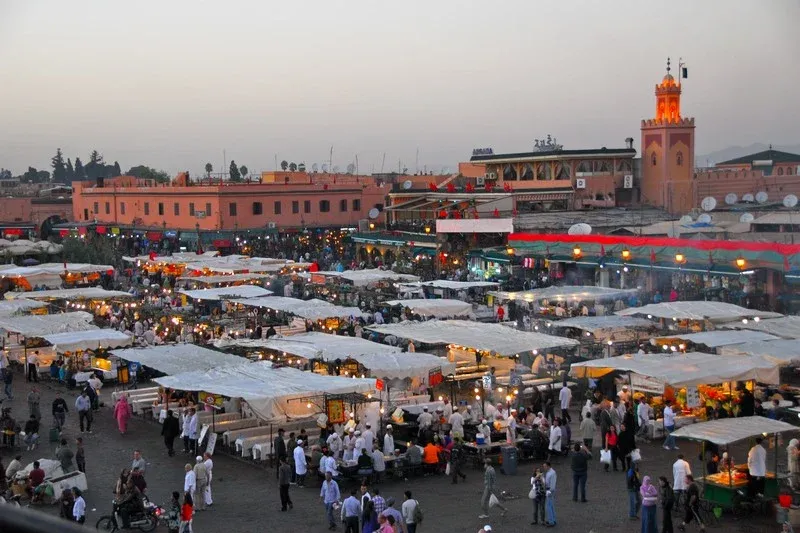
The vibrant atmosphere of Marrakech, particularly around the famous Jemaa el-Fnaa square, is increasingly marred by the presence of unregulated advertising for tour guides and services. These advertisements lack any commercial identity and are indicative of the growing shadow economy within the tourism sector of the city. This situation poses a significant challenge as the Moroccan government aims to attract 26 million tourists by 2030, including 18 million foreign visitors and 8 million Moroccans living abroad. Upon entering the square, one might encounter foreign guides surrounded by unsuspecting tourists, listening to information that may not be credible.
The new strategy aimed at achieving this ambitious target necessitates a critical examination of the political and ethical courage to confront the unregulated sector. Questions arise regarding the effectiveness of government policies in enhancing performance indicators within the tourism industry. The prevalence of unlicensed tour guides, many of whom are foreigners, raises concerns about the protection of tourists from misleading information. Furthermore, it begs the question of whether the Ministry of Tourism and relevant authorities are equipped to tackle the issues posed by low-cost transport and accommodation brokers.
The Call for Action and Collaboration
Selwan Barada, the president of the Marrakech Travel Agencies Association, highlighted numerous complaints directed at local and national authorities, urging for immediate intervention to address the prevailing circumstances. Legal businesses are struggling to survive in the face of unregulated competition that evades taxation and undercuts prices, offering services at rock-bottom rates (approximately 200 dirhams for transport and meals) without insurance or proper offices. When clients arrive, they are often left without a point of contact, which raises serious questions about tourist safety and security.
Barada pointed out that 14 years ago, major tourist destinations in Europe, such as Spain, faced similar challenges but managed to combat the illegal sector through stringent law enforcement. In contrast, the Moroccan government appears silent on addressing this pressing issue, despite its aspirations to welcome 26 million tourists by 2030, leveraging Morocco’s rich offerings and its proximity to major tourist source markets. Furthermore, improvements in infrastructure and transport, alongside a new investment charter, are anticipated to attract significant foreign investments and mobilize domestic savings and investments.
Barada called for cooperation among the Ministry of Tourism, the judiciary, and local authorities to curtail the unregulated sector, which threatens Morocco's reputation and undermines legitimate travel agencies. He cited recent incidents during Umrah trips that resulted in scams targeting pilgrims, highlighting the plight of tourists stranded without transportation to their booked destinations.
In the context of the new strategy, various stakeholders in the tourism sector attribute the recent influx of tourists to the Moroccan national football team's success in the Qatar World Cup, which has significantly raised Morocco's profile as a tourist destination. The unexpected surge in visitors to Marrakech has exceeded expectations, continuing even amidst geopolitical tensions involving the United States and Israel in Iran.
Abdel Rahim Mendili, a member of the natural spaces guides union, emphasized that addressing unlicensed guiding requires a fundamental rethink. Cities that attract tourists rely heavily on a singular economic model, and without diversification, the proliferation of unlicensed guides poses risks to tourists and creates additional burdens for law enforcement. He also pointed out an emerging competition from unregulated tours originating outside Morocco, which do not comply with local laws and offer minimal benefits to the national economy.
Mendili stated that the tourism sector is now attracting a demographic of tourists seeking the lowest prices, typically offered by the unregulated market, which fosters unhealthy competition and prevents detailed and accurate engagement with tourist groups. The low prices (around 200 dirhams) for comprehensive short trips raise suspicions of money laundering, as they encompass transportation, adventurous camel rides, and dining experiences, suggesting that the organizers are not motivated by profit, but perhaps have alternative objectives.
Moreover, the misinformation provided to tourists is attributed to a lack of training and the absence of widely available guidance offices at tourist hotspots. Continuous professional development aimed at enhancing skills and competencies among tour guides and tourism industry workers is crucial. The lack of service standards often results in unprofessional conduct, which detracts from the quality of service and tarnishes the image of the tourism sector.
Tourism professionals in Marrakech have echoed calls for improved verification processes and enhanced collaboration with the Ministry of Tourism to uphold standards and protect both tourists and industry professionals. Laila Boutaleb, the former Secretary of State for Tourism, emphasized the significant role of the unregulated sector in tourism, acknowledging its capacity to provide accommodation options that attract a larger number of tourists, evidenced by a 14% increase in tourist arrivals in 2018.
As reported by hespress.com.