
Urban Struggles in Es-Salaam, Agadir
The Es-Salaam neighborhood in Agadir is currently grappling with an overwhelming influx of street vendors, whose presence is not only saturating public spaces but also severely disrupting the daily lives of local residents. This situation has led to a noticeable degradation of urban conditions, impacting hygiene and safety, and highlighting the persistent challenges faced by local authorities in regulating public spaces. Despite numerous complaints directed at management bodies, the lack of concrete measures has driven residents to seek assistance from social media influencers to voice their concerns and advocate for change.
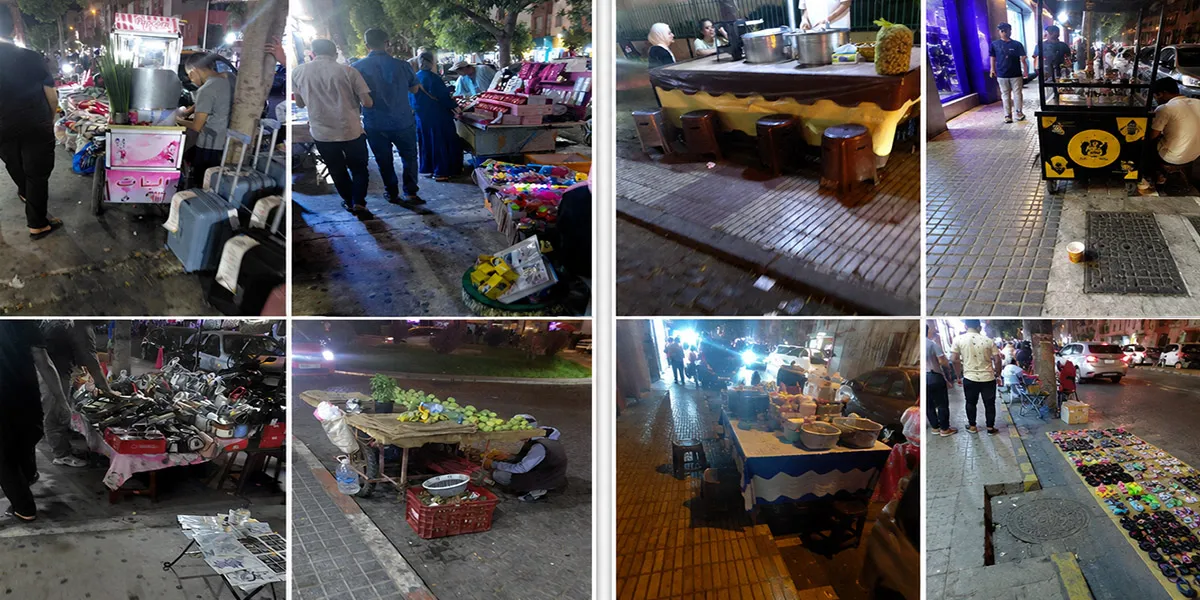
Renowned for its bustling commercial and residential atmosphere, the Es-Salaam area has transformed into a chaotic marketplace over the past two years, especially intensified during the summer months when tourists flock to the region. By late afternoon, the streets morph into a scene reminiscent of a never-ending fair, with vendors setting up stalls right at the doorsteps of residential buildings, anticipating the surge of foot traffic attracted by nearby shopping galleries and cafes.
Entire avenues are effectively blocked off, creating an open-air market where virtually everything is up for sale. Pedestrians find themselves navigating around parked vehicles, while drivers endure monstrous traffic jams, often leading to daily disputes marked by a cacophony of honking horns. This illegal occupation of public space has become the new norm, overshadowing the area with an overwhelming sense of disorder.
Chaos and Insecurity in the Neighborhood
The situation is exacerbated by the proliferation of food trucks that invade the area after sunset, turning street corners and pedestrian zones into informal eateries that operate outside basic hygiene standards. The aftermath of this disarray becomes all too apparent at dawn, with streets littered with waste that poses a direct threat to public health. The combination of visual and olfactory pollution, along with increasing feelings of insecurity, has created a tense atmosphere for residents.
Nighttime in Es-Salaam has devolved into a spectacle of dangerous motorcycle and car stunts, as modified vehicles speed through the streets without regard for traffic laws, while the absence of speed bumps or police barricades allows this reckless behavior to flourish unchecked. The growing presence of homeless individuals and beggars further amplifies the residents' fears, contributing to a dramatic decline in the neighborhood's livability and tarnishing Agadir's reputation in the eyes of visitors.
Despite numerous complaints from community leaders, local authorities have yet to respond effectively to the escalating crisis, leaving residents feeling abandoned. In response to what they perceive as administrative inaction, the community has turned to social media influencers to amplify their grievances and assert their constitutional right to a peaceful living environment. Property owners' associations, supported by civil society and legitimate businesses, have submitted collective complaints and petitions to the Souss-Massa regional authorities and even the National Police, yet meetings with officials have yielded little progress.
"Our daily lives have become a living nightmare," lamented a property manager from the Es-Salaam neighborhood. "Our entrances are blocked at all hours, and we are subjected to the smells of frying food, constant shouting, and late-night brawls. We pay our local taxes, yet it feels as though we have been forsaken by the authorities. Why are these individuals allowed to dictate terms right outside our homes?" This heartfelt plea encapsulates the frustration of a populace that feels increasingly helpless, questioning the local government's ability to restore order in the face of a brazen informal sector that continues to claim public and private domains.
As reported by leseco.ma.