
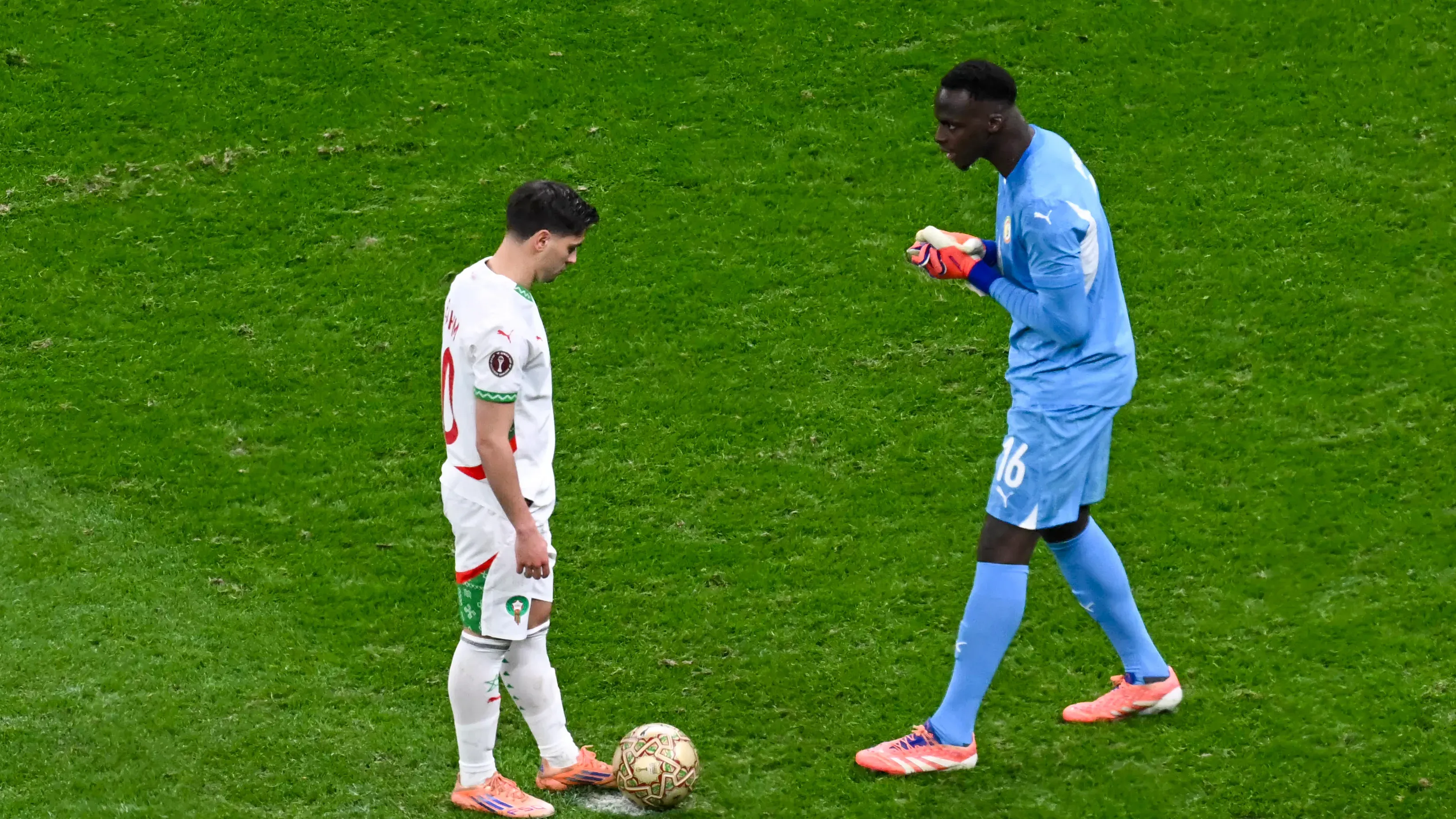

On Thursday, all eyes in the realm of African football are focused on Lausanne, Switzerland, where the national teams of Senegal and Morocco, alongside the Confederation of African Football (CAF), convene before the Court of Arbitration for Sport (CAS). This meeting revolves around an appeal filed by the Senegalese side against a controversial decision that stripped them of the 2025 Africa Cup of Nations title, awarding it instead to Morocco. The appeal stems from a decision made by the CAF Appeals Committee, which ruled in March that Senegal would forfeit the final match due to their withdrawal, resulting in a 3-0 victory for Morocco, as stipulated in articles 82 and 84 of the competition regulations.
However, the case is underscored by notable legal complexities, as Senegalese players had initially left the pitch during the final before returning to play, ultimately winning the match in extra time. As discussions unfold at the CAS, six primary questions are expected to shape the dialogue, although a final ruling is not anticipated during today’s session.
Was Senegal’s Withdrawal a True Refusal to Play?
Among the foremost issues for the CAS to resolve is whether Senegal's action constituted a genuine refusal to continue the match. Article 82 explicitly penalizes a team that "refuses to play or leaves the pitch before the end of the match without the referee's permission." According to reports from the sports-focused network "Afrik Foot," Roman Bezini, a lawyer specializing in sports law, suggests that the circumstances surrounding the Africa Cup of Nations final put the case in a legal gray area. He points out that articles 82 and 84 do not explicitly address a situation where a team departs the field without permission and then returns to continue the match. Bezini argues that the match did not conclude definitively but rather resumed, opening a legal discourse on whether the events should be classified as a "refusal to play" under the regulations.
Further complicating the matter, attorney Amir Najazi differentiates between "refusal to play" and merely leaving the pitch, noting that Senegal’s return to play could challenge the characterization of their actions as a complete refusal to engage. Conversely, he acknowledges that the departure of a majority of players from the field does, in a literal sense, represent "leaving the pitch" as per the regulations. Consequently, the dispute hinges not only on the incident of leaving but also on the subsequent legal ramifications after the match resumed.
Will the Final Whistle Validate the Result Achieved on the Pitch?
This aspect forms a critical part of Senegal's defense, given that the match resumed under the officiating of referee Jean Jacques Ndala and continued until its conclusion, with Senegal emerging victorious in extra time. South African sports law expert Pius Nduboku believes that these details could prove decisive in the case. He stated to the South African Broadcasting Corporation (SABC): "If the referee had not allowed them to return to the pitch, we wouldn’t be facing this issue. However, they returned, the match resumed, and the referee blew the final whistle." Thus, Nduboku posits that the CAF Appeals Committee misinterpreted the facts, and the resumption of play alongside the final whistle could be vital in protecting the result achieved on the field.
Even if the CAS is convinced that Senegal violated the competition regulations, another pressing question arises: was the penalty of declaring Senegal the loser due to withdrawal proportionate? Here, Amir Najazi emphasizes the principle of proportionality in sanctions, which is a fundamental element in CAS deliberations. He suggests that the court may view the penalty of loss by withdrawal as excessive if alternative sanctions could address the behavior exhibited by the Senegalese team without overturning the final result that was reached after the match resumed.
Ultimately, the case does not solely revolve around a literal interpretation of articles 82 and 84 but also involves determining a penalty that balances adherence to competition regulations with the preservation of a final match result that has been completed.
Another pivotal point in this legal conflict concerns whether the letter of the regulation or the factual occurrences of the match should take precedence. Bezini argues that a strict application of CAF regulations could lead to the affirmation of the Appeals Committee's decision, as article 82 clearly mandates punishment for a team leaving the pitch without permission. As such, he considers Senegal's chances of appeal to be "significantly weak." In stark contrast, Nduboku believes the Appeals Committee erred in interpreting articles 82 and 84, particularly since they allegedly did not sufficiently consider the players' return to the pitch and the subsequent resumption of the match as sanctioned by the referee. The South African attorney has gone so far as to assert, "I am convinced that the Court of Arbitration for Sport will overturn the decision."
Furthermore, there exists a potential middle ground wherein the CAS could uphold the match result while still imposing sanctions on Senegal. Najazi posits that both legal positions could be defensible, but the paramount consideration must be the "integrity of the competition and the fairness of the result achieved on the field." Under this scenario, maintaining the result reached during the match might be the least harmful option, with the possibility of imposing separate disciplinary actions on those responsible for the players leaving the field. Hence, the court must navigate several considerations: strict adherence to CAF regulations, the referee's role in resuming the match, the fact that the match was completed, and the potential to penalize Senegal's conduct without nullifying the result achieved on the pitch.
Finally, the prospect of replaying the final match seems highly improbable. Experts discussing the case agree that the scenario of a rematch is unlikely. Bezini argues that CAF regulations do not appear to permit such a solution, while Nduboku considers the notion of replaying the match to be entirely out of the question. Therefore, the legal battle at the Court of Arbitration for Sport will likely not revolve around the possibility of replaying the final but rather a more critical question: who holds the legal right to claim victory in a match that has already been decided on the field? Will it be Morocco, based on CAF's decision to declare Senegal the loser due to withdrawal, or will the title revert to Senegal based on the resumption of the match and the established result after the final whistle?
As reported by kooora.com.
