
Exploring Africa's Role in the Global Economy
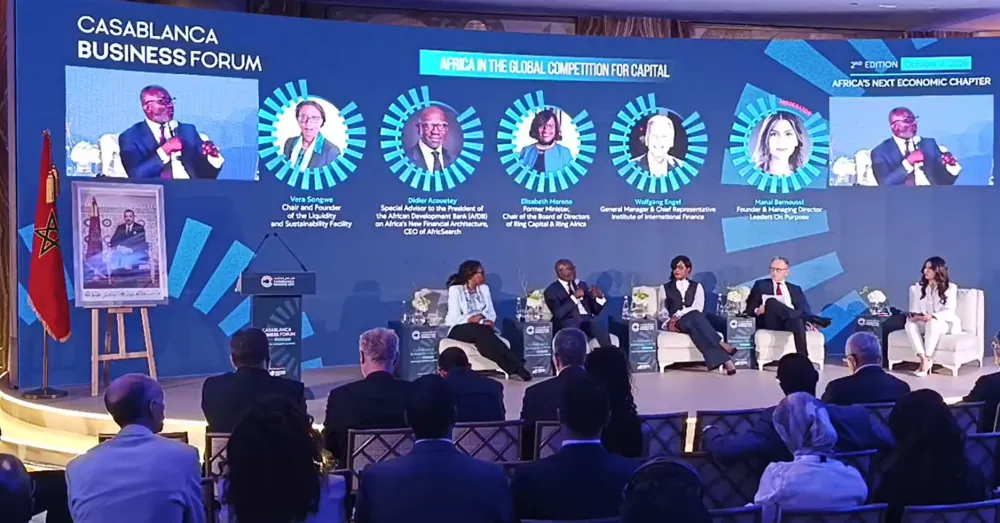
The second edition of the Casablanca Business Forum, organized by Casablanca Finance City (CFC) under the theme "Africa’s Next Economic Chapter," takes place at a crucial juncture where global economic balances are undergoing significant reshaping. Geopolitical fragmentation, rapid technological advancements, climate transitions, and international competition for investments are all factors that are redefining the strategies of both states and businesses alike.
Within this context, the forum aimed to tackle a pivotal question: how can Africa exert more influence over these transformations rather than merely adapting to them? Discussions focused on the various levers that could enable the continent to enhance its economic sovereignty, attract greater capital, and solidify its role in the emerging value creation chains.
Saïd Ibrahimi, the General Director of Casablanca Finance City Authority (CFCA), asserted that Africa must now be regarded as a fully-fledged player in the global economy. He emphasized that the continent has its own ambitions, talents, and an increasing capacity for innovation and value creation. Therefore, the challenge is no longer just to ascertain how Africa will adapt to the transformations of the global economy, but also to explore how it can actively contribute to shaping them.
This evolution is particularly evident through the expansion of African businesses beyond their domestic markets, the emergence of new urban innovation hubs, and the development of economic models spearheaded by a new generation of entrepreneurs. Ibrahimi highlighted, "Our responsibility is not only to predict what Africa could become but, more importantly, to accelerate what it is already becoming." For the CFCA Director General, the challenge now lies in transitioning from potential to execution, from investment to transformation, and ultimately, to achieving productive, inclusive, and sustainable growth.
Capital, Infrastructure, and Talent Development
The event was further enriched by a virtual address from Professor Philippe Aghion, the 2025 Nobel Laureate in Economics, who discussed the conditions necessary for converting economic and technological transformations into productivity gains, competitiveness, and sustainable growth. Various sessions at the forum tackled several structural issues crucial for Africa's economic future, including sovereignty and growth in a changing global environment, international competition for capital, financing the climate transition ahead of COP31, infrastructure development, and continental integration.
The issue of human capital also featured prominently in discussions, focusing on transitioning from a brain drain to a skill circulation model, aimed at better mobilizing African talents for the continent's development. Through this event, Casablanca Finance City seeks to further solidify the city’s positioning as a connecting platform between international investors and African markets.
Today, CFC brings together nearly 300 companies representing 70 nationalities and operating across 53 African countries. Positioned at the crossroads of Africa, Europe, and the Middle East, the Casablanca financial hub aspires to strengthen its role as a regional hub and gateway to the continent's economies. In an environment where capital flows, value chains, and decision-making centers are being reshaped, the ambition stated in Casablanca is clear: to transform Africa from merely a space of potential into a more integrated player in the new dynamics of the global economy.
As reported by lavieeco.com.