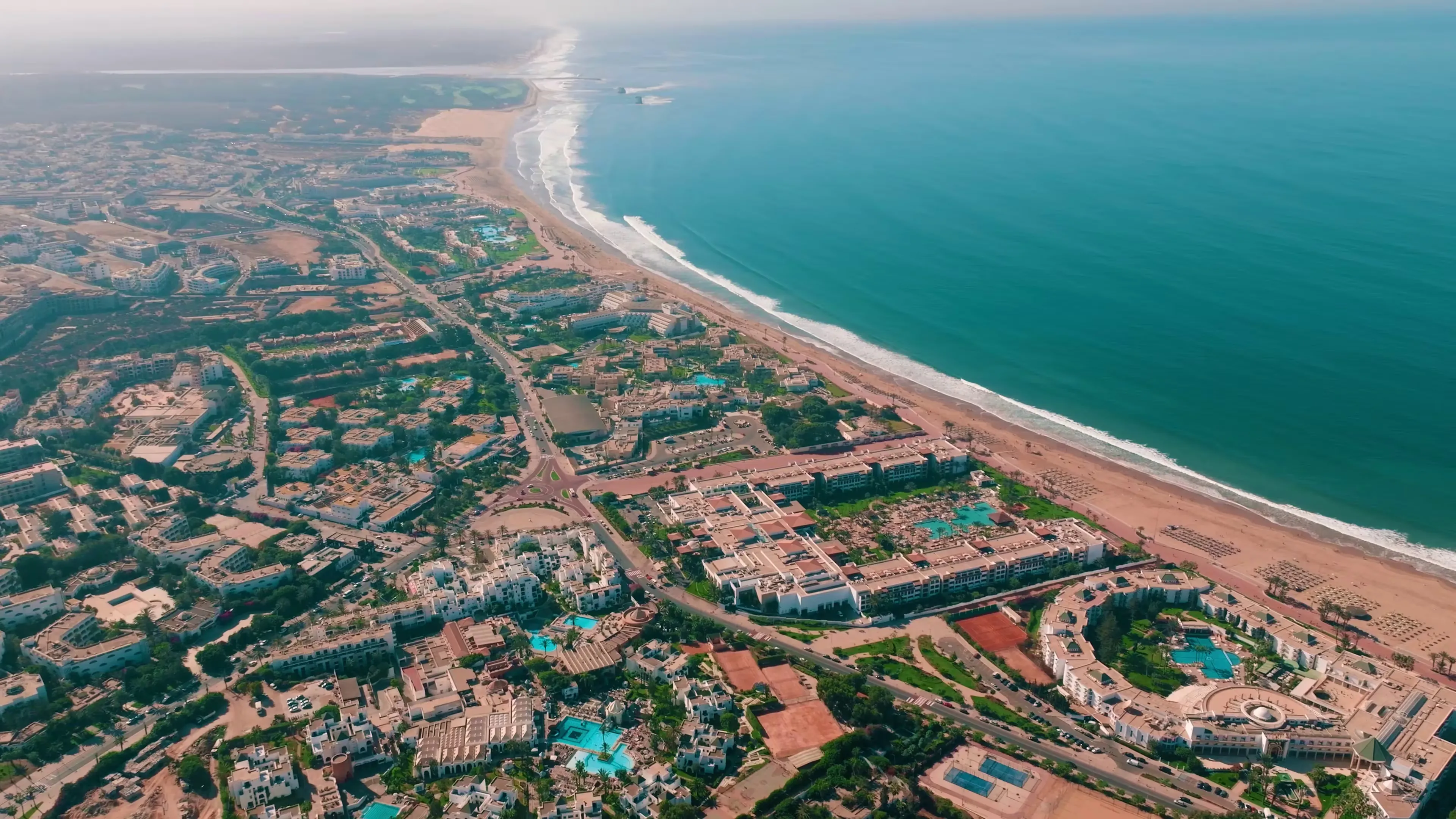

Agadir's Tourism Surge: A Bright Future Ahead
In Agadir, the hotels, coastal areas, and key tourist attractions are witnessing an impressive increase in visitor numbers, signaling a destination that is progressively enhancing its appeal. The capital of Souss continues to attract its traditional clientele, particularly from the UK and France, while simultaneously expanding its reach to newer European markets. This evolution is accompanied by a significant rise in domestic demand, indicating a broadening appeal.
As of the end of May 2026, the tourism statistics reflect this dynamic growth, with over 607,000 tourists having visited Agadir since the beginning of the year, marking a 6.6% increase compared to the same period in 2025. The total number of overnight stays reached nearly 2.6 million, representing a 9.7% rise. These indicators not only highlight the attractiveness of the destination but also underscore the importance of the length of stay as a crucial aspect of its tourism activity.
“Agadir is experiencing a very positive evolution in its visitor numbers. The city is no longer reliant solely on its traditional markets like France and the UK, but is also strengthening its presence in new markets, particularly Poland and Belgium, alongside robust domestic demand,” explains Elarby Id-Bousaid, a representative within a hotel group in Agadir.
Strategic Developments and Future Prospects
For industry professionals, this growth is occurring in a context where demand is beginning to outstrip available capacity. The challenge now lies in supporting this growth with an increase in supply, particularly regarding accommodation and tourism services. “The indicators we have suggest a promising summer season ahead. Demand currently exceeds available capacity, which highlights the need to accelerate investments in hospitality and services to support this growth,” Id-Bousaid emphasizes.
This upward trend is not coincidental; it is a result of the transformations that have taken place in the city over recent years, particularly through the Urban Development Program for Agadir, launched in 2020. Urban space redevelopment, infrastructure improvements, and the development of new facilities have gradually enhanced the destination's appeal and improved the experience offered to visitors.
Noureddine Bourchich, the regional tourism delegate in Agadir, notes that the current momentum is directly linked to various infrastructure projects underway in the capital of Souss. “The growth currently being experienced by tourism in Agadir is associated with major royal projects, some of which are already completed, while others are nearing completion or scheduled for the coming years,” he explains.
Beyond urban infrastructure, the sector is also focusing on modernizing its offerings. The renovation of several establishments, the introduction of new hotel units, and the training of professionals contribute to this elevation in service quality. “Tourism-related infrastructure plays a crucial role, whether it involves upgrading hotel establishments or training a workforce that meets the sector's demands,” adds Bourchich.
This transformation is accompanied by a strategy aimed at diversifying and consolidating the local tourism ecosystem. The tourism roadmap includes several initiatives designed to enhance the destination's attractiveness: expanding accommodation capacity, creating new tourist activities, improving service quality, and enhancing air connectivity.
Aviation is indeed a vital component of this strategy. For a destination heavily reliant on international markets, the opening and strengthening of air links allow for an expanded pool of potential visitors and better connect Agadir with source markets.
Simultaneously, the hotel landscape continues to evolve. Two new five-star properties have recently opened, enhancing the offerings available to both international and national visitors. “The investment aspect has also seen significant progress. The opening of two five-star establishments will bolster accommodation capacity and consolidate the region's positioning in terms of services, comfort, and leisure,” Bourchich highlights.
Looking ahead, Agadir is also preparing for another significant event: the 2030 World Cup. The city is set to host matches during this competition and must have a tourism offering capable of accommodating an exceptional influx of visitors, as well as leveraging this international visibility for sustainable growth. The planned investments in the coming months will align with this perspective, focusing on both infrastructure and the tourism services provided to visitors.
Thus, for Agadir, the stakes extend beyond merely succeeding during the summer season. The aim is to transform this burgeoning visitor trend into sustainable growth by simultaneously evolving accommodation capacities, service quality, connectivity, and entertainment offerings. This strategy will enable the capital of Souss to solidify its position among Morocco's major tourist destinations while preparing for a significant leap forward as 2030 approaches.
As reported by fr.le360.ma.