
Investment in Educational Infrastructure in Agadir
A significant agreement has been established to allocate 380 million dirhams (MDH) for the establishment and equipping of three new university institutions in Agadir. This ambitious project, set to unfold over three years, will be executed in collaboration with Ibn Zohr University. Funding will be primarily provided by the Ministry of Higher Education, which will contribute 73.68% of the total investment, while the regional council will cover the remaining 26.32%. The initiative aims to diversify the educational offerings in the Souss-Massa region, equipping it to produce specialized skills in health, sports, and agro-industry to meet the evolving needs of the regional job market.
Detailed Breakdown of the Project
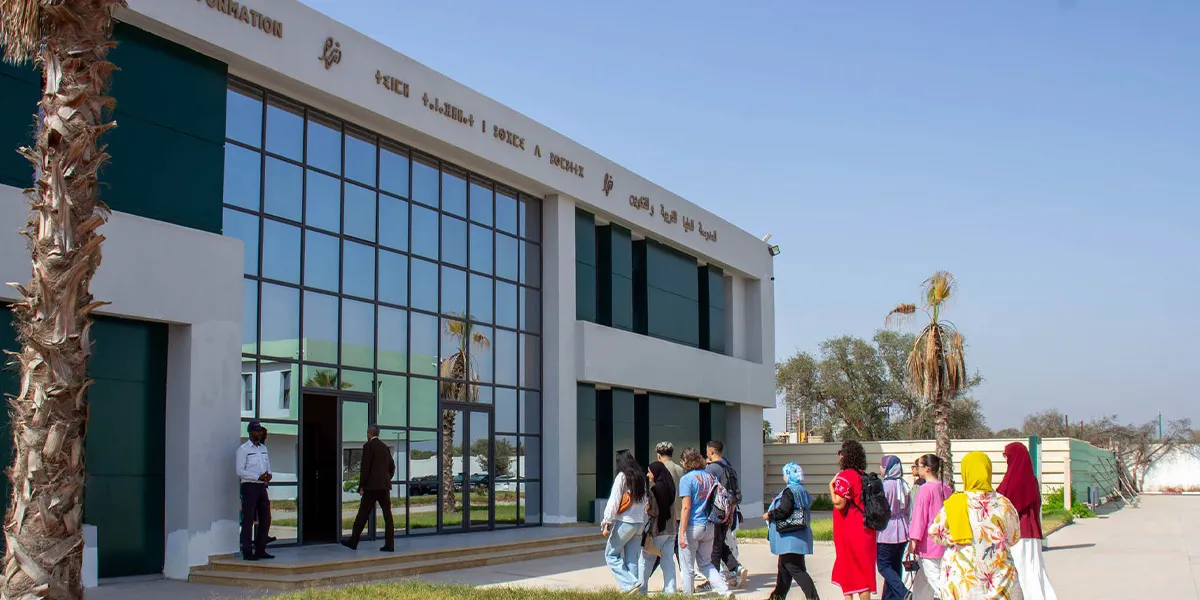
The educational landscape in the Souss-Massa region is set for enhancement following the approval of a partnership agreement between Ibn Zohr University of Agadir and the Souss-Massa Regional Council. This agreement focuses on the construction and equipping of three specialized university institutions: the Institute of Sports Professions, the Faculty of Dentistry, and the Higher School of Agro-Food Industries and Biotechnology. The total investment for these three entities will amount to approximately 380 million dirhams, with locations designated within the urban municipalities of Agadir and Aït Melloul, under the oversight of Ibn Zohr University. The viability of this operation hinges on a collaborative financial partnership that includes the Ministry of Higher Education, Research, and Innovation, alongside Ibn Zohr University and the Souss-Massa Regional Council.
The financial structure of the budget indicates a distribution among the three main contributors: the Ministry and the University together will provide a significant investment of 280 MDH (73.68% of the total), complemented by the regional council's contribution of 100 MDH (26.32%). To ensure the timely progress of these projects, the disbursement of funds will be staggered over three fiscal years. The agreement's duration is set until the successful completion of all three initiatives.
In the first year, a total of 215 MDH will be released (160 MDH from the Ministry and 55 MDH from the region). The second year is expected to mobilize an additional 125 MDH (80 MDH from the Ministry and 45 MDH from the region), culminating in the third year with a final disbursement of 40 MDH entirely funded by the Ministry. These funding strategies are designed to secure the completion and operational readiness of the three infrastructures under optimal conditions.
This partnership agreement encompasses the construction and equipping of the Institute of Sports Professions, which will include the development of administrative and educational spaces, establishment of sports facilities, and installation of specialized research laboratories. The same level of detail applies to the Faculty of Dentistry and the Higher School of Agro-Food Industries and Biotechnology.
Ultimately, the objectives of these projects revolve around five key axes: enhancing and diversifying higher education offerings in the Souss-Massa region through the establishment of specialized entities; ensuring alignment between education and employment market needs through the training and qualification of specialized profiles; and addressing the current and future demands of employers in the health, sports, agro-food, and biotechnology sectors. Furthermore, these initiatives aim to bolster research and innovation, facilitate technological transfer within the relevant disciplines, and contribute to the economic and social development of the region by cultivating qualified human resources, thereby enhancing the area's attractiveness for both national and international investments.
It is noteworthy that this agreement forms part of a broader agenda consisting of 24 points from the ordinary session of July 2026 of the Souss-Massa Regional Council, convened last week in the province of Chtouka Ait Baha. Most of these points involve partnership agreements covering a wide array of sectors, including economy, investment, digital transition, education, health, and social inclusion.
As reported by leseco.ma.