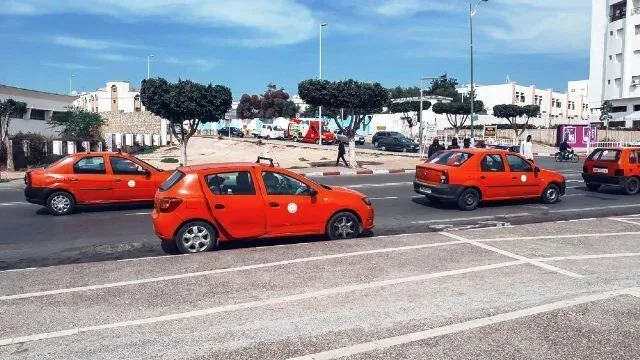

Agadir Taxi Professionals Rally Against Ineffective Financial Aid
In Agadir, taxi drivers are voicing their frustrations regarding the current financial assistance program implemented by the government in response to soaring fuel prices. The protests have highlighted significant concerns among taxi professionals, who argue that the aid is superficial, merely providing a temporary fix rather than addressing the structural issues facing the sector. As reported by fr.le360.ma.
During a recent demonstration on Mohammed V Avenue, taxi drivers, along with transport industry stakeholders, underscored the necessity of capping fuel prices to protect citizens' purchasing power. Additionally, they are calling for the SAMIR refinery to resume operations to ensure a stable and regulated petroleum market. A prevailing sentiment among the protestors is the perceived injustice of the financial aid distribution, which currently benefits taxi license holders rather than the actual drivers who bear the brunt of operational costs, including fuel purchases.
Conflicts have arisen between taxi owners and drivers over the control of financial support, with owners often monopolizing payments, while drivers demand strict adherence to the Interior Ministry's circular No. 1026, issued on December 1, 2022. This circular clearly states that non-driving operators who fail to compensate their drivers from public aid should be denied financial assistance.
As disputes continue and concerns about potential misappropriation of funds by intermediaries grow, the call for direct aid to active drivers intensifies. Unions and professional representatives emphasize the excessive pressures and even abuses of authority that many drivers face from certain operators, further compounding their grievances.
This wave of protests coincides with the Ministry of Transport and Logistics announcing an increase in the direct support allocated to road transport professionals. This decision reflects the government's commitment to implement this exceptional aid in line with global fuel price fluctuations, yet it leaves unresolved the critical issue of local governance in the distribution of these funds.