
Agadir's Budget Growth for 2027
The city of Agadir has officially approved its budget for the 2027 fiscal year, which has been set at 850 million dirhams (MDH), reflecting a notable increase of 7.46% from the previous year’s budget of 791 MDH. This growth, amounting to an additional 59 MDH, is primarily attributed to enhancements in local taxation, which constitutes an impressive 82.6% of the overall budget. Key contributors to this fiscal boost include the municipal service tax, professional tax, and a tourism tax. The financial structure is designed to generate a projected surplus of 278.3 MDH, which will be allocated to repay 170 MDH of the principal debt and fund 10 significant equipment projects totaling 108.3 MDH.
Key Tax Contributions and Future Projects
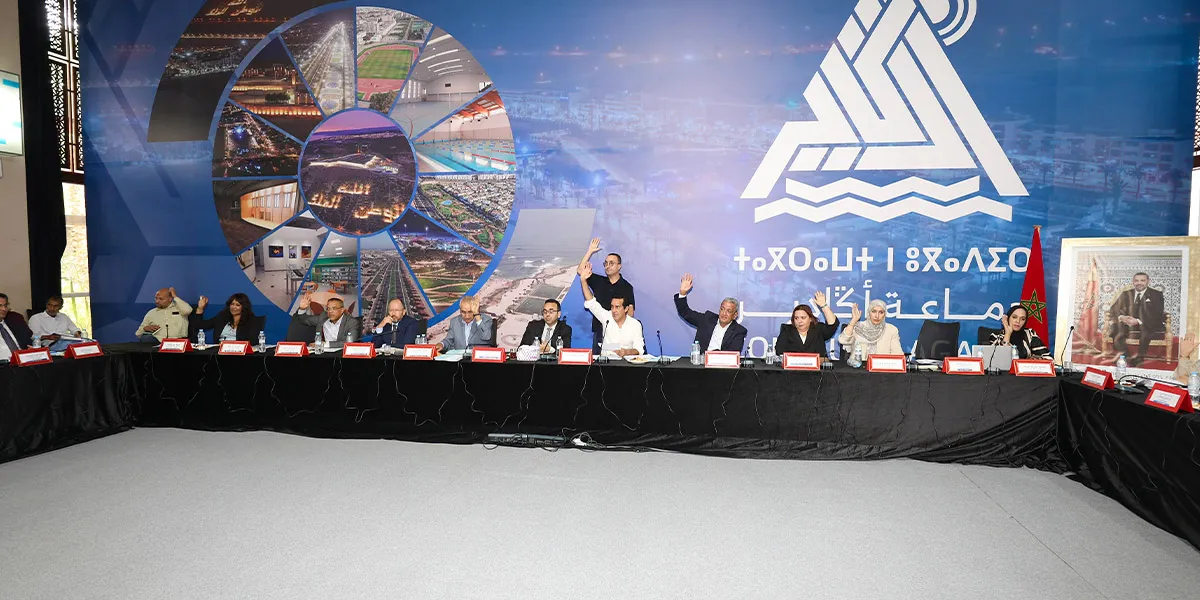
During the council meeting held last Wednesday, the emphasis was placed on the importance of local tax revenues, which amount to 702 MDH. Among the most significant sources of revenue is the tax on municipal services, which alone has increased by 20 MDH to reach 220 MDH. This tax applies to all built properties and covers essential services such as waste collection, public lighting, and road maintenance. Additionally, the municipal share of the state VAT has been revised to 148 MDH, representing a 14 MDH increase to support infrastructure expenses. The professional tax has also seen an uptick, securing an additional 10 MDH to reach a total of 130 MDH. The tourism sector plays a vital role as well, with the tourism tax climbing to 40 MDH, driven by a robust increase in overnight stays.
The budget allocation for equipment projects underscores the city’s commitment to urban development and infrastructure enhancement. A total of 10 projects are earmarked for funding, with the most substantial allocation directed towards the urban upgrading of the Lhajeb neighborhood in Tikiouine, which will receive 40 MDH. Other notable projects include contributions to the National Sports Development Fund and the urban planning of Bensergao, with specific allocations aimed at improving local sports facilities and upgrading under-equipped neighborhoods, respectively. These initiatives reflect a strategic approach to utilizing the city’s budget surplus to foster growth, enhance community services, and improve the overall quality of life for residents.
As reported by leseco.ma.