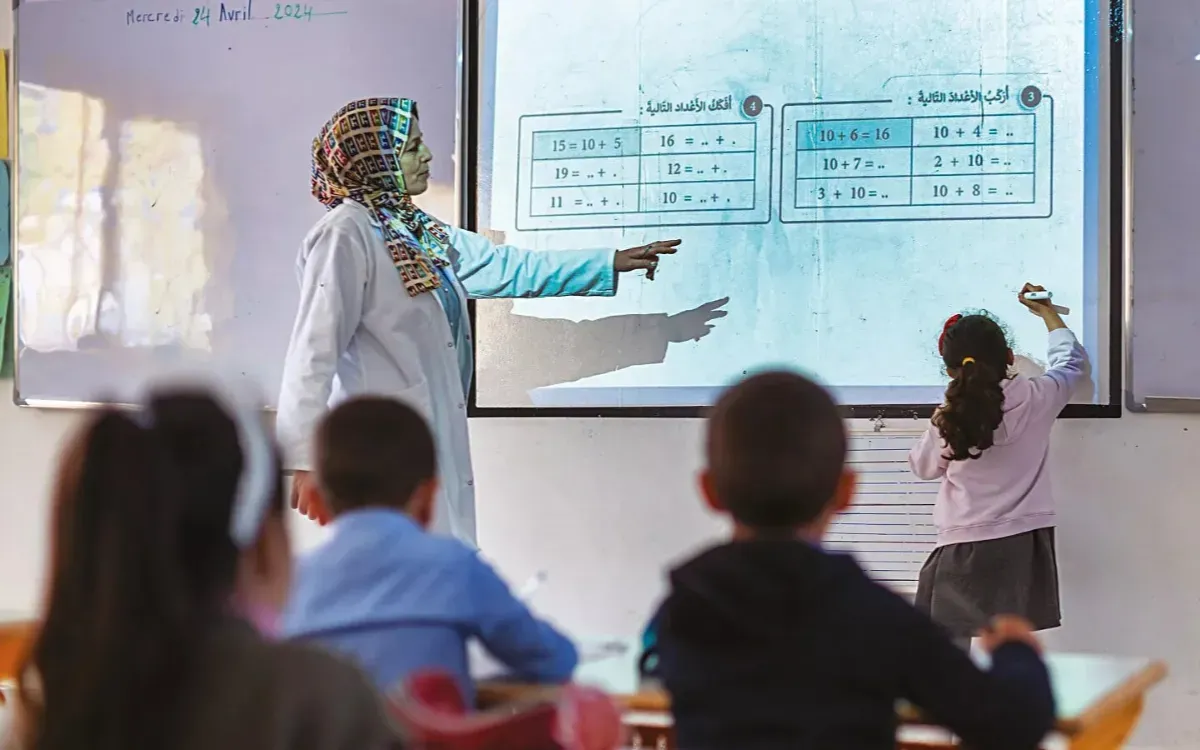

The latest PISA results have revealed a disheartening picture for Morocco's educational system. According to the assessment, a staggering 87% of 15-year-old students in Morocco fail to meet the minimum proficiency level in reading, 84% in mathematics, and 77% in science. These figures were released on September 8th by the OECD in their report dedicated to Morocco for the PISA 2025 survey. The performance levels of Moroccan students starkly contrast with the averages observed across OECD countries, highlighting a significant educational gap that demands urgent attention.
In the realm of reading, only 13% of Moroccan students have achieved at least level 2, which PISA defines as the minimum threshold for proficiency. This is in stark contrast to the OECD average, where 69% of students meet or exceed this level. In practical terms, this means that a vast majority, 87%, of Moroccan youth assessed fall below the essential capabilities required for reading comprehension, such as identifying the main idea of a moderately lengthy text, retrieving information based on explicit criteria, and reflecting on the structure or purpose of a text. Alarmingly, very few Moroccan students reach levels 5 or 6, which are designated for the most proficient readers.
The situation in mathematics is only marginally better, with a mere 16% of students achieving the minimum proficiency level, compared to an OECD average of 65%. This translates to 84% of students remaining below the level necessary to, for example, mathematically represent a simple situation, compare two routes, or convert prices into another currency. Similarly, in science, only 23% of students reach level 2 or above, whereas the OECD average stands at 74%. Once again, the data suggests that almost no Moroccan students fall within the highest performance tiers.
Declining Trends in Academic Performance
A comparison with the PISA 2022 results indicates a worsening trend in both reading and mathematics. During the previous assessment, 19% of Moroccan students reached the minimum reading level and 18% in mathematics. However, these figures have dropped to 13% and 16% respectively in 2025. The average performance scores have declined in reading and mathematics, while remaining relatively stable in science. Over the past five years, there has been a notable increase in the proportion of students classified as low performers, with a 14-point rise in reading and an 8-point increase in mathematics and science since 2018.
Nevertheless, the OECD offers a crucial perspective on these declining results. It notes that the number of 15-year-olds eligible to participate in PISA has increased by more than 30% in Morocco between 2018 and 2025, even as this age group's overall population has remained relatively stable. This shift reflects a significant advance in secondary school enrollment, particularly among youth who were previously marginalized within the educational system. The organization posits that the inclusion of a larger number of students from disadvantaged backgrounds partially accounts for the apparent decline in results. For students whose educational circumstances have remained consistent throughout the assessment periods, performance in science and mathematics has held up better, although reading skills have continued to falter.
The PISA 2025 survey encompassed 6,978 students across 179 institutions in Morocco, representing approximately 535,800 15-year-olds, or 87% of the entire cohort for that age group. The OECD confirms that the Moroccan data complies with all its quality standards. Importantly, Morocco’s decline in educational performance is not an isolated issue; the OECD has documented a historical drop in reading and mathematics proficiency across numerous countries globally. However, the disparity remains stark: while 69% of OECD students meet the minimum reading proficiency level, only 13% of Moroccan students do.
As reported by bladi.net.