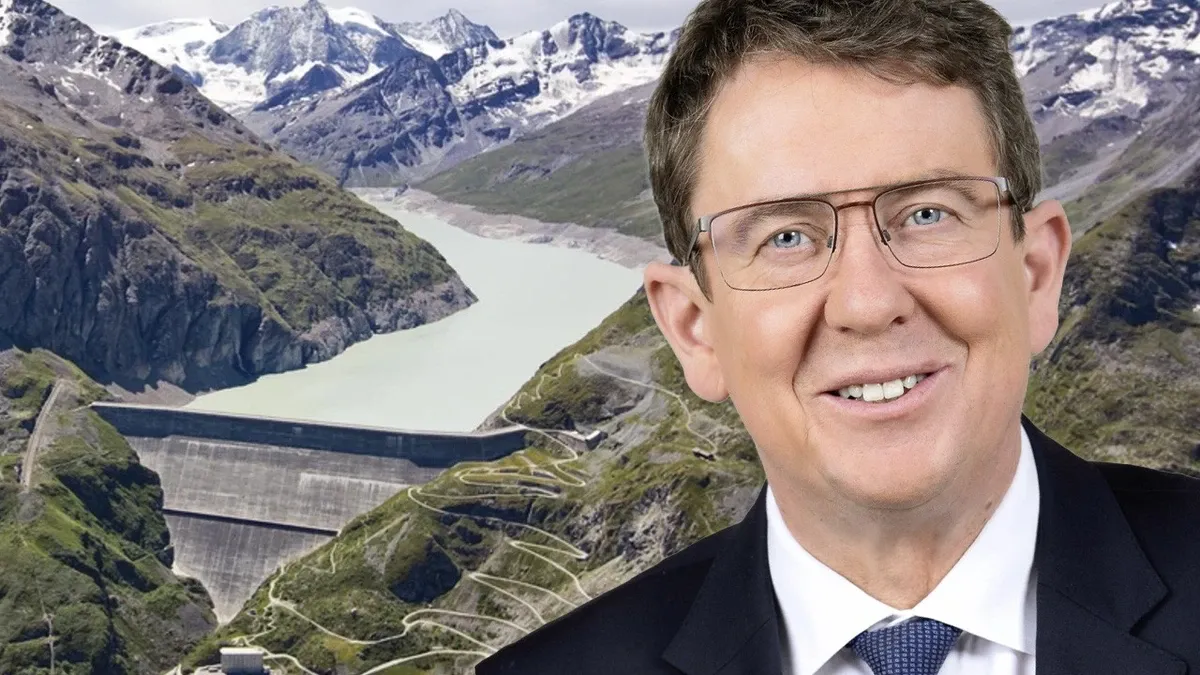

On June 9, 2024, Energy Minister Albert Rösti experienced a significant triumph when he successfully advocated for the electricity law, aimed at catalyzing sixteen reservoir projects, even against the wishes of his own party. However, just a year later, a sense of disillusionment began to set in. In a candid interview with CH Media, he revealed some troubling findings from a survey conducted among electricity producers, stating, "We have found that out of the two terawatt-hours of electricity targeted by 2040, only about half will be produced." This stark reality underscores the challenges faced in advancing hydroelectric projects in Switzerland, despite political backing.
In response to the slow progress, Rösti announced plans to propose an expansion of the list appended to the electricity law, which includes various storage projects. This proposal is particularly controversial as it would allow the benefits of these projects to take precedence over environmental protections during interest assessments. The stagnation in hydroelectric development stems from several factors: some projects are deemed financially unviable, while others encounter opposition, and some are hindered by legal constraints that return operations to local municipalities upon concession expiry, thereby discouraging investment.
Rösti's Growing Irritation
According to sources close to the Federal Council, Rösti's frustration with major energy corporations is mounting. These companies have been granted powerful tools through the electricity law and the federal law aimed at accelerating procedures for renewable energy development, yet they continue to approach large projects with reluctance. The scenario resembles a Bermuda Triangle of responsibility: while the Confederation is ultimately accountable for ensuring sufficient energy supply, it is the energy providers, which are regional entities, that must fulfill this objective. These providers are as concerned with securing dividends from companies like Axpo and Alpiq as they are with ensuring energy security, complicating the transition to sustainable energy sources.
As a result, the momentum of the energy transition has been alarmingly slow. Rösti's dissatisfaction has reached a point where it is uncertain whether he will actually proceed with the proposed expansion of the annex to the electricity law, initially anticipated for early 2026, but now potentially postponed until autumn. However, amidst the stagnation, a previously sidelined project is gaining traction—the upgrade of the Grande Dixence dam, which is owned mainly by Alpiq. This initiative, dubbed "Dix+", aims to raise the dam by five meters, enabling the storage of an additional twenty million cubic meters of water, equating to approximately 100 GWh, enough to supply around 25,000 households annually.
While the technical and operational feasibility of the project has been established, Alpiq has noted that some regulatory aspects still require clarification with the Confederation. The determination of whether an additional concession is needed for the dam's elevation remains unresolved, although a similar project at Lake Moiry did not necessitate one. Alpiq has emphasized that the lake of Dix stands as Switzerland's largest reservoir, and even a minor increase in the dam's height could yield substantial benefits.
The Delayed Maturation of the "Dix+" Project
Interestingly, the "Dix+" initiative is not a novel concept; it was previously discussed during a roundtable on hydroelectricity convened by former Energy Minister Simonetta Sommaruga, Rösti's predecessor. At that time, environmental organizations and energy producers reached a consensus on fifteen projects, which were later included in the electricity law. Initially, Alpiq had proposed a more ambitious elevation of fifteen meters; however, that plan was deemed unrealistic. The company initially hesitated to advance the downsized project due to political considerations, aiming to avoid jeopardizing the nearby Gornerli dam, which is directly linked to the Dixence's gallery systems.
The Gornerli project is viewed as the most controversial new initiative within the electricity law, as it promises to secure 550 GWh of winter electricity but also likely involves significant ecological disruption. Alpiq appeared to prioritize ensuring the Gornerli project was on track before reintroducing the Dixence project into the political arena. However, this strategic delay may not matter much to Minister Rösti, who is primarily focused on ensuring that Switzerland builds energy capacity in a timely manner, aligning with the population's approved expectations from two years ago. As reported by watson.ch.