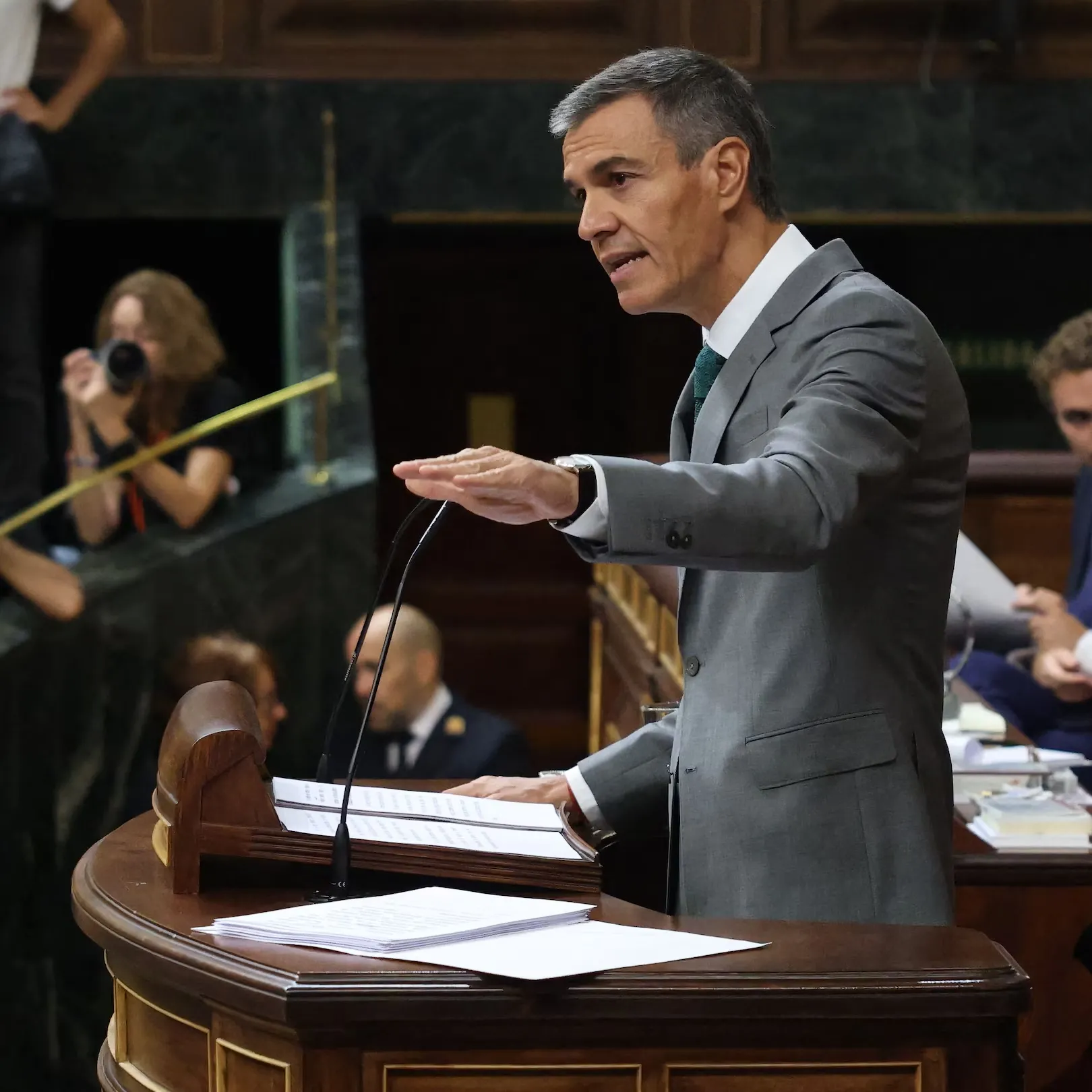
Alberto Herrera Critiques the Government's Response to the Ceuta Crisis
In a recent episode of 'Herrera en COPE', Alberto Herrera delved into the extraordinary session held by Spanish Prime Minister Pedro Sánchez regarding the migration crisis in Ceuta. Herrera posed a critical question, seeking clarity on the government's understanding of the events that transpired. He emphasized the need for the state machinery to elucidate the who, how, and why behind the mass influx of migrants into Spanish territory. During his editorial segment, Herrera challenged Sánchez’s assertion that intelligence services were unable to foresee the scale of the incident. He pointed out the alarming claim made by Interior Minister Fernando Grande-Marlaska, who disclosed that he learned about a police report commissioned by a judge through the media. In light of Sánchez's justification that the situation was complex and multifaceted, Herrera questioned how the state ended up in a position where agents had to confront tens of thousands of individuals, forcing them to choose between opening fire or risking a tragedy.
Contradictions in Official Narratives and Morocco's Role
Herrera further contrasted the official narrative with details from the police report, which indicated a complete leniency on the part of Moroccan authorities and suggested that agents were directing migrants through the water. While Sánchez claimed that Morocco played a pivotal role in ensuring the return of over 90% of those who crossed, Herrera highlighted that this does not account for Morocco's actions prior to and during the crisis. He noted that the Moroccan ambassador was summoned only on August 21, due to ministerial statements regarding sovereignty, rather than in response to the border crisis. Additionally, Herrera pointed out the existence of two prior reports from the National Intelligence Centre (CNI) and a communication dated July 27, warning of a mass entry of immigrants, followed by a subsequent alert on July 29 about the risk of a mass influx. Given this context, Herrera called for an explanation as to why Morocco could prevent other gatherings thereafter and what measures the government had taken over the past month to clarify the circumstances at the border.
Jorge Bustos, who joined the discussion, criticized Sánchez for his lack of self-reflection and accused him of projecting a triumphant image while deflecting responsibility onto imaginary villains or security forces. Bustos remarked that it is the duty of a competent government to adequately assess these warnings and take necessary actions to prevent the emergencies highlighted by intelligence reports and institutional calls for caution. He concluded by observing a significant atmosphere within the Socialist party that suggests an impending end of an era, referencing ministers like Margarita Robles, Félix Bolaños, and Óscar Puente. He also noted internal dissent among the approximately fifty Socialist mayors who defied party discipline to express solidarity with the autonomous city of Ceuta.
As reported by cope.es.