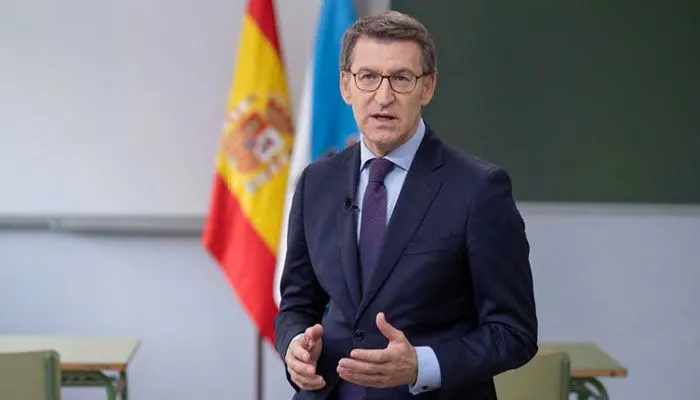

Alberto Núñez Feijóo, the leader of the Spanish Popular Party, has announced that Morocco will be the destination of his first foreign visit should he ascend to the presidency of the Spanish government. In a recent interview with the newspaper "OKDIARIO," Feijóo expressed his desire to cultivate a "smooth and respectful" relationship with Rabat, while simultaneously delivering sharp criticism of the current Prime Minister Pedro Sánchez. He accused Sánchez of behaving more like a subordinate to Morocco than as the head of the Spanish government.
These statements come amidst a political controversy following a recent migration crisis in Ceuta and the evolving relations between Madrid and Rabat. Feijóo emphasized the necessity of maintaining good relations with Morocco for Spain, but insisted that this should be founded on mutual respect. When asked about which country he would visit first if he were to become Prime Minister, Feijóo unequivocally stated that Morocco should be his first stop, highlighting that he plans to visit Rabat. This aligns with an unwritten diplomatic tradition followed by former Spanish Prime Ministers, including Felipe González, José María Aznar, José Luis Rodríguez Zapatero, and Mariano Rajoy, all of whom prioritized Morocco as their initial foreign destination. In contrast, Sánchez chose Paris for his first trip abroad after taking office in 2018.
However, Feijóo's announcement was coupled with a scathing political attack on Sánchez, stating that he would not emulate what he perceived as Sánchez's "disregard for Morocco" during the early days of his administration. He further asserted that Sánchez now acts as a subordinate to Morocco rather than as the leader of the Spanish government, a statement that underscores the heightened rhetoric Feijóo has introduced into the Spanish internal debate regarding the nature of Sánchez's government relations with Rabat in recent years.
Additionally, Feijóo expressed his "absolute interest" in fostering good relations with Morocco, insisting that he requires respect for Spain from Rabat, just as he commits to respecting the kingdom in return. He also criticized what he deemed a lack of adequate explanations that Spain "deserves" regarding the recent migration crisis, suggesting that Sánchez has become incapable of defending Spain's interests in its relations with Morocco.
The leader of the Spanish opposition also addressed the situation in Ceuta, announcing his intention to return to the city. He confirmed that he communicates daily with the local government head, Juan Vivas, and characterized the fallout from the migration crisis there as a significant concern for him, criticizing the Spanish government's assertion that the situation has returned to normal while noting that thousands of individuals remain within the city.
Despite his sharp rhetoric towards Sánchez's management of the relationship with Rabat, Feijóo was careful to clarify that his plan, should he reach the Palacio de La Moncloa, would not revolve around severing ties with Morocco. Instead, he aims to rebuild the relationship based on what he described as trust, respect, and a firm stance concerning Spanish interests.
His remarks reveal a stark contradiction in the Popular Party's rhetoric, with fierce criticism of Sánchez's Moroccan policy on one hand and an acknowledgment of Morocco's significance as a strategic partner for Spain on the other, to the extent that it could become Feijóo's first foreign destination if he becomes Prime Minister. This highlights that the relationship with Rabat is poised to become one of the central political battlegrounds between the Popular Party and the Socialists, particularly in light of the ongoing repercussions of the Ceuta crisis and the increasing internal debate regarding how Madrid should manage its relations with its southern neighbor.
As reported by assahifa.com.