
Understanding the Cyber Warfare Against Morocco
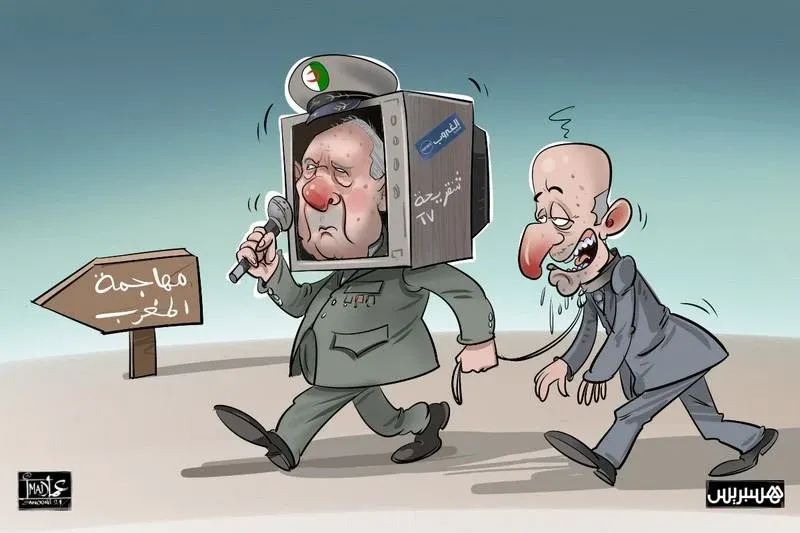
Since the onset of the migration crisis at the occupied enclave of Ceuta on July 30, 2026, the Algerian media machinery has promptly engaged in a concerted campaign against the Kingdom of Morocco. This initiative has mobilized various platforms and digital accounts to portray the situation under a narrative that transcends mere news coverage of a border crisis. The objective appears to extend beyond simply reporting on the developments surrounding migration; it seeks to tarnish Morocco's image, undermine the stability of its institutions, and leverage the event to influence its internal situation.
A thorough analysis of the recent Algerian digital and media maneuvers reveals a strategy that exploits the immigration issue within the ongoing narrative warfare between the two countries. Images and videos associated with migrants and minors are being utilized and framed within a broader political context aimed at depicting Morocco as a nation in turmoil. This manipulation transforms a complex social and security issue into an instrument for media and political pressure.
At the core of this digital tempest stand the accounts of Ahmed Hafsi and the "Algeria Portal" as exemplars of the rhetoric circulating during this crisis. Their activities are clearly not isolated from the overarching campaign context. While the "Algeria Portal" disseminates visual materials and articles that leverage images of migrants and minors to construct a negative narrative about Morocco, Hafsi's account promotes a more aggressive and mobilizing discourse. This indicates a convergence of roles between platforms that present the material in a journalistic format and those that propel it into more inflammatory and polarizing territories.
Shifting Narratives and Regional Implications
The most alarming revelation from the recent Ceuta crisis is the shift in Algerian media rhetoric from merely focusing on Morocco's image abroad to attempting direct influence within Morocco itself. Various accounts and platforms have sought to harness the emotional charge accompanying migration scenes, transforming them into material for public condemnation of the Moroccan state and its institutions, employing harsh descriptors like "repression" and "failure." This indicates a clear attempt to shift the discourse from a localized border event to a comprehensive narrative about the Moroccan situation.
During the crisis, certain platforms went beyond commentary and reposting clips; they actively promoted calls for protests and circulated dates for mobilization, including August 9. This coincided with hashtags urging "uprising" and pushing for the transformation of the public anger surrounding migration into a political act within Morocco. Such behavior illustrates that the engagement with this issue was not limited to sympathy for migrants or criticism of crisis management; in some instances, it veered towards an attempt to exploit it to stir public unrest in Morocco.
Moreover, indicators suggest that this activity did not begin solely on July 30; analyses based on open-source intelligence reveal a transnational digital environment that had been active prior to the crisis, sharing information about routes, timings, and gathering points related to attempted border breaches. Some groups even featured phone numbers with the Algerian country code, which merits technical scrutiny as it may help map the networks involved in disseminating and amplifying information. However, establishing direct ties to official entities requires more than just the presence of Algerian numbers or accounts operating from outside Morocco.
To fully grasp this rhetoric, it is essential to examine how comparative narratives are constructed in Algerian platforms. Algeria is often portrayed as a stable country closely connected to its citizens, while Morocco is depicted as a fragile state experiencing internal tension. This dichotomy serves political narratives more than it explains the migration crisis, revealing that the event is being exploited to fuel a preconceived mental image of the western neighbor rather than addressing it in its immediate social, security, and political contexts.
These campaigns seldom miss an opportunity to reintroduce the Moroccan Sahara issue into the discussion. Some platforms attempt to connect Ceuta and Melilla with the Sahara, presenting these issues within a unified narrative that accuses Morocco of expansionism. Such associations recycle Algeria's support for the Polisario Front’s positions and strive to place the Sahara issue at the center of any international coverage related to Morocco, even when the event is objectively unrelated to the conflict, thereby transforming a border crisis into an opportunity to recycle long-standing political rhetoric.
On a regional level, the Algerian campaign has focused on Moroccan-Spanish relations, promoting the idea that Morocco is using migration as leverage against Madrid or to punish it for its rapprochement with Algeria. Voices from the Spanish right criticizing Rabat were amplified, while the details regarding security cooperation and coordination between the two countries in managing migration received less attention. This selective narrative presents Morocco as an unreliable partner, attempting to undermine the trust built in recent years between Rabat and Madrid.
The events surrounding the Ceuta crisis transcend a mere transient migration issue; they unveil a narrative war where media platforms, digital accounts, hashtags, and video clips are employed to reshape events and direct their significance. The cases of Ahmed Hafsi and the "Algeria Portal" exemplify how media coverage intertwines with digital mobilization. Nevertheless, the complete picture remains dependent on technical monitoring capabilities to identify dissemination networks, republishing paths, and the potential existence of actual coordination among the accounts involved.
However, confronting this type of campaign does not necessitate replicating its language or responding in kind; rather, it requires documenting publications, identifying their sources, dates, and dissemination paths, and subsequently presenting the facts to the public in their correct context. The cohesion of Morocco’s internal front, the strength of state institutions, and the vigilance of its agencies are crucial elements in countering attempts at deception and influence. In this regard, accurate and well-documented information is far more effective than media noise in dismantling any campaign targeting Morocco's image or internal security.
As reported by hespress.com.