
President Tebboune Highlights Challenges Facing the Nigeria-Morocco Gas Pipeline
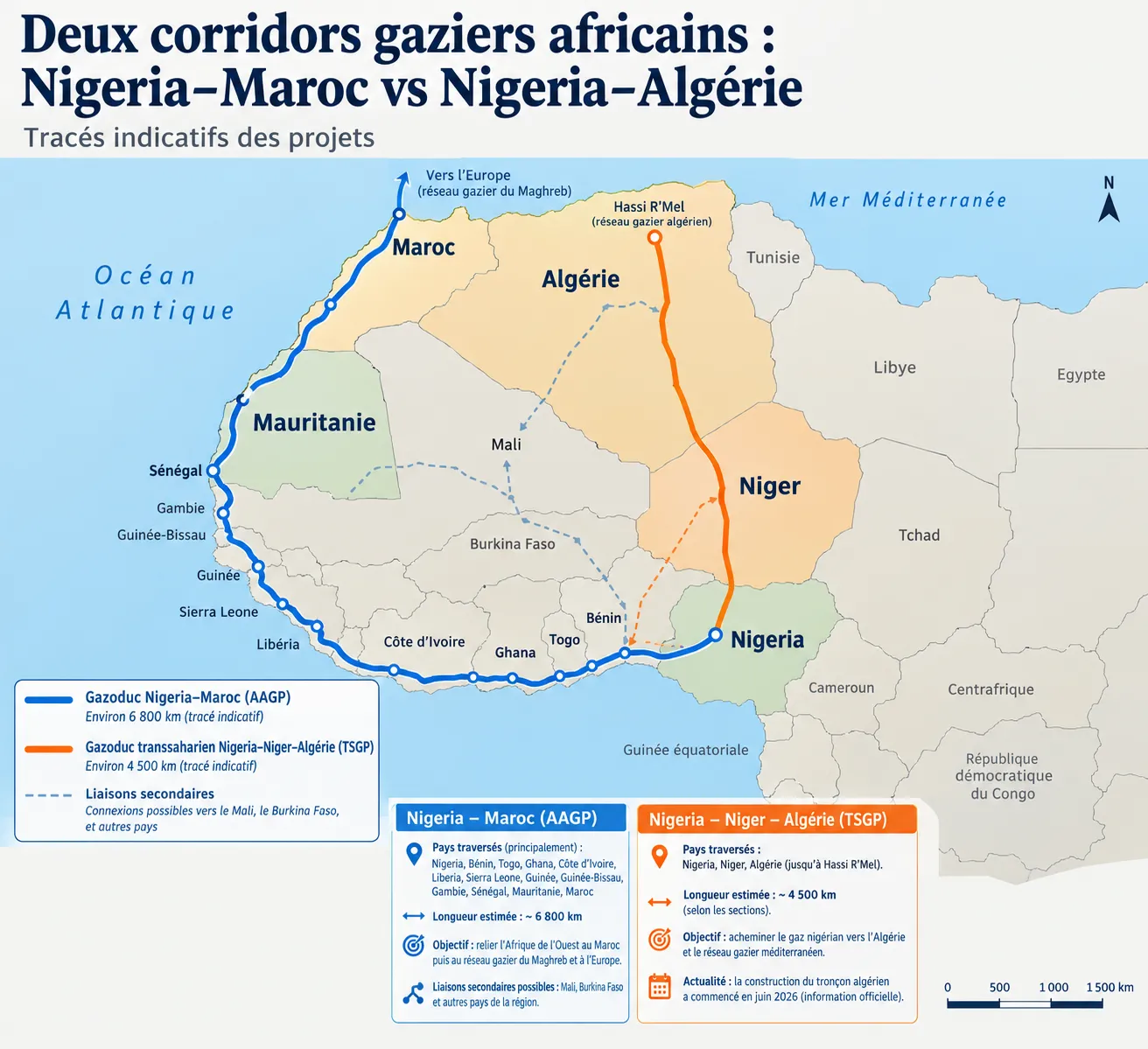
On October 4, Algerian President Abdelmadjid Tebboune made remarks regarding the Nigeria-Morocco gas pipeline project, which is currently under consideration. While he did not explicitly mention the pipeline, his comments were clearly directed at it, emphasizing the various challenges associated with its route that crosses multiple African countries. During a regular meeting with the Algerian press, Tebboune highlighted the logistical difficulties that any alternative project to the Trans-Saharan pipeline would face, referring to what he described as 'logical obstacles' that could hinder their implementation. He pointed out the length and complexity of the proposed West African project, which is expected to traverse fourteen nations, each of which may seek a share of the gas under transit rights.
However, it is important to note that available data indicates the Nigeria-Morocco pipeline will actually pass through thirteen countries, starting from Nigeria and stretching to Morocco, including transit through Benin, Togo, Ghana, Côte d'Ivoire, Liberia, Sierra Leone, Guinea, Guinea-Bissau, Gambia, Senegal, and Mauritania. This ambitious project aims to follow the Atlantic coast of Africa, gradually linking Nigeria to Morocco while also creating opportunities for connections to European markets. The initiative is being championed by both Nigeria and Morocco and has garnered interest from various international institutions and partners.
Trans-Saharan Pipeline: Algeria's Strategic Energy Initiative
In contrast, the Trans-Saharan pipeline proposed by Algeria presents a more direct route that connects Nigeria, Niger, and Algeria. As Algeria seeks to expedite this project, its role as a key gas supplier to Europe remains critical. Furthermore, Algeria is advancing initiatives such as the SoutH2 Corridor, which aims to transport green hydrogen produced in Algeria to Europe through Tunisia, Italy, and Austria, eventually reaching Germany. On October 1, energy ministers from five countries signed a ministerial declaration in Algiers aimed at enhancing cooperation on this energy corridor.
For Algeria, both the Trans-Saharan pipeline and the SoutH2 Corridor are vital components of a broader strategy to solidify its position as an energy hub between Africa and Europe. By combining traditional gas exports with emerging sectors related to renewable energy and hydrogen, Algeria aims to strengthen its influence and economic stability in the energy landscape.
As reported by leconomistemaghrebin.com.