
Algeria's Diplomatic Play in the UN Security Council
In a significant development on the international diplomatic stage, Libya has officially declared its intention to seek a non-permanent seat on the United Nations Security Council for the 2028-2029 term. This announcement was made during the 81st session of the UN General Assembly in New York, where Tripoli has ambitiously launched its campaign to secure one of the coveted fifteen seats on the Council. However, it is worth noting that Morocco has harbored similar aspirations, having garnered pan-Arab support for its own candidacy during the 34th Arab League summit in Baghdad back in May 2025. At that summit, the Moroccan government received a significant endorsement from the Arab organization for its bid to join the UN's executive body, indicating a growing regional consensus around Morocco's role in international governance.
At the time of Morocco's candidacy announcement, Libya, represented by Mohamed Al Menfi, the President of the Libyan Presidential Council, did not voice any opposition to Morocco's aspirations, as reflected in the commitments made during the Baghdad Declaration. This declaration urged all member states of the Arab League to "employ all diplomatic means" in support of Morocco. This backdrop raises critical questions about Libya's sudden shift in stance, suggesting a potential influence from Algeria, which has historically maintained a complex and often adversarial relationship with Morocco.
Influence of Algeria on Libyan Politics
The recent shift in Libya’s diplomatic posture has sparked speculation about Algeria’s role in this strategic maneuver. In February 2026, Algeria had previously encouraged the internationally recognized Libyan government to put forth its candidacy for the African Union's Peace and Security Council (PSC) for the 2026-2028 term, during a period when Morocco was also vying for representation on behalf of North Africa. This pattern of diplomatic interference highlights Algeria's ongoing efforts to bolster its influence in the region, particularly in relation to Morocco's ambitions.
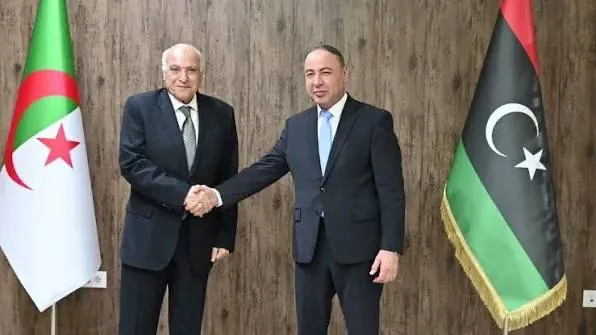
Furthermore, Algeria's earlier initiative to support the Polisario Front in competing for a seat on the PSC was temporarily shelved, indicating a strategic recalibration in its foreign policy. Recent meetings between Algerian Foreign Minister Ahmed Attaf and his Libyan counterpart, Taher Al Baour, in New York, as well as previous discussions in Jordan and Djeddah, illustrate Algeria's continued engagement with Libya as it seeks to counter Morocco's diplomatic efforts.
Despite Algeria's attempts to leverage Libya against Morocco, the latter successfully secured a seat on the PSC for the 2026-2028 term with a commanding 34 votes out of 48 during the ordinary session of the AU Executive Council held on February 11. Tensions between Morocco and Libya have been palpable, with incidents such as the public protest by the Libyan government against a consultative meeting held in Morocco between the Libyan House of Representatives and the High State Council in December 2024, further complicating their bilateral relations.
In light of these developments, it remains to be seen how the dynamics between Algeria, Libya, and Morocco will evolve, especially as the UN Security Council race heats up. The implications of Algeria's strategic maneuvers could have far-reaching consequences for regional stability and international diplomatic relations in North Africa.
As reported by yabiladi.com.