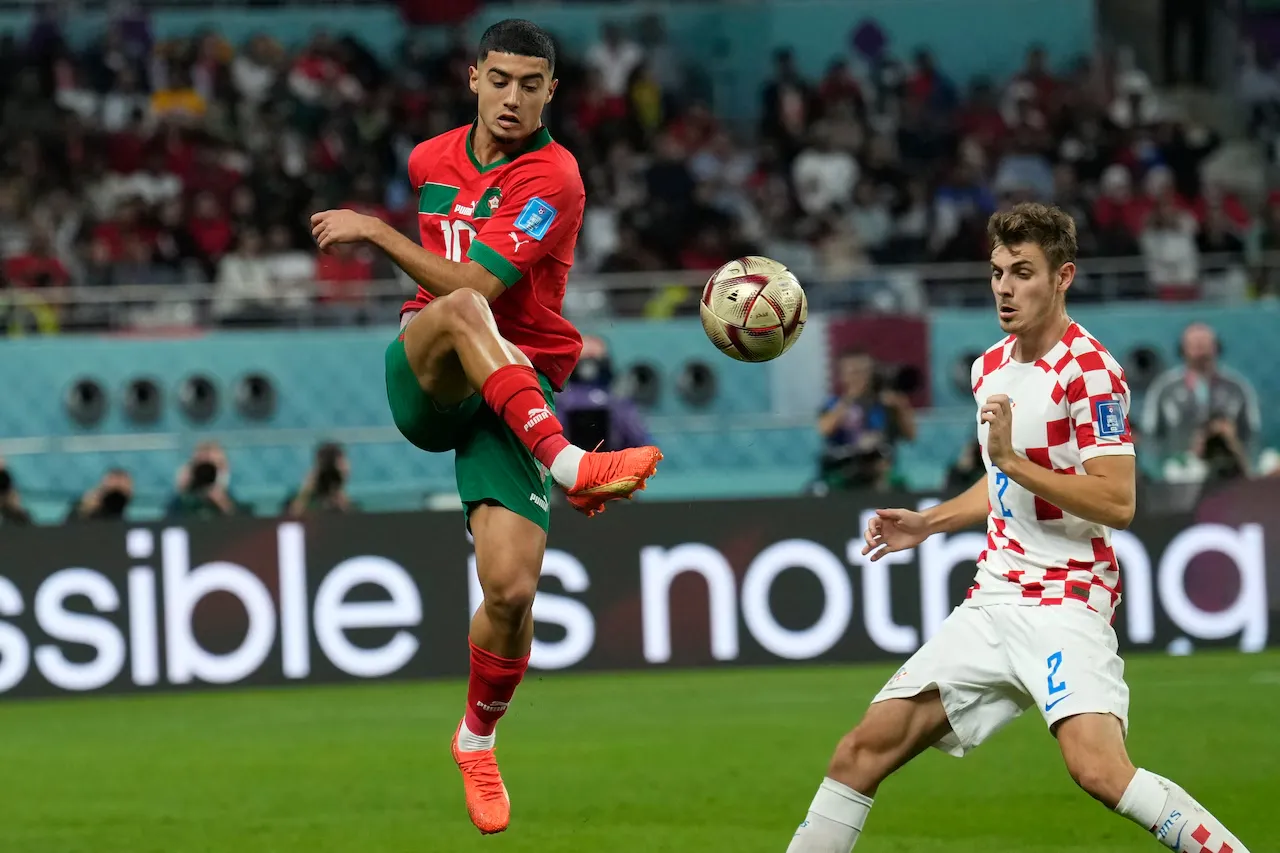
Allan Okello's recent transfer from Young Africans to the Moroccan football giants AS FAR Rabat could yield significant financial benefits for various clubs involved in his development, including Vipers and KCCA. Okello, a key player for the Uganda Cranes, finalized a three-year deal with AS FAR just a week ago, following a brief seven-month tenure with the Tanzanian champions. While initial reports suggested that the transfer fee could range between $1.2 million (approximately Shs 4.48 billion) and $1.5 million (around Shs 5.60 billion), more accurate information from Daily Monitor indicates that the actual amount paid by AS FAR to Young Africans was $500,000 (Shs 1.87 billion).
This transfer fee is distinct from Okello’s personal contract, which is estimated at around $800,000 (Shs 2.98 billion) for his three-year deal. Understanding this distinction is essential, especially regarding how it impacts potential payments to Okello's former clubs. It is common for contractual sell-on clauses and FIFA solidarity payments to be connected to the transfer fee between clubs rather than the player’s salary package.
Vipers, who sold Okello to Young Africans in January for a reported $300,000 (Shs 1.12 billion), have retained a 10 percent sell-on clause that could provide them with further financial gain from this latest transfer. However, the interpretation of this clause raises questions. If it is based on the total transfer fee of $500,000, Vipers could receive approximately $50,000 (Shs 186.6 million). Conversely, if it is based only on the profit made by Young Africans from Okello’s sale, a calculation using the initial $300,000 fee would yield a gain of about $200,000 (Shs 746.2 million), resulting in a potential payout of approximately $20,000 (Shs 74.6 million) for Vipers.
What is evident is that Vipers' inclusion of a sell-on clause means they stand to benefit financially from Okello's career progression shortly after his departure from Uganda. Additionally, this transfer has implications for FIFA's solidarity payments. Given that Okello joined KCCA’s youth system as a teenager and subsequently made his senior debut in 2017, KCCA is likely to be one of the primary beneficiaries of these solidarity funds, reflecting their investment in his early training and development.
FIFA's solidarity mechanism allows clubs that contributed to a player's training to receive a portion of the transfer fee paid in subsequent deals. The Electronic Player Passport system, which tracks a player's registration history from the age of 12, plays a crucial role in determining which clubs are eligible for these funds. For a transfer fee of $500,000, the solidarity allocation could be set at five percent, amounting to a maximum of $25,000 (Shs 93.3 million). This amount would then be distributed among the clubs that trained Okello during his formative years. KCCA is poised to benefit significantly due to Okello's long-standing association with their youth and senior teams, while Paradou AC, where he was registered during his time in Algeria, may also receive a share.
In conclusion, Okello's transfer not only underscores his rising profile within African football but also illustrates the ongoing financial rewards that can accrue to clubs that invest in player development. For Ugandan clubs that effectively scout, nurture, and register talent, the potential for continued financial returns exists long after a player has left their ranks. This case serves as a potent reminder of the lasting value of youth development in football.
As reported by monitor.co.ug.