
Meeting Global Water and Energy Needs
The increasing global demand for clean drinking water and electricity is driving energy operators to rethink their industrial priorities, particularly in regions facing persistent water scarcity. In this context, the Emirati group AMEA Power has embarked on a strategic shift by participating in the second phase of the Agadir desalination complex, a significant initiative aimed at closely integrating water production with renewable energy supply.
In an institutional analysis obtained by barlamane.com.
Hussain Al Nowais announced that this operation marks "a first foray into the desalination sector in North Africa," noting that "the global demand for clean energy and reliable water supply continues to grow," which underscores the importance of hybrid infrastructures in planning policies. He further emphasized that "projects that simultaneously integrate water production and energy generation are becoming essential to address closely linked resource constraints."
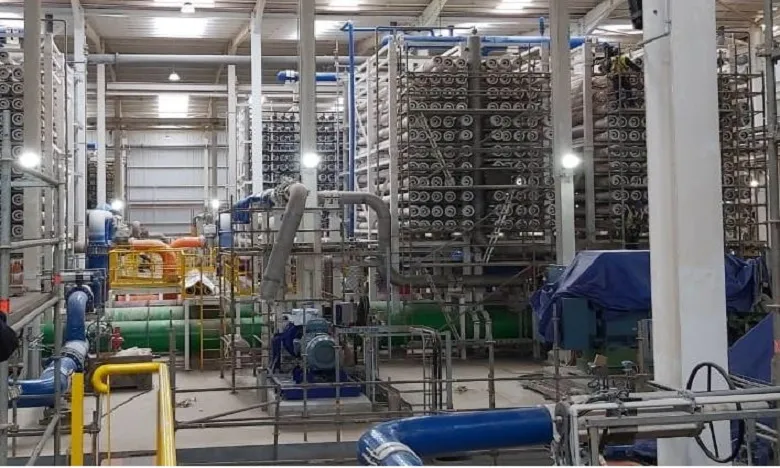
The expansion of the Agadir complex, already in its first phase operated by the Spanish company Cox, is expected to enable a significant increase in capacity. According to provided details, "the total production will reach 400,000 cubic meters of water per day," positioning the facility among the largest desalination units on the African continent. Such capacity is critical in a regional environment characterized by dwindling water resources and irregular rainfall.
Al Nowais highlighted that this capacity increase comes at a time when "water supply security is becoming a major issue in areas facing increasing aridity." The Agadir infrastructure is set to play a pivotal role in supplying populations and agricultural activities while contributing to the stabilization of local water balances.
The second phase of the project also introduces a renewed partnership configuration. Hussain Al Nowais clarified that "this stage is based on a joint venture between Cox and AMEA Power," stemming from an agreement concluded in May 2025, which "prepares the ground for future joint developments integrating water and energy." He added that "the Agadir expansion represents the first realization of this commitment and establishes an operational framework for subsequent achievements."
Innovative Water-Energy Integration
The architecture of the project relies on a close articulation between water infrastructures and energy capacities, addressing the need to reduce the environmental footprint of desalination, traditionally energy-intensive. Hussain Al Nowais emphasized that "utilizing energy from renewable sources significantly reduces the carbon footprint of the facility while maintaining high performance levels."
The system indeed plans to power the plant with a 150 megawatt wind farm located in Laâyoune, also developed by AMEA Power. This configuration ensures energy continuity compatible with water production requirements, while minimizing reliance on fossil fuels. The leader specified that "the integration of wind energy into the plant's operation is a direct response to the high energy consumption associated with desalination."
This approach represents an evolution in industrial models, where infrastructures are no longer designed in isolation but rather in a complementary functional logic. Hussain Al Nowais noted that "energy and water systems can be designed to operate together rather than separately," paving the way for more technically and environmentally efficient configurations.
Financially, the scale of investment reflects the strategic significance of the project. Preliminary estimates suggest that "the combined cost of the second phase of desalination and the associated wind farm exceeds 250 million euros." This level of commitment illustrates the group's intent to sustainably embed its operations within the Kingdom's energy and water landscape.
The implementation timeline anticipates a gradual commissioning of the various components. According to the provided indications, "the extension of the desalination plant is expected to become operational by the end of 2026," while "the wind farm is projected to be operational by 2027." This staggered planning facilitates a gradual integration of renewable energy flows into the overall operation of the facility.
The project is also being deployed under the Water Alliance Ventures platform, reflecting a specific structuring of water-related activities within the group. Hussain Al Nowais noted that "this organization demonstrates a commitment to expanding the company's competencies beyond just the energy sector," by fully incorporating water-related issues into its operational scope.
AMEA Power's involvement in the Agadir project underscores a growing recognition of the inseparable nature of water and energy challenges. Hussain Al Nowais stressed that "desalination offers a reliable source of fresh water but requires significant energy input," adding that "the association with renewable energies represents a sustainable response to these two constraints." This integrated approach allows for the reconciliation of water security and environmental requirements in a context marked by the intensifying effects of climate change.
Morocco appears to be a prime location for the group’s activities. Hussain Al Nowais pointed out that "the Kingdom is emerging as a key market in AMEA Power's long-term strategy," due to its commitment to renewable energies and the clarity of its resource management policies. He noted that "several clean energy projects are already under development in the country," and that integrating desalination into this framework expands the group's operational scope. This enhanced presence aligns with national ambitions regarding energy transition and the securing of water supply.
The leader also emphasized Morocco's position on the African continent, stating that "the Kingdom is one of the most advanced countries in adopting renewable energies," particularly thanks to sustained investments in solar and wind sectors. He added that "the integration of desalination into this strategy addresses an increasingly pressing water issue exacerbated by climate change and population growth." For AMEA Power, the Agadir venture marks a decisive step in broadening its operational footprint. Hussain Al Nowais remarked that "this project signifies a natural progression in the group's growth strategy," enabling it to "leverage the expertise gained in renewable energies to penetrate the water sector."
The Dubai-based group is also pursuing its international expansion, with data indicating its presence in around twenty countries, boasting a project portfolio exceeding 6 gigawatts, including more than 2,600 megawatts already in operation or under construction. Hussain Al Nowais highlighted that "the company continues to diversify its investments across various technologies, including wind, solar, battery storage, desalination, and green hydrogen."
In this perspective, the expansion of the Agadir complex stands as an emblematic achievement, illustrating the progressive convergence between energy and water infrastructures. The leader believes that "this type of project can serve as a model for future sustainable infrastructure development," particularly in regions facing similar constraints. He finally asserts that "the combination of renewable energy and essential services like water production can yield both environmental and economic benefits," paving the way for more resilient industrial configurations. For Morocco, this operation contributes to securing water supply while facilitating the transformation of the energy mix, while for AMEA Power, it solidifies a shift towards a multi-sectoral positioning of high strategic value.