
Significant Progress in Drilling Operations
On April 23, Critical Mineral Resources Plc (CMR) released a detailed communication regarding the advancements of its Agadir Melloul project in Morocco, showcasing a consistent progression of drilling operations and a favorable accumulation of geological indicators suggesting the emergence of a large-scale deposit. The company stated, "Drilling operations continue to deliver highly encouraging progress, supporting the medium-term exploration target of 25 million tons." Furthermore, it emphasized that the ongoing program is progressing as anticipated in terms of footage, as well as continuous intersections of observable copper mineralizations in both sulfide and oxide forms, across expected widths. CMR also indicated that the current drilling trajectory allows for the publication of positive results by the end of April or shortly thereafter, revealing that a batch of core samples was sent to the laboratory on April 9, with an estimated analysis turnaround of two to three weeks, plus an additional day for final data processing.
The consistency observed between collected data and the selected geological model is highlighted by the company, which stated, "Visible mineralization remains consistent with geological assumptions, with a very satisfactory continuity of copper observed across several drill holes and areas," serving as a particularly encouraging indicator as the project approaches its first resource estimation milestone. This convergence of technical elements coincides with a ramp-up of operational capacity, with the company noting that "the current drilling rate reaches approximately 1,200 meters per month, supporting a steady flow of analytical results in the upcoming months."
Operational Advancements and Technical Parameters of Drilling
Delving into specifics, the company reported robust activity in March, during which "860 meters were drilled over 21 operational days, with ten days lost due to the Eid period." Since the beginning of April, the average daily productivity stands at "approximately 60 meters, placing the company on track to meet its monthly target of 1,200 meters." Observations from the drill cores reveal "remarkable continuity of copper mineralization across multiple drill holes and areas," an indicator that is highly encouraging as the company progresses toward its first resource estimation.
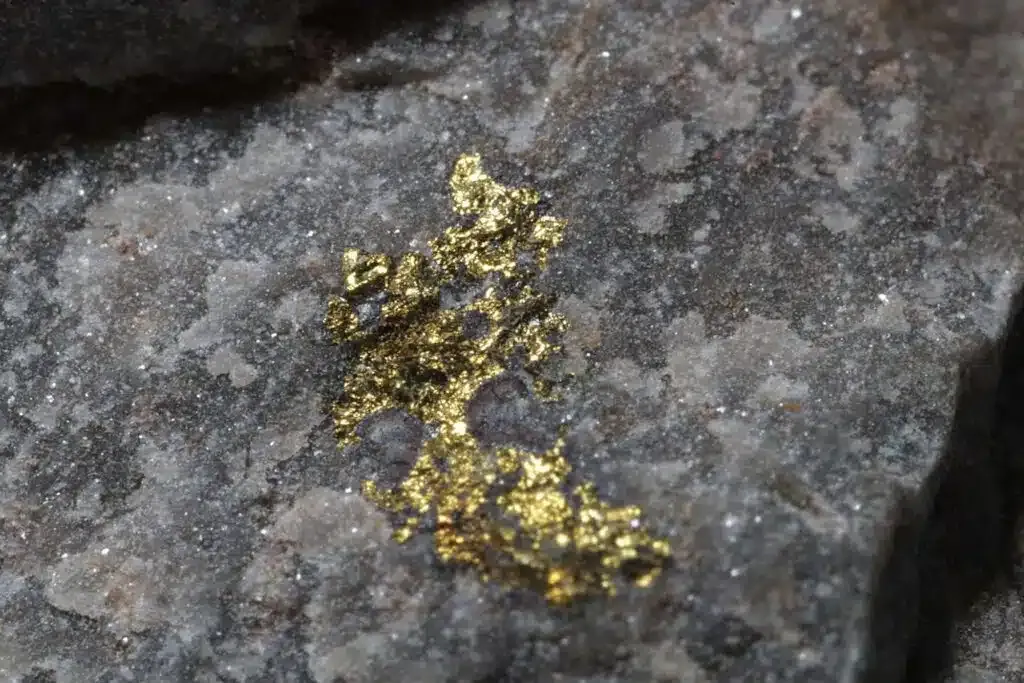
Since the signing of the joint venture in mid-2025, the company has noted that it has "rapidly advanced the project," initiating drilling in September 2025, followed by the introduction of a second drill rig in December of the same year. This acceleration occurred "despite an unusually wet and cold winter temporarily affecting drilling rates." The work conducted in the fourth quarter of 2025 identified "a strongly mineralized igneous extrusion, presumed to be rhyolitic," alongside analytical results indicating "the presence of gold in certain areas," which "enhances the prospect of an expanded potential including deeper targets associated with copper, silver, and gold."
The work completed thus far has established "the existence of a significant sedimentary copper discovery," with the site being presented as "a geological analogue to the Tizert deposit, located about 50 kilometers away and estimated at 130 million tons." The company notes that these formations share "the same geological age, comparable stratigraphy, and a similar style of mineralization," which "supports the conviction that the project could evolve into a large-scale deposit." The drilling results already published reveal notable intersections, including "5.8 meters at 1.12% copper and 19 grams of silver per ton from 2.2 meters," and several others showcasing significant copper grades.
CMR specifies that its success rate, defined as the proportion of intersections exceeding 0.30% copper, stands at "approximately 27%, which is significantly higher than the initial target of 5% to 10%," while acknowledging that "it remains premature to determine if this level can be maintained across the entire project." The targeting of drill holes is based on "geochemical mapping, trenches, and fieldwork," with geophysical campaigns planned in support. To structure the project's development, the company outlines a strategy to "establish a land portfolio covering at least 100 square kilometers of prospective sedimentary rocks," "drill the most promising areas with an aim of 5% to 10% of sufficiently mineralized rocks to be classified as resources according to the JORC code," and "extend the partnership perimeter to maximize district-wide potential." The current perimeter covers "65 square kilometers of prospective sedimentary units within a total of 102 square kilometers of permits." The technical timeline for 2026 includes plans for "metallurgical testing between May and June," "development of the treatment scheme and a preliminary design of the plant by July," "completion of geotechnical studies by July," and several other critical milestones leading up to a first resource estimation compliant with the JORC code in September.
CEO Charles Long states that "the shallow mineralization observed at Agadir Melloul, coupled with very encouraging widths, bolsters confidence in the project's large-scale potential," adding that "increased drilling rates and the regular arrival of analytical results should ensure a steady stream of information to the market in the coming months." He specifies that "the first resource estimation should support an initial mining development scenario, pending ongoing technical and economic studies," while mentioning a "substantial expansion potential due to continued drilling, with the prospect of reaching or exceeding 25 million tons."
As reported by barlamane.com.