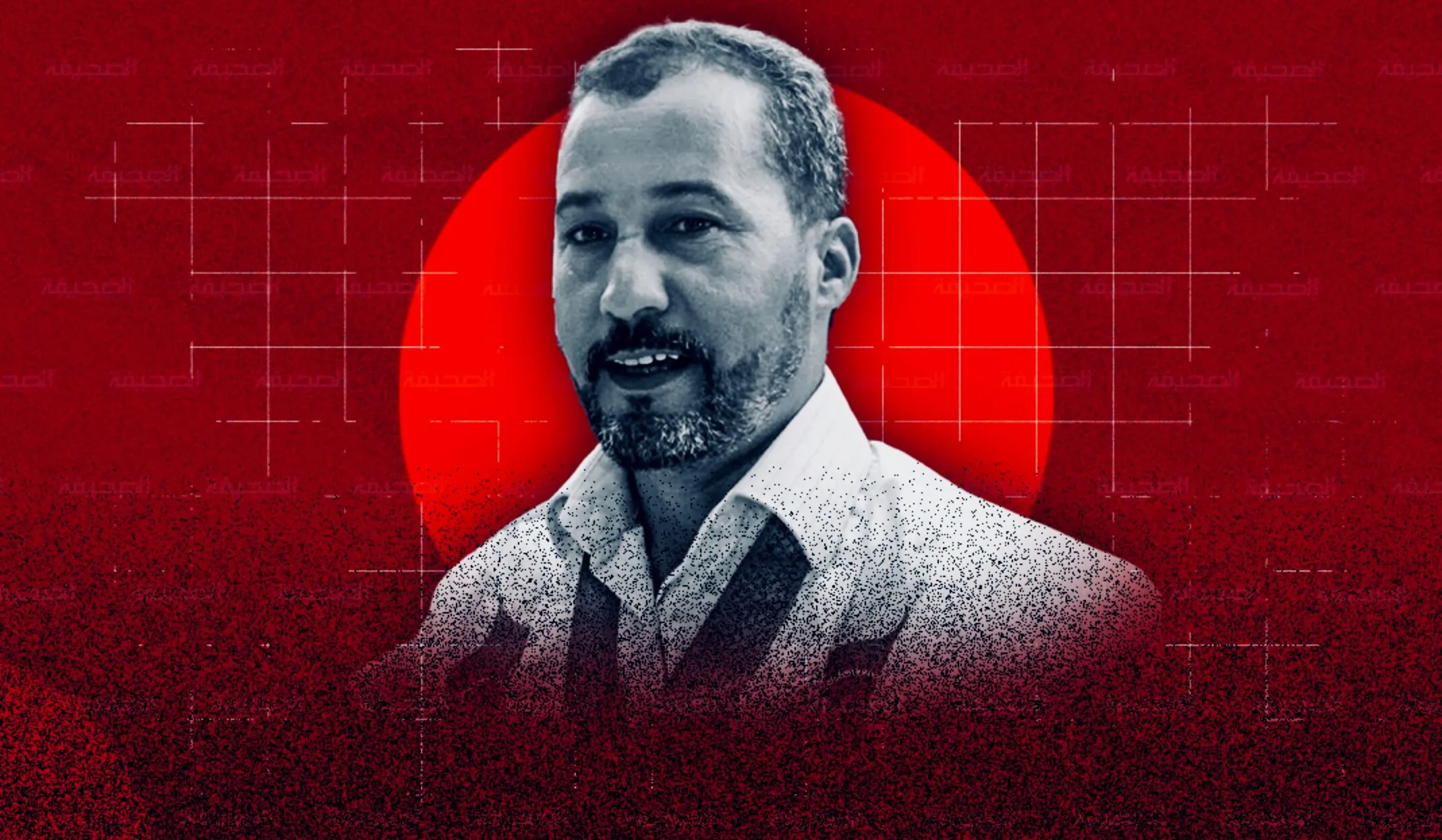

Mustafa Salma Ould Sidi Mouloud, a former leader of the Polisario Front and the previous head of its so-called police apparatus, has sparked renewed discussions regarding the dynamics between Algeria and the Polisario Front. He referenced a prior statement made by Algerian President Abdelmadjid Tebboune, which highlighted the Front's request for arms from Algeria and the latter's refusal to provide them "at this time." This conversation arises amidst recent developments in the region, particularly Algeria's intensified activities in the Sahel, exemplified by its military aid to Niger, which included four helicopters, equipment, ammunition, spare parts, and logistical support. This move was publicly announced by Algerian authorities as part of enhancing defense and security cooperation with Niger.
In a post on his official Facebook page, Ould Sidi Mouloud contextualizes Algeria's position within a broader analysis of its support for the Polisario Front. He argues against reducing the relationship to the considerations surrounding what Algeria terms the "Saharan issue." Having lived within the Front's system before becoming one of its leading critics, he posits that Algeria's support is fundamentally tied to state interests and regional calculations, primarily aimed at keeping Morocco under pressure from an ongoing conflict and exhausting its capacity to expand southward.
According to the former Polisario leader, the evolving situation regarding the Sahara over recent years, coupled with Morocco's expanding presence in Africa, has rendered Algeria's political strategy toward the Front increasingly complex. He suggests that Morocco now operates in Africa not solely through the lens of the Saharan issue, but has also built significant economic, diplomatic, and logistical ties, thereby extending competition with Algeria into new arenas, including the Sahel and West Africa.
Salma interprets this shift as a reason for Algeria's gradual pivot in focus from the Polisario Front to other regional arenas. He contends that supporters of the Front, who express confusion over Algeria's reluctance to fulfill arms requests while providing military assistance to Sahel nations, overlook the reality that countries do not conduct foreign policy solely based on fixed loyalties. Instead, they act according to what they perceive as strategic interests that can be rearranged as regional dynamics change.
This perspective underscores the significance of Algeria's recent actions toward Niger. Rather than serving as a direct indicator of abandoning the Polisario, it reflects the increasing attention Algeria is directing toward the Sahel region. Algeria's announcement of military support to Niger, which includes helicopters, equipment, ammunition, spare parts, and maintenance support, signifies a shift in cooperation between the two countries towards more defense-oriented and security-related aspects.
This development has previously been analyzed by "Assahifa," focusing on questions that extend beyond the nature of the assistance to its regional implications. The military aid from Algeria to Niger occurs within the context of an effort to reposition Algeria within the Sahel following a series of developments that have impacted its traditional influence, including tensions with Mali, political changes in Niger, and the emergence of a Sahel coalition that has restructured power dynamics away from several traditional regional frameworks.
One of the most contentious aspects of Algeria's policy emerges from its historical self-presentation as a regional power that rejects external interventions and adheres to the principle of non-interference in the internal affairs of states. Yet, it finds itself compelled to recalibrate its strategies in response to a new political landscape dictated by coups and military shifts in the Sahel.
In Niger, Algeria's transition from a hardline stance against the coup that ousted President Mohamed Bazoum to engaging with the existing authorities illustrates, in some respects, that geographical and strategic calculations can outweigh political rhetoric when it comes to vital spheres of influence.
The return of the Algerian ambassador to Niamey, following a period of tension and stalemate, serves as a prominent indicator of this shift in approach. Algeria, which previously advocated for a return to constitutional order in Niger, is now cooperating with the current authority, aligning itself with a new regional reality that no longer allows for prolonged disengagement from transformations.
This strategic recalibration is not limited to the political or military realms; it also extends into the energy sector, with renewed interest in Sonatrach's activities in Niger's Kafra oil field, alongside ongoing considerations of cross-border energy projects between the two nations.
Consequently, the characterization of Algerian maneuvers as a shift from "diplomacy of rupture" to "diplomacy of the portfolio" becomes increasingly significant. Algeria has recognized that in the current regional reality, maintaining influence cannot rely solely on political stances, particularly as Sahel countries redefine their foreign relations and diversify their partnerships. Therefore, providing assistance and economic and military cooperation can be understood as tools to regain influence that Algeria has lost over recent years.
This equation gains even more importance when contrasted with Morocco's approach in the region. While Algeria seeks to maintain its position in the Sahel through security, military, and energy tools, Morocco has opted to expand its presence through economic investments, infrastructure development, and logistical connectivity. In this context, the Atlantic initiative launched by King Mohammed VI aims to enable Sahel countries to access the Atlantic Ocean, thereby facilitating connections between these nations' economies and Moroccan ports and infrastructure, paving the way for new trade routes.
As reported by assahifa.com.