
Understanding Morocco's World Cup Journey
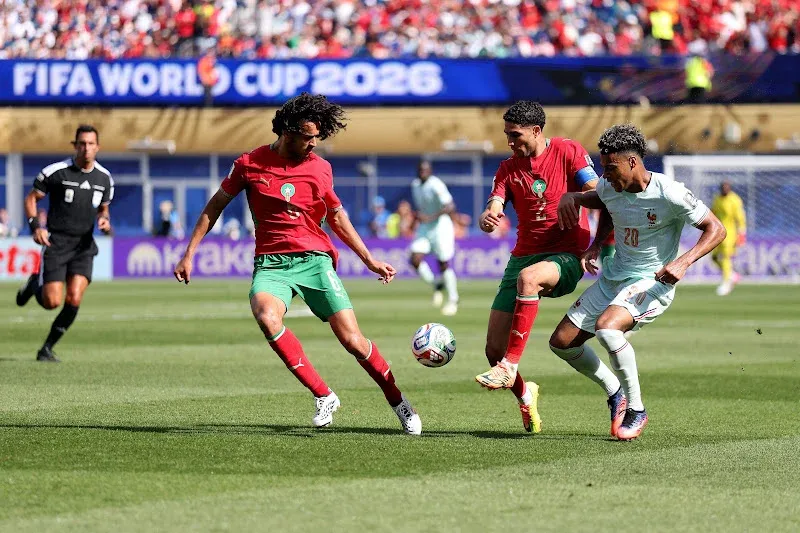
In a significant turn of events during the 2026 World Cup, the Moroccan national team faced elimination in the quarter-finals, succumbing to a 2-0 defeat against France. This match not only highlighted the differences in performance between the two teams but also underscored areas where Morocco, despite their valiant efforts, fell short. Statistics reveal that Morocco was competitive in possession and ball distribution, yet it was the effectiveness of their offensive play that ultimately determined the outcome.
According to statistical analysis from the renowned site "WhoScored," Morocco completed 542 passes compared to France's 501, showcasing a stronger short-pass game with 489 successful short passes against France's 455. Additionally, Morocco managed 40 long passes versus France's 30, and had 13 crosses compared to France's 12. These figures suggest that Morocco was not only capable of ball control but also adept at building plays during the match.
Offensive Inefficiencies and Defensive Resilience
Despite Morocco's impressive ball possession, reflected in a 52% share in the first half and 53% in the second, their inability to convert possession into scoring opportunities was glaring. The team only mustered five shots throughout the match, while France launched 22 attempts. Notably, 15 of France's attempts came from open play, highlighting their ability to penetrate defensive structures effectively. Conversely, Morocco's offensive efforts were primarily limited to set pieces, with only two shots from open play.
Further analysis from "Opta" revealed that France generated an expected goals (xG) value of 1.87 in the first half alone, the highest among all teams in the tournament for a scoreless first period. Morocco’s goalkeeper, Yassine Bounou, played a pivotal role in keeping his team in the game, saving a penalty from Kylian Mbappé and demonstrating remarkable skill throughout the match. However, the balance shifted dramatically in the second half when Mbappé scored in the 60th minute and assisted Ousmane Dembélé for the second goal in the 66th minute, sealing Morocco's fate.
Individual performances were also notable, with Yassine Bounou earning the highest rating for Morocco at 7.5 for his exceptional saves, including a record-equalling four penalty saves in World Cup history. Meanwhile, Mbappé continued to solidify his legacy, scoring his 20th World Cup goal and tying for the tournament lead with eight goals, while Dembélé was awarded the man of the match with a score of 8.5 for his contributions.
Ultimately, the match statistics reveal that while Morocco was competitive in possession and several technical metrics, the stark difference lay in their finishing ability and the conversion of opportunities. The French team’s effective offensive maneuvers translated into goals, while Morocco's struggles to penetrate France's defense and create genuine chances underscored the challenges they faced. This match serves as a critical learning point for the Moroccan squad as they aim to build on their World Cup experience in future competitions.
As reported by hespress.com.