
Insights from the Ground: The Melilla Border Crisis
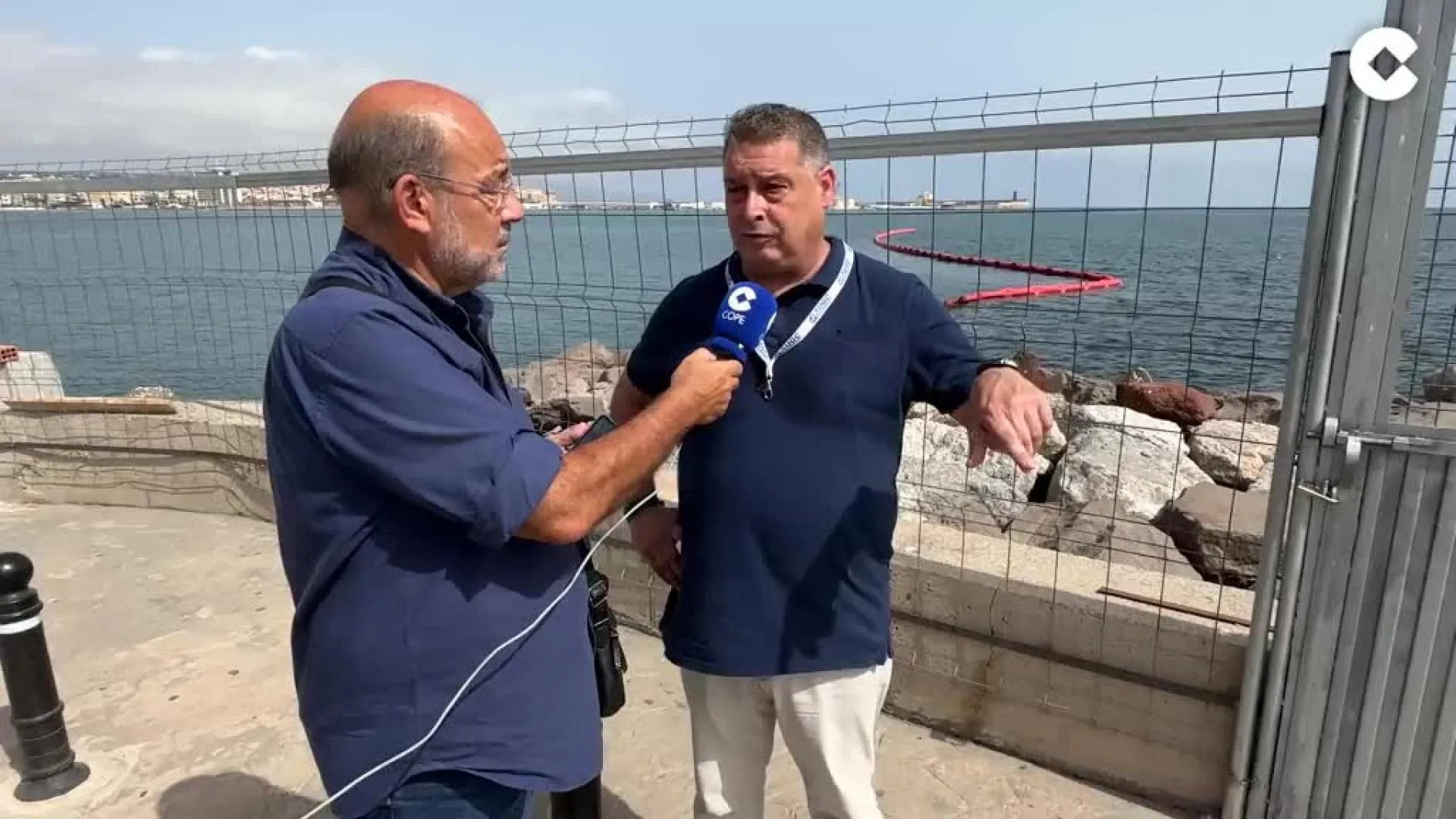
Angel Expósito, the director of the program 'La Linterna', undertook a significant journey along the 12-kilometer border fence that delineates the Spanish autonomous city of Melilla from Morocco. Accompanied by Sergio Juan Márquez Guerrero, the Secretary General of the Unified Association of Civil Guards (AUGC) in Melilla, Expósito's exploration reveals stark socio-economic disparities, showcasing a contrasting per capita income of €45,000 on the Spanish side versus just €4,500 in Morocco. This journey began at the southern dock facing the port of Nador, where the last observation post of the civil guard is located. Here, measures have been put in place, including containment elements and a red buoy as a temporary extension of the breakwater, following a judicial resolution to enhance security and control over the rising migrant crossings.
The Spanish security forces are currently grappling with a significant influx of migrants attempting to breach the border, as hundreds have recently tried to enter Spanish territory through various points including Dique Sur, Barrio Chino, Beni-Enzar, and Farhana. The route progressed to Beni-Enzar, the only operational crossing, before reaching the now-closed Barrio Chino checkpoint, which serves as a grim reminder of the tragedy that claimed the lives of over a hundred Sub-Saharan migrants. According to Márquez Guerrero, the current state of affairs is characterized by a "tense calm" regarding mass land assaults, although there has been a notable shift towards maritime attempts to cross the border.
The Shift Towards Maritime Migration
Márquez Guerrero elaborated on how administrative changes have significantly impacted access routes for migrants. He noted an increase in irregular migration, particularly from Morocco via swimming, since the closure of previous routes and the lack of a Schengen space for Moroccan citizens. Previously, migrants could traverse with just their identity documents due to good neighbor agreements, but with the new visa requirements, many are resorting to perilous sea crossings in search of a better life.
During the inspection of the border line, Expósito and Márquez Guerrero observed facilities such as the CETI and the Center for Minor Offenders, adjacent to the La Purísima center for unaccompanied foreign minors. They noted that the Farjana checkpoint has remained inactive since the pandemic, a reflection of the unique historical and geographic circumstances that necessitated a rectangular retreat in the perimeter fencing to respect the adjacent Muslim cemetery of Sidi Guariach.
The journey concluded at the Northern Dock, near Aguadú, overlooking the Alborán Sea, a common launching point for individuals attempting to swim to the Spanish coast while evading controls. In the final segment of the report, Márquez Guerrero expressed the growing concerns of the officers regarding inadequate resources and the broader implications of migratory events experienced in other regions. He emphasized the urgent need for improved human and material resources, asserting that the civil guards require legal protections for their actions at the border. The current force in Melilla consists of around 750 civil guards, operating at over 90% capacity, a number deemed insufficient by Márquez Guerrero, who advocates for an increase of at least 300 additional personnel to effectively manage the ongoing pressures at the border.
As reported by cope.es.