
Insight into Election Results
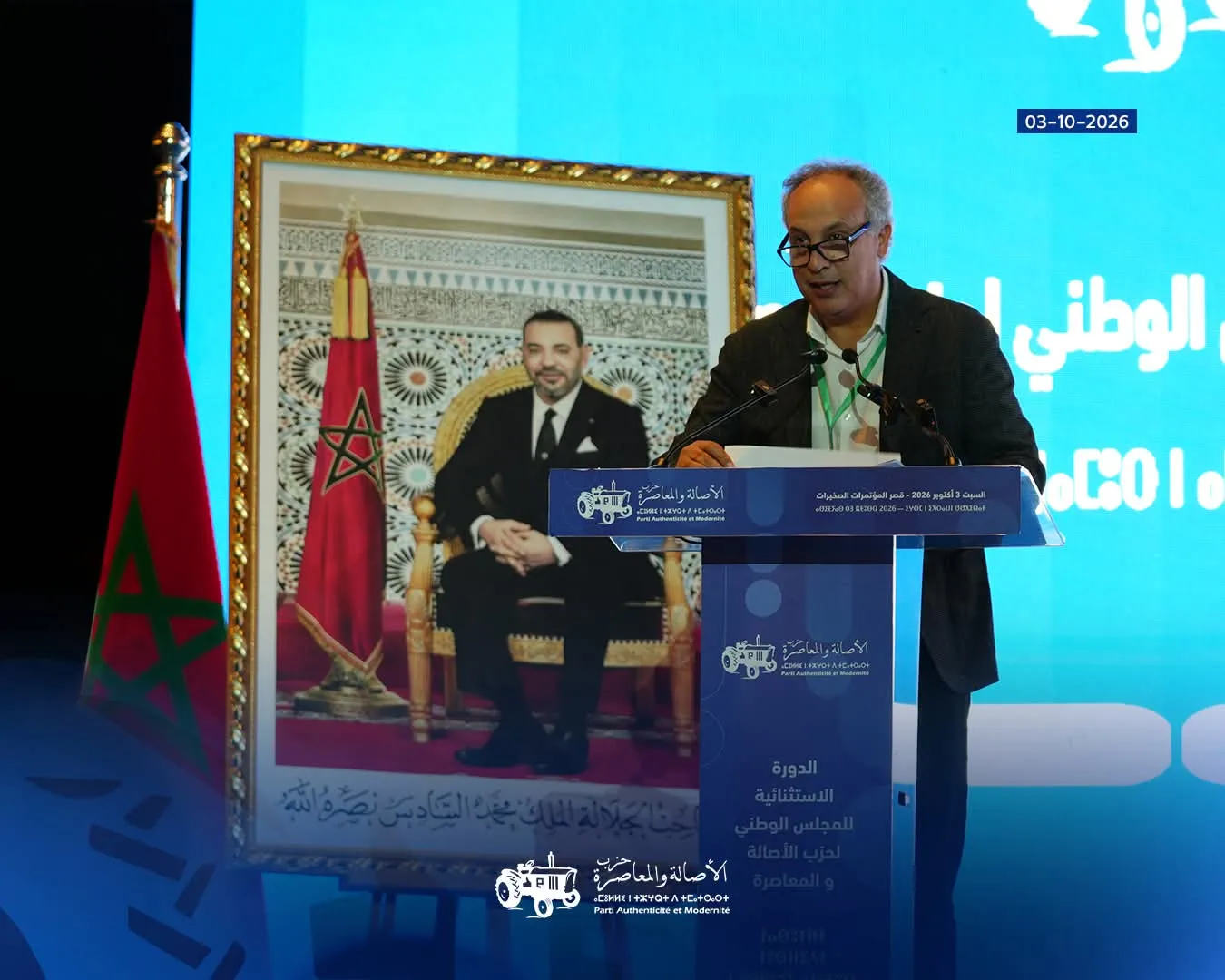
The recent analysis of the election results presented by the Authenticity and Modernity Party (PAM) reveals that their impressive victory, securing 97 seats in the elections held on September 23, is not merely a product of a single voting bloc or region. Instead, it demonstrates a broad geographical distribution of support, with significant electoral strength concentrated in key areas, notably Marrakech-Safi and Casablanca-Settat. According to the presentation made by Samir Kodar, the head of the party's organizational sector, PAM garnered a total of 2,109,152 votes, which were divided between 1,043,781 votes in local constituencies and 1,065,371 votes in regional ones. This result aligns with the preliminary official outcomes declared by the Ministry of Interior, placing PAM first with approximately 24.5% of the total seats in the House of Representatives.
Geographical Distribution and Demographics
Internal data from the party indicates that its influence extended beyond merely winning a large number of seats; it also achieved extensive geographical coverage. The party asserts that it won 85 out of 92 local districts it contested, translating to an impressive success rate of about 92%. Locally, PAM topped the results in 37 districts, showcasing its widespread appeal. When analyzed regionally, the data illustrates that the party successfully obtained a seat in every local constituency across seven regions, including Tangier-Tetouan-Al Hoceima, Fes-Meknes, Marrakech-Safi, the East, Beni Mellal-Khenifra, Guelmim-Oued Noun, and Laayoune-Sakia El Hamra.
However, the distribution of votes reveals significant disparities in electoral weight across different regions. Marrakech-Safi emerged as the party's primary stronghold with 177,986 regional votes and 168,078 local votes, followed by Casablanca-Settat with 163,660 regional votes and 158,563 local votes. Rabat-Sale-Kenitra followed closely with 124,736 regional votes and 123,324 local votes, while Fes-Meknes recorded 110,309 regional votes and 106,717 local votes. These figures highlight that the bulk of the party's electoral base is concentrated in regions with considerable demographic and political significance.
Conversely, PAM's support was notably lower in the less populated southern regions, as evidenced by its tally of only 8,063 regional votes and 9,039 local votes in Laayoune-Sakia El Hamra, and 31,568 regional votes and 32,554 local votes in Dakhla-Oued Ed-Dahab. It's essential to note that the interpretation of seats differs from that of raw votes due to the demographic weight and the number of districts among the regions.
The composition of the parliamentary team also provides noteworthy insights. According to the presentation, 47 of the party’s parliamentarians are entering the House of Representatives for the first time, which accounts for 48.5% of its elected members, indicating that nearly half of the new parliamentary team did not serve in the previous House. Additionally, female representation stands at 20%, with 19 women among the total seats won. Overall, these figures illustrate that the success of the Authenticity and Modernity Party is rooted in two intertwined elements: the ability to gather over two million votes nationwide and a geographically extended electoral presence that enabled it to convert this support into 97 seats. The discrepancies between regions further clarify that the party's numerical strength is primarily concentrated in Marrakech-Safi, Casablanca-Settat, Rabat-Sale-Kenitra, and Fes-Meknes, while the electoral presence in other regions, albeit comprehensive in terms of district coverage, reveals a lesser volume of votes.
As reported by ar.telquel.ma.