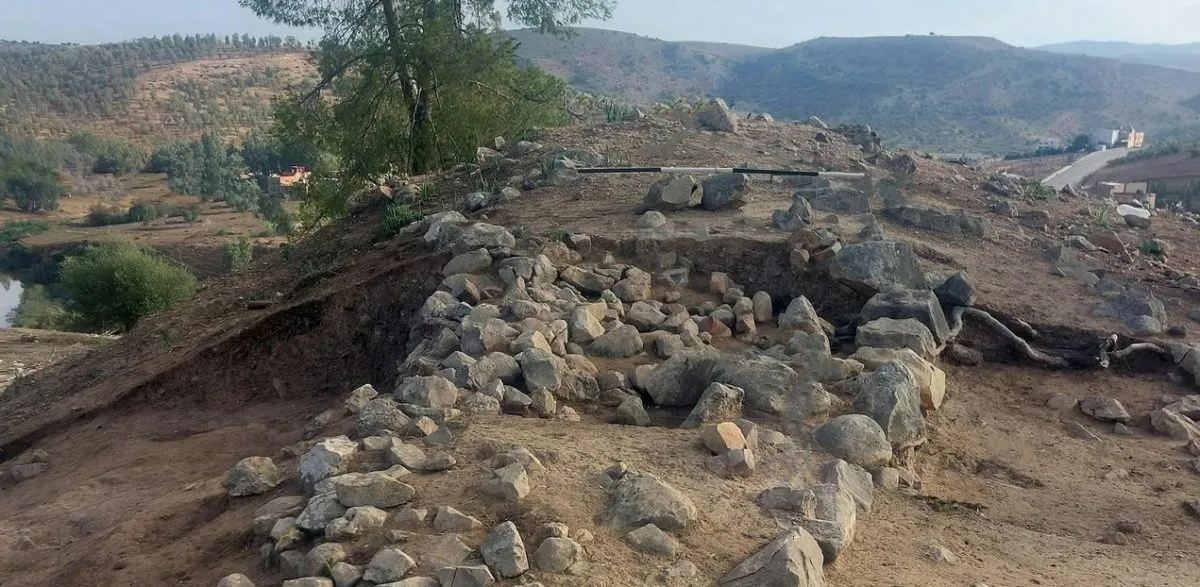

Revelations from the Oued Beht Archaeological Site
Recent archaeological investigations at the Oued Beht site in Morocco have unveiled significant evidence of advanced communities that thrived in northwest Africa thousands of years ago. The excavations have brought to light the earliest known large-scale defensive structure in North Africa, located outside the Nile Valley, which dates back approximately 4,000 to 3,500 years. This remarkable structure comprises a ditch, rampart, and a wall strategically built across a narrow ridge, indicating that these ancient societies had organized labor forces and engaged in meticulous planning to protect or control a critical location. Prior excavations had already established Oued Beht as a significant prehistoric hub for agriculture and craftsmanship, spanning at least 10 hectares, where early communities cultivated crops, raised livestock, and manufactured tools and pottery.
Moreover, the findings suggest that these communities were not isolated; they had connections extending to broader Mediterranean trade networks, including regions such as Iberia. The site witnessed reoccupation centuries later during the medieval era, during which the defensive structures were refurbished, alongside the establishment of a hilltop settlement and a cemetery. This continuity of occupation illustrates that Oued Beht was a vital landscape across various historical periods, offering fresh perspectives on the evolution of societies in the Maghreb region.
As reported by africa.com.