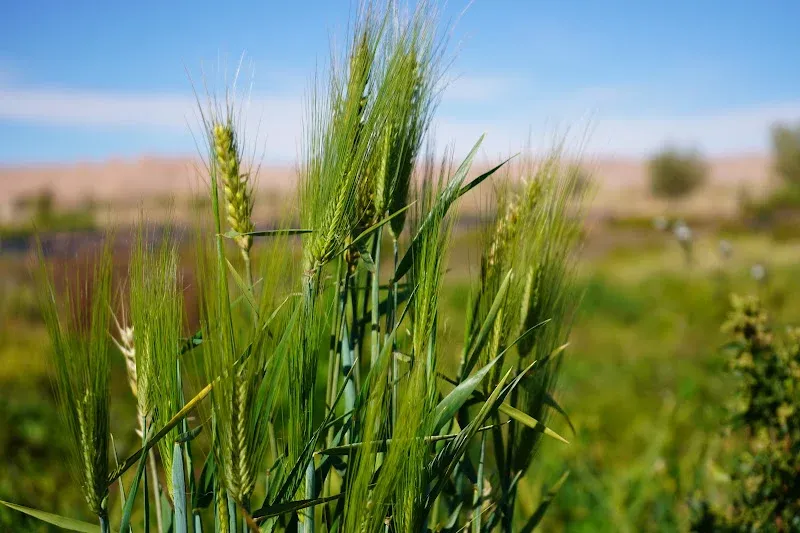
April Showers Indicate a Promising Harvest Season in Morocco
As the harvesting machinery prepares to roll out in various regions, attention has turned towards fields that have taken on a vibrant green hue this April. The recent rains not only bolstered the water levels in dams but also stimulated the growth of spring and rain-fed crops. This sets the stage for a harvest season that is likely to be the most abundant in years. Traditionally, the "April rains" symbolize hope among Moroccan farmers, who are eager to restore agricultural balance and achieve food security after enduring several years of drought.
Despite some regions experiencing flooding, particularly in areas like the Gharb plains and the northwestern region, the current agricultural season has overall benefited from a harmonious distribution of rainfall throughout its onset and maturity phases. This consistent precipitation ensures high-quality grain production, as noted by various agricultural experts.
The Impact of Rainfall on Crop Production
Agricultural engineer Mohamed Benatta highlighted that the current farming season has witnessed significant rainfall, emphasizing that the effectiveness of these showers depends on two main criteria: total quantity and timing of the rainfall. He indicated that excessive rain within a short timeframe, such as between 300 and 350 mm, can adversely affect farming, as seen in some northern regions that suffered from flooding and are still in recovery. Conversely, most areas of the kingdom have experienced what can be described as "very good" rainfall distribution, exceeding the annual average. Early rains at the season's start enabled farmers to plow and sow under ideal conditions.
According to Benatta, the rains in March and April have further complemented this cycle, raising expectations for peak productivity. He noted that the April showers play a critical role in ensuring the fullness of grain heads, significantly enhancing both the weight and quality of the yield. Moreover, these rains have greatly benefited spring crops and rain-fed vegetables, particularly peas and broad beans, which are anticipated to respond positively to the recent precipitation.
In a statement regarding the current harvest outlook, agricultural expert Shahrzad Al-Khous emphasized that the region of Fes-Meknes is experiencing an exceptional farming season. She reported that the "beneficial rains" have positively impacted all crops, particularly autumn grains, thanks to a balanced and timely distribution of rainfall. Data collected until the end of April 2026 indicates a substantial increase in precipitation compared to the previous year, with current averages reaching 688.9 mm, up from just 400 mm during the same period last year. This significant improvement highlights the enhanced water supply available for crops.
Al-Khous also mentioned that the area planted with autumn crops has reached an impressive 97%, reflecting farmers' positive response to favorable climatic conditions. The cultivated land encompasses 640,310 hectares of grains. Field tracking operations in the region indicate a very promising condition for the crops, with 78% rated as very good, 19% as average, and only 3% categorized as acceptable, with no areas reported in poor condition.
As for productivity expectations, the average yield is projected to range between 25 and 60 quintals per hectare, depending on regional conditions and farmers' technical efforts. Al-Khous underscored the significance of March and April's rainfall, known among farmers as "the rain of filling," which coincided with the critical phase of grain head development. In mountainous regions, these rains have also enhanced the biomass of crops still in early growth stages.
Looking forward, the previous season yielded approximately 1.5 million tons, while current projections suggest the possibility of reaching around 3 million tons this year—a substantial increase attributed to favorable weather and cooperative efforts. She concluded by urging farmers to remain vigilant and monitor their crops for fungal diseases, especially given the increased humidity from alternating cold and sunny periods, while reaffirming the commitment of the National Office for Agricultural Council to ensure crop protection against any threats that may compromise final quality as the season approaches its end.
As reported by hespress.com.