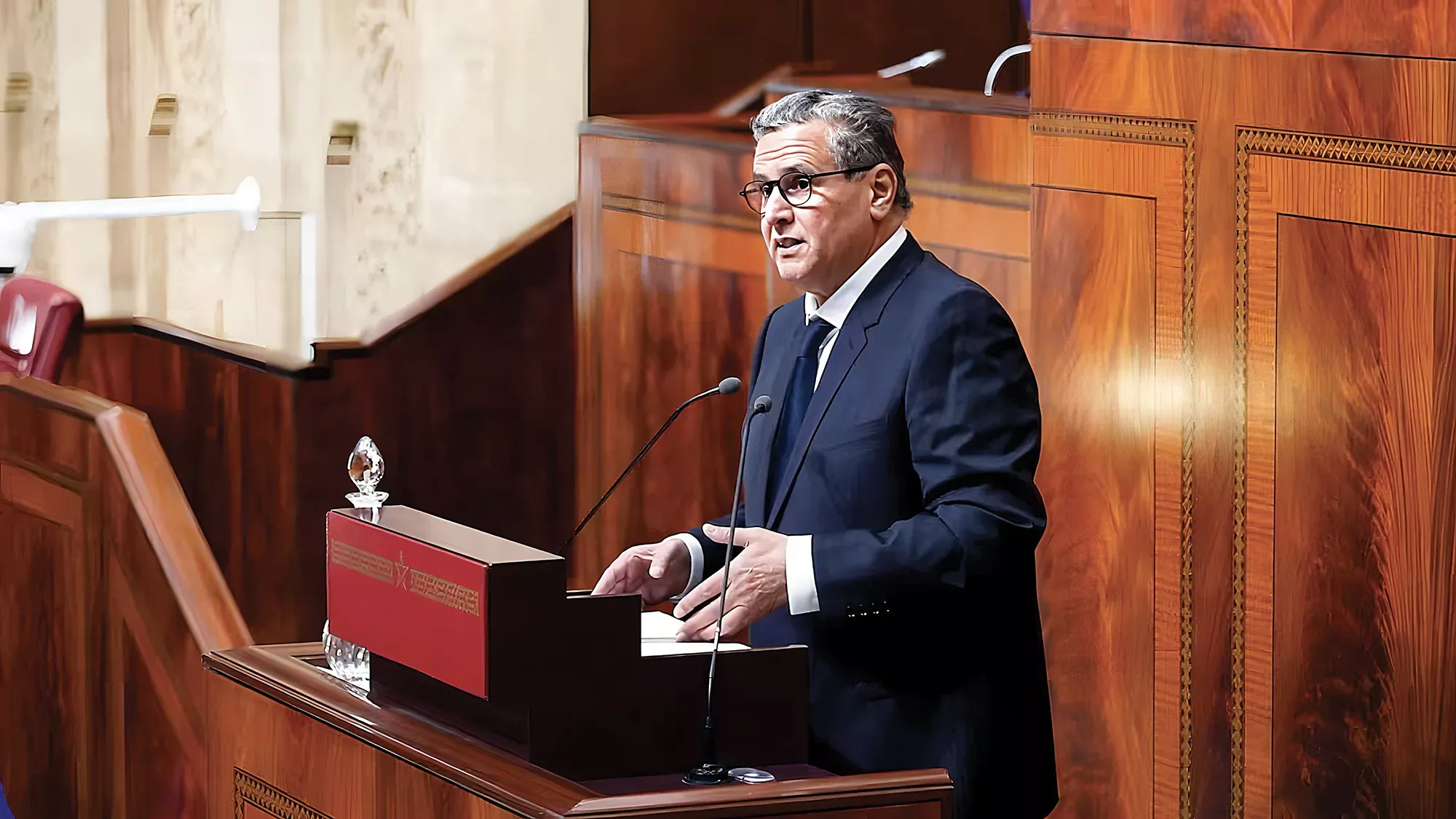

As Morocco approaches the upcoming legislative elections in 2026, the administration led by Aziz Akhannouch can no longer be gauged solely based on the reforms it has proposed. Five years into his tenure, the government is now compelled to face its own commitments and the tangible outcomes that have emerged as a result. In 2021, the government's agenda promised the creation of one million net jobs, an average growth rate of 4%, and a female labor participation rate exceeding 30%. However, the labor market continues to be the Achilles' heel of its performance.
Employment and Purchasing Power: The Critical Weak Points
The government claims to have created 850,000 jobs between 2021 and 2025, yet the unemployment rate still hovered around 13% in 2025, with youth unemployment for those aged 15 to 24 exceeding 37%. Even more telling is the fact that the female labor participation rate has stagnated at approximately 19%, far from the ambitious target of 30%. These statistics do not imply a lack of effort; rather, they highlight the limitations of a policy framework that sometimes measures success by the quantity of programs and job announcements rather than addressing a more fundamental question posed by citizens: do I genuinely have a better chance of finding employment?
The issue of purchasing power presents another significant challenge. Following an inflation rate of 6.1% in 2023, characterized by a 12.5% rise in food prices, a decrease in inflation does not equate to a return to prior price levels. For households, lower inflation primarily indicates that prices are increasing at a slower rate, not that they have become affordable again. On the contrary, the expansion of social protection and direct financial assistance represents substantial advancements that should not be underestimated. Nonetheless, a social state must extend beyond merely compensating for hardship; it must also tackle the root causes of these issues, which include employment, education, health, housing, and social mobility.
The Gap Between Official Narratives and Citizens' Experiences
Herein lies the government's principal political vulnerability: the discrepancy between the proclaimed results and the lived experiences of a segment of the populace. As political analyst Marouane Bichichi aptly notes, a government may announce the creation of hundreds of thousands of jobs, yet a young person might still be in search of their own. An administration may declare a decline in inflation, while a household may observe that their expenses remain significantly high. Billions in investments may be touted, but a graduate could justifiably wonder where their opportunity lies. Bichichi emphasizes that the true issue is not the number of reforms but rather how many citizens can assert that those reforms have positively transformed their lives.
This disconnect does not necessarily signify a complete failure of the government, but it does represent a major political dilemma, as trust is cultivated not through statistics but through observable results. Therefore, Akhannouch's record must be interpreted with two key criteria in mind: acknowledging the reforms that have genuinely been implemented and critically evaluating the promises that have not been fulfilled. As 2026 draws nearer, the pivotal question may not be how many reforms the government can showcase, but rather how many citizens can affirm that these reforms have substantially improved their lives. The vision of a 'Morocco of competencies' can only become a reality when it evolves into a 'Morocco of results.'
As reported by mobile.telquel.ma.