
Understanding the Strategic Implications of NATO's Stance on Ceuta and Melilla
Recent statements by Javier Colomina have reignited one of the most enduring uncertainties in Spanish defense policy. The NATO Special Representative for the Southern Neighborhood expressed strong conviction that allies would support Spain in the event of an aggression against Ceuta, a significant assertion that raises questions about the vulnerability of these Spanish territories located in Africa, potentially leaving them defenseless against Morocco. This topic is particularly sensitive, as much of the strategic debate surrounding Ceuta and Melilla has historically relied on the geographical ambiguity of these cities. A confrontation of notable intensity would likely not remain confined to the territories of Ceuta and Melilla, as it would inevitably impact the Strait of Gibraltar, the western Mediterranean, and Spanish forces deployed from the mainland.
Ceuta and Melilla do not fall within the geographical parameters established by Article 6 of the Washington Treaty on the same footing as mainland Spanish territory or the Canary Islands. Article 5 states that an armed attack against any NATO member is defined as one occurring against territories in Europe or North America, Turkey, or islands under the jurisdiction of the parties in the North Atlantic region north of the Tropic of Cancer. While there exists a theoretical vulnerability on paper, such circumstances would have practical limits. A significant confrontation surrounding Ceuta would compel Spain to deploy naval and air forces from the mainland, maintain open communications across the Strait, and operate in the western Mediterranean, where the treaty's coverage is much clearer.
The Potential for Escalation and NATO's Role
Article 4 of the treaty would likely gain even greater importance during the initial phases of an escalation. Madrid has the authority to bring any situation it perceives as a threat to its territorial integrity or security before the Atlantic Council without waiting for an armed attack to occur. Military movements by Morocco around Ceuta, a series of border incidents, sabotage, or a sufficiently intense hybrid campaign could prompt allied consultations prior to the onset of open confrontation. For Morocco, such a consultation would have implications even if NATO did not immediately take military action. At that point, Morocco's calculations would need to incorporate a variable that would be challenging to manage, as it could not precisely gauge what level of pressure would trigger a broader political or military response.
A strategy situated within the gray zone continues to provide more leeway for Rabat than a conventional operation. Border pressure, indirect actions, information campaigns, cyberattacks, or incidents with ambiguous attribution could allow Morocco to escalate tensions while complicating Spain's response. However, NATO has increasingly integrated hybrid and cyber threats into its doctrine and acknowledges that, depending on their severity and consequences, such actions can reach the threshold of collective defense.
The scenario would become significantly more delicate if this pressure culminated in a limited military action against Ceuta and/or Melilla. Morocco might attempt to exploit the territorial ambiguity of Article 6 by refraining from any attacks on the mainland and focusing operations around the cities. Nonetheless, it would be challenging for Rabat to disregard a Spanish armed response that would include naval and air units operating in the Strait and the western Mediterranean.
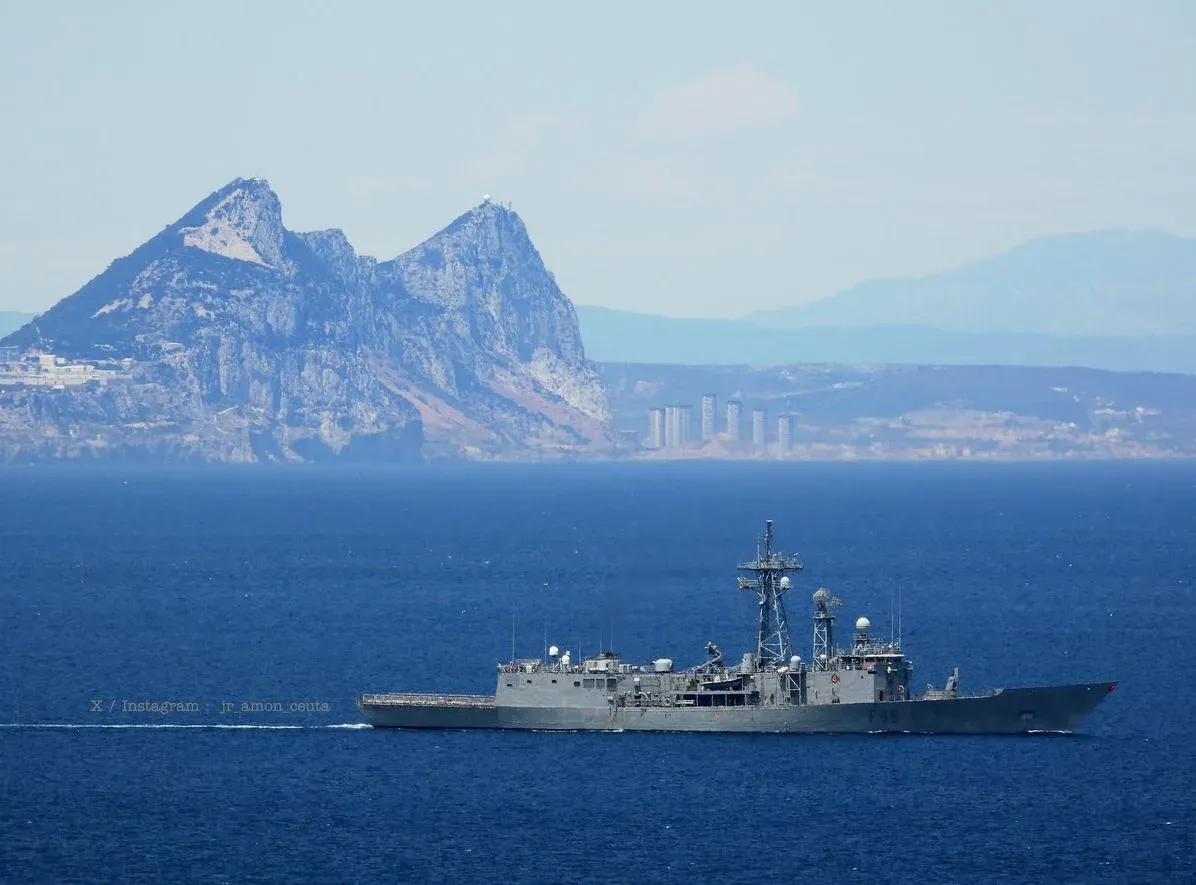
From that moment, the constraints on Morocco would increase, as the second part of Article 6 specifies that an armed attack is also defined as one occurring against the forces, ships, or aircraft of any of the parties present in these territories, as well as in any other European region where occupying forces of any of the parties were stationed at the time the treaty came into effect. Therefore, an attack on a Spanish frigate while protecting communications with Ceuta presents a scenario far less ambiguous than a ground clash within the city. A similar situation would arise with Spanish aircraft operating in that area. Should escalation involve attacks on bases, military installations, or defense systems located in Andalusia or the Canary Islands, the debate over the collective defense status of Ceuta would become moot, as hostilities would have reached Spanish territory covered under the treaty.
The greater the effort required by Morocco to alter the situation on the ground, the more difficult it would become to maintain the initial geographic advantages of Ceuta. Rabat would need to carefully manage any escalation, increasing pressure on the city while each subsequent step could broaden the likelihood of the confrontation spilling over into the Mediterranean, the mainland, or the Canary Islands. Spanish deterrence would largely depend on convincing Morocco that an episode initiated in Ceuta could rapidly escalate into a much broader conflict.
However, Article 5 allows considerable latitude for each NATO member state to determine how it would engage: "if such an attack occurs, each state will assist the attacked Party or Parties by taking, individually and in concert with the other Parties, the measures it deems necessary, including the use of armed force." This flexibility would be particularly relevant in a conflict with Morocco, especially given the influence of the United States and the interests several allies maintain in Rabat. The Perejil incident demonstrated just how significantly these relationships can shape crisis management, with Washington playing a central role in de-escalation and Paris maintaining a pro-Moroccan stance by blocking favorable declarations for Spain following the recovery of the islet. In a military scenario around Ceuta, the intensity of allied support would still depend on how the situation evolved and to what extent Madrid’s key partners were willing to engage.
As reported by zona-militar.com.