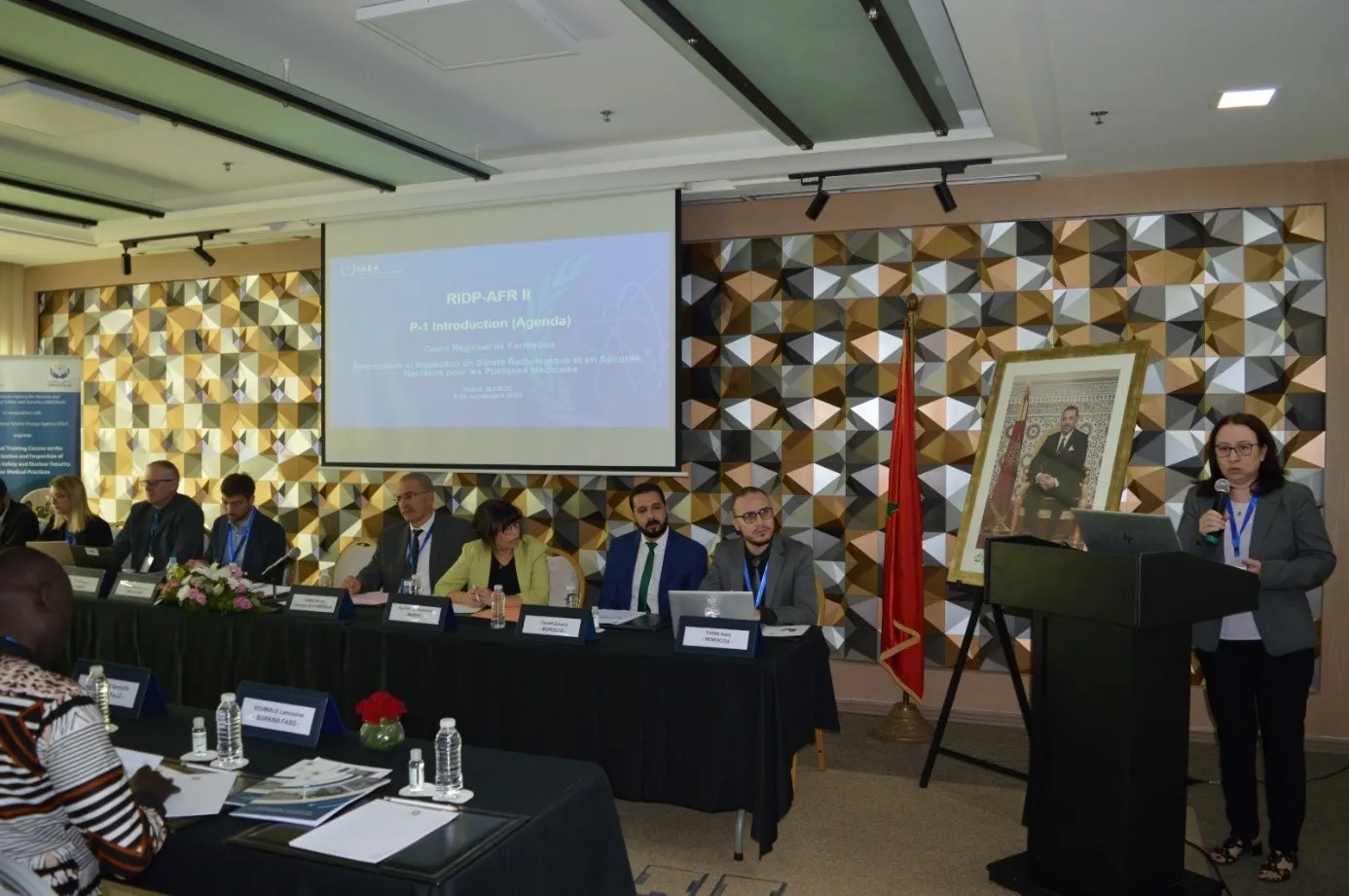

Bouchra Boustani's Inspiring Journey in Nuclear Security
Bouchra Boustani's story is one of resilience and determination, emerging from a small coastal town near Casablanca, Morocco, where she cultivated her passion for mathematics and physics in a family that valued knowledge. Born in the late 1960s in Mohammedia, Boustani faced the challenge of studying in a male-dominated field, where female representation was minimal, often accounting for less than 10% of her classmates. Despite these challenges, she pursued her studies in mechanical engineering, specializing in nuclear engineering, which was still in its infancy in Morocco.
After graduating from the School of Engineers in 1993, Boustani encountered another hurdle in her career path, struggling to find employment in a country without nuclear power plants. She began her professional journey at the Ministry of Industry and later joined the National Center for Radiation Protection in 1995, focusing on environmental monitoring and regulatory functions that laid the groundwork for her future in nuclear security. A pivotal moment occurred in 2006 when she attended a training course on physical protection in Libya, which introduced her to nuclear security concepts that would shape her career.
Leading the Charge in Nuclear Security
In 2016, shortly after the establishment of the Moroccan Agency for Nuclear and Radiological Safety and Security, Boustani was appointed head of the Nuclear Security and Safeguards Department. Her role involved developing regulatory frameworks, establishing licensing systems, and contributing to Morocco's implementation of comprehensive safeguard agreements with the International Atomic Energy Agency (IAEA). In 2021, she transitioned to the IAEA as a senior nuclear security officer, where her responsibilities include assisting countries in building and enhancing their regulatory frameworks in nuclear security. Boustani expresses her enthusiasm for her role, stating, "I have the opportunity to travel, help countries, and interact with people from different cultures, which I truly enjoy."
As she reflects on her career, Boustani encourages young women aspiring to enter scientific fields to pursue their dreams relentlessly, stating, "If you have a dream, you should strive to achieve it. As for obstacles, there is nothing you can do but overcome them." She emphasizes the importance of perseverance, integrity, and organization, values that have guided her throughout her professional journey.
Bouchra Boustani's experience exemplifies the changing landscape for women in science, technology, engineering, and mathematics (STEM). She notes the significant increase in female engineering students in Morocco, who now make up nearly half of the student population, a development that fills her with hope for the future.
The IAEA is committed to gender equality and supporting the ability of all individuals, regardless of gender, to contribute to and benefit from its programs and activities equally. To this end, the agency strives for gender balance in its secretariat and aims to integrate gender perspectives into its programs and activities. In 2020, the IAEA launched the Marie Skłodowska-Curie Scholarship Programme to support the next generation of women in nuclear fields by providing scholarships for master's degrees in related disciplines. Additionally, in March 2023, the IAEA introduced the Lise Meitner Programme, offering early to mid-career professionals opportunities for several weeks of training visits to nuclear facilities.
As reported by iaea.org.