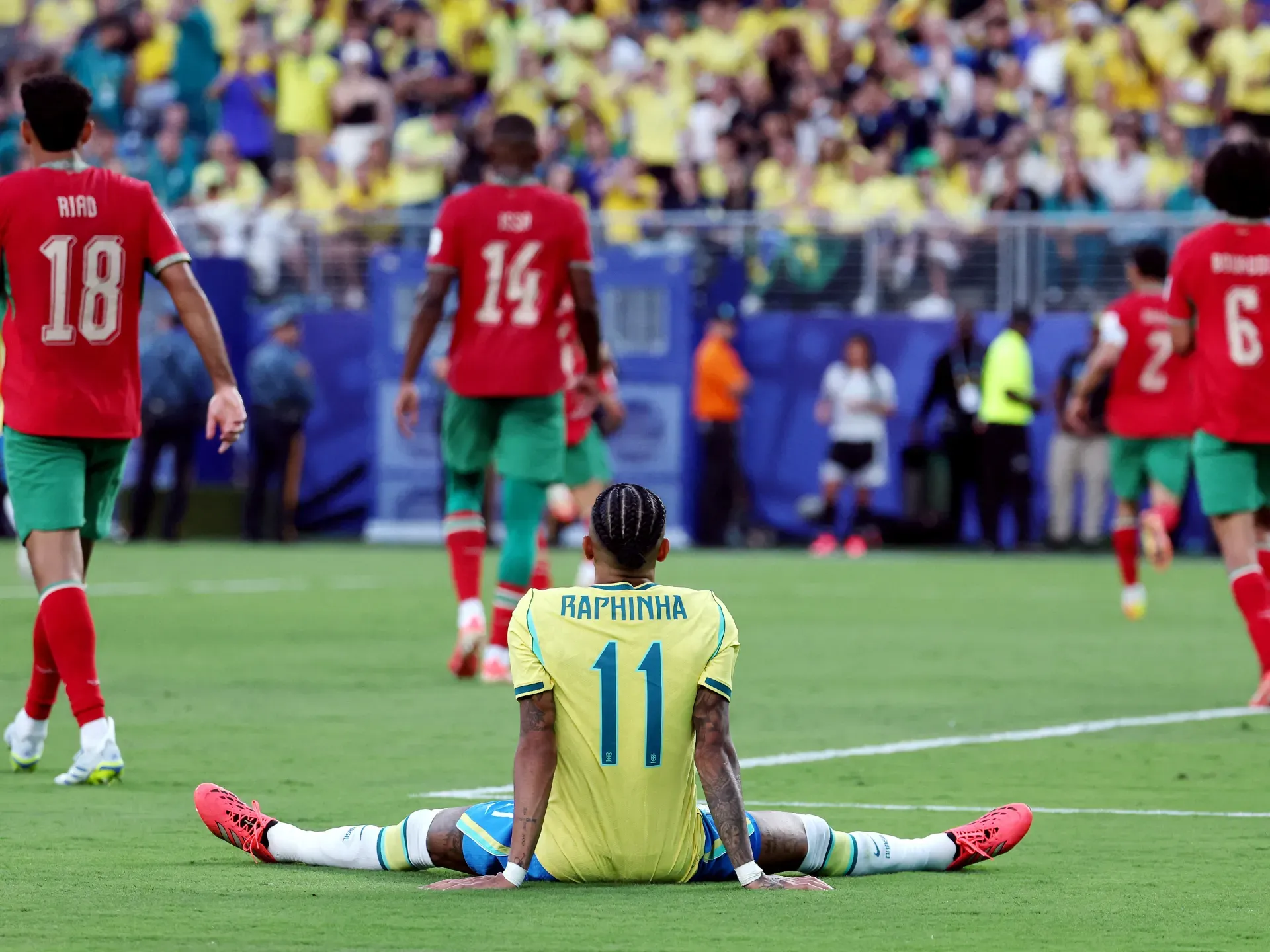

The Brazilian national team began its journey in the 2026 World Cup with a disappointing draw against Morocco, ending the match with a score of 1-1. This result raised numerous questions regarding the preparedness of one of the tournament's leading contenders for the coveted title. Despite Brazil's roster featuring a plethora of stars and experienced players, the team struggled significantly to assert its style of play for extended periods during the match, particularly in the first half where they appeared far from their usual standard.
Brazil's Struggles and Player Insights
After the match, Brazilian forward Matheus Cunha expressed his dissatisfaction with the team's performance, particularly highlighting the errors that led to a loss of control during crucial moments of the game. Cunha emphasized that the Brazilian squad possesses the necessary potential to overcome this rocky start, stressing the importance of learning from their mistakes before the upcoming matches. He pointed out that the team cannot continue on the same path that they began against Morocco, acknowledging the weight of responsibility they carry and indicating that they are now more prepared for future challenges.
Brazil's head coach Carlo Ancelotti also recognized that his team did not deliver the expected performance, admitting that the criticisms following the match were warranted given the players' showing. Ancelotti explained that the team suffered from a lack of balance in the first half, which granted the Moroccan team a distinct advantage at various points during the match, although he noted a slight improvement in performance after halftime. He reassured fans that winning the World Cup is not determined by the outcome of the opening match, affirming that the tournament is still in its early stages and that there is ample opportunity for the team to rectify their mistakes and reclaim their true form.
Morocco's Tactical Discipline and Next Steps for Brazil
Ancelotti praised the level of play exhibited by the Moroccan squad, acknowledging their organizational prowess and clear tactical discipline, which made the match more challenging for Brazil. Morocco successfully established its rhythm during many phases of the game, capitalizing on Brazil's setbacks in the first half, thereby reaffirming its ability to compete with major footballing nations on the global stage. The Brazilian coach defended the substitutions he made during the match, explaining that he acted promptly to address the deficiencies in performance.
The match witnessed a large turnout of Brazilian supporters, who filled most of the stadium, reflecting the immense popularity of the national team worldwide. Ancelotti expressed gratitude for the overwhelming fan support his team received, while also apologizing to the fans for failing to secure a victory in the opening match. As he embarks on his first World Cup experience as Brazil's head coach, Ancelotti has set his sights on leading the team to its sixth world title.
Looking ahead, Brazil is set to face Haiti in their second group stage match on June 19, a crucial encounter aimed at regaining confidence and achieving their first win in the tournament. The Brazilian team will conclude its group matches against Scotland on June 24, with fans hopeful for a strong reaction to bring the team back into contention for the title. Despite the initial setback, Brazil still possesses significant potential to advance, especially with players capable of making a difference at any moment. However, the clear message from the Brazilian camp is that the performance shown against Morocco will not suffice to meet their lofty ambitions, and the upcoming phase demands greater focus and a fresh start if they wish to reach the podium at the end of the tournament.
As reported by aljazeera.net.