
The historic appointment of Fatima Ezzahra El Mansouri as the first female Head of Government in Morocco marks a significant milestone, not merely as an isolated event but as a continuation of the rich tradition of women holding influential positions within the realms of government, institutions, and the royal palace in Morocco. This groundbreaking decision by King Mohammed VI signifies a pivotal moment in the nation's political landscape, as it elevates a woman to the highest echelons of the executive branch for the very first time.
This appointment is a testament to the steady progress that Moroccan women have achieved over the past decades, particularly under the reign of King Mohammed VI, who has been a driving force behind the advancement of women's roles in governance. One of the earliest significant milestones was the historic appointment of Zoulikha Nasri in 1998 as the first female royal adviser in the kingdom, a role she continued to excel in under King Mohammed VI, where she managed critical economic and social issues and led major philanthropic initiatives like the Mohammed V Foundation for Solidarity.
Over the years, women have increasingly occupied vital positions across various state sectors. Amina Benkhadra has been at the forefront of the National Office of Hydrocarbons and Mines (ONHYM) since 2003, and her previous tenure as Minister of Energy, Mines, Water, and Environment further exemplifies the significant contributions women have made. In 2014, Zineb Adaoui made headlines by becoming the first female Wali (governor) in Morocco, and in 2021, she achieved another first by heading the Court of Auditors. Meanwhile, Latifa Akherbach has been shaping media regulations as the head of the High Authority for Audiovisual Communication (HACA) since 2018.
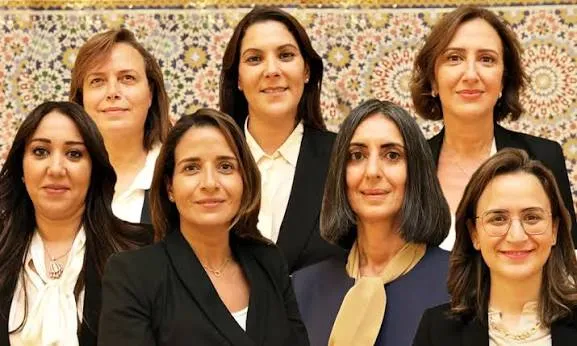
Amina Bouayach has led Morocco’s national human rights council since 2018, reinforcing the critical role women play in safeguarding civil rights within the kingdom. In both current and previous administrations, women have held some of the most sensitive and powerful portfolios. Notably, Nadia Fettah Alaoui served as Minister of Economy and Finance in the outgoing cabinet, a position recognized as one of the most influential economic roles in Morocco, while Leila Benali has been pivotal in steering energy transition and sustainable development policies. Other prominent female figures include Fatima Ezzahra Ammor, who has taken charge of tourism, and Amal Seghrouchni, who has focused on digital transformation and administrative reform.
El Mansouri’s ascension to the role of Head of Government is not merely a new development but rather a culmination of a historical continuum. It illustrates how successive generations of capable women—from royal advisers like the late Zoulikha Nasri to institutional leaders like Benkhadra, Adaoui, Akherbach, Benali, Fettah, and others—have laid the groundwork for this landmark achievement in Moroccan history.
As reported by northafricapost.com.