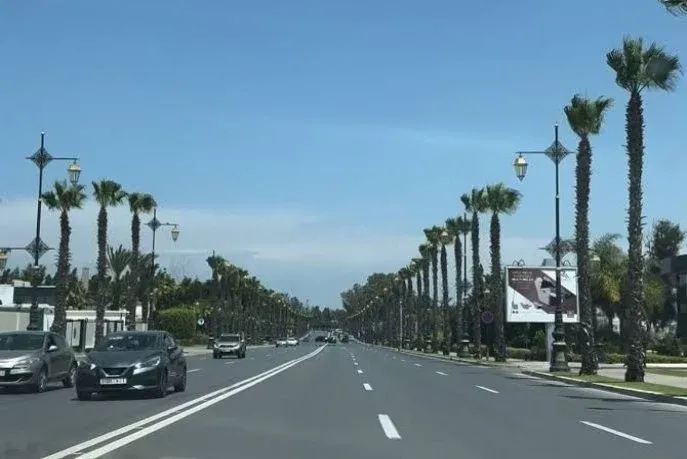

Understanding the Urban Divide in Rabat
In Rabat, a mere street can signify a transition from one Morocco to another, illustrating the stark contrasts that exist within the urban landscape. Popular neighborhoods, affluent residential areas, pockets of poverty, and concentrations of wealth coexist in close proximity, yet fail to share equitable opportunities. As the pivotal date of September 23 approaches, Anwar Cherkaoui emphasizes that the implications of this electoral competition extend beyond mere political outcomes; they raise critical questions about social mobility, the redistribution of opportunities, and the city’s capacity to bridge these divides.
The Electoral Challenge of September 23
On September 23, Moroccans will cast their votes to select representatives for the House of Representatives and, by extension, their future government. However, amidst the various political programs, slogans, and electoral promises, a more pressing question emerges: how will the next government address the visible territorial fractures that affect daily life? Will we continue to accept as inevitable that a child born in a disadvantaged neighborhood of Rabat faces numerous frustrations and barriers to accessing quality education, healthcare, green spaces, digital resources, transportation, cultural opportunities, or simply a dignified urban environment? Or will we finally decide that the wealth generated within the city must contribute to narrowing the gaps that exist within it?
This distinction is crucial. Genuine redistribution goes beyond merely transferring money to the impoverished; it involves creating more opportunities that empower individuals to escape poverty. Building a social policy based on the assumption that the wealthy will naturally 'assist' the poor is a perilous approach. A housekeeper employed in an affluent villa does not constitute an effective anti-poverty strategy, nor does hiring a young man as a caretaker translate into successful professional integration. The limited number of domestic jobs created by wealthy neighborhoods cannot substitute for quality education, appropriate vocational training, efficient public transport, equitable healthcare access, or a robust local economy. These roles merely serve as poignant reminders of the economic disparities that persist.
The true question lies not in whether the wealthy sustain the poor, but in whether a city’s wealth is transformed into collective investment. Here lies the importance of local taxation, urban planning, public transport, education, healthcare, housing, and cultural and sports facilities. A smart city should not only aim to attract capital; it should also seek to convert a portion of that capital into social mobility.
The cases of Medellín and Rio de Janeiro provide valuable lessons in urban integration. Medellín, once synonymous with drug trafficking, has transformed into a beacon of urban renewal. Since the 1990s, the Colombian city has directed significant investments toward its most disadvantaged neighborhoods, which are often located in poorly serviced peripheral areas. Infrastructure improvements, such as transportation, schools, libraries, public spaces, cultural facilities, and the Metrocable system, have been designed as tools to combat spatial exclusion, with the clear goal of bringing residents closer to essential services and employment opportunities. The lesson from Medellín is straightforward: it is not enough to ask the impoverished to integrate into the city; the city must also reach out to them.
Conversely, Rio de Janeiro illustrates a different form of social fracture. The proximity of affluent neighborhoods to favelas has often resulted in mere juxtaposition rather than true integration. Initiatives like the Favela-Bairro and Territórios Sociais have attempted to reconnect vulnerable populations with essential infrastructure, education, healthcare, employment, and social services. While Medellín offers a more compelling case than Rio, both cities illustrate that poverty cannot be alleviated by isolating the impoverished and transforming their neighborhoods; rather, it requires fully integrating these areas into the urban fabric.
In Rabat, social fractures can often be observed just a few streets apart. This proximity, however, could serve as a catalyst for solidarity. A portion of the wealth generated in the more affluent neighborhoods could be redirected to fund education, healthcare, transportation, public spaces, and training in neighboring popular areas. The challenge also lies in opening similar opportunities for youth, regardless of whether they reside in Douar El Hajja or Douar Doum: accessing education, skilled employment, and economic hubs. True social diversity entails not just physical proximity but also a convergence of opportunities.
While the upcoming elections will not single-handedly resolve social and territorial fractures, they can set a direction for the future. The next government must go beyond managing inequalities in a fragmented manner and envision the city as a cohesive entity where wealth benefits all. The goal is no longer merely to multiply aids and short-term programs; rather, it is to convert concentrated wealth into avenues for social mobility. A city divided between prosperous enclaves and pockets of poverty breeds frustration and social rifts. Thus, the true challenge on September 23 will be transforming geographical proximity into genuine equality of opportunity.
As reported by quid.ma.