
Fouzi Lekjaa Champions a Unified Development Strategy
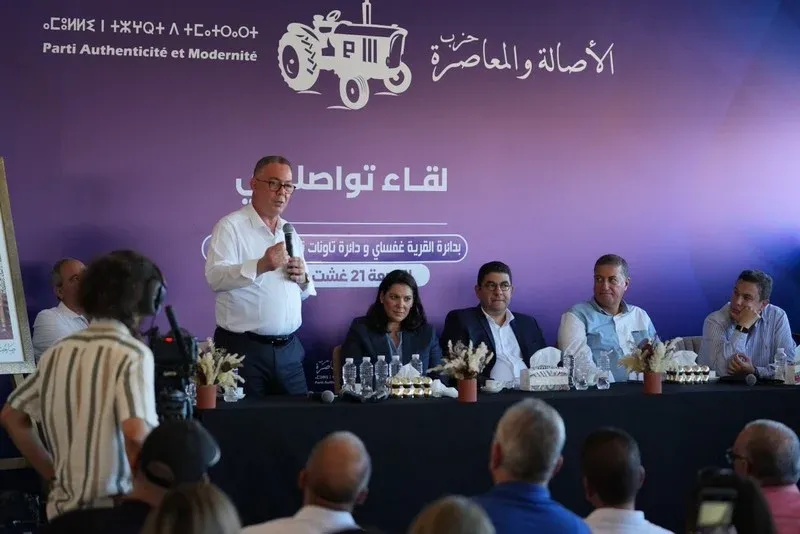
The recent remarks by Fouzi Lekjaa, a prominent member of the political bureau of the Authenticity and Modernity Party (PAM) and the Minister Delegate in charge of Budget, have sparked a significant conversation about Morocco's future development strategies. During a political gathering in the town of Ghawazi in the Taounate region, Lekjaa emphasized the importance of constructing a "Unified Morocco" as the foremost goal for the upcoming government. He asserted that reducing disparities between the regions of the kingdom and harmonizing the pace of development across various provinces are crucial steps towards achieving spatial justice. This vision aligns closely with royal directives aimed at ensuring equitable opportunities for citizens in terms of development and essential services.
Addressing Social and Developmental Discrepancies
In his address, Lekjaa underscored that addressing social and developmental imbalances necessitates the implementation of effective programs that can bring about a direct impact on citizens' lives. He highlighted the critical areas of education, healthcare, and infrastructure as pivotal sectors that require immediate attention. Furthermore, he acknowledged the immense potential of Morocco's youth, who have demonstrated exceptional capabilities in diverse fields such as sports, engineering, medicine, and innovation. By providing suitable opportunities for these talented individuals, Lekjaa believes that their contributions to national development can be significantly expanded.
Elaborating on the capabilities of Moroccan youth, Lekjaa noted that accumulated experiences have shown that when given genuine opportunities and favorable conditions, young people can excel remarkably. Hence, investing in human resources is deemed essential for the upcoming developmental projects. He pointed out that the uneven pace of development across the country necessitates an acceleration of projects aimed at improving living conditions and enhancing access to public services.
Moreover, Lekjaa recognized the persistent inequalities in development indicators across certain regions of Morocco, which effectively perpetuate the existence of different speeds within the developmental journey. He described this situation as alarming and called for immediate measures to address these disparities. One of the fundamental tasks for the forthcoming period, he specified, is to eliminate these inequalities so that all regions of Morocco can progress at the same rate and benefit from the same developmental dynamics.
In this context, Lekjaa urged the need to strengthen the road network, improve educational quality, and enhance healthcare services, viewing these sectors as key to achieving a balance between regions and providing citizens with equitable access to services. He also highlighted the challenges facing the Moroccan education system, revealing that over 300,000 students drop out of school annually, a figure he termed significant and in need of extensive mobilization to tackle the root causes of school dropouts and expand educational opportunities.
Linking the success of future projects to their ability to restore trust and instill hope in citizens, Lekjaa asserted that public programs must transition from mere commitments to tangible results that citizens can feel in their daily lives. He also emphasized the importance of political participation in shaping public choices, encouraging citizens to engage in electoral processes and select capable individuals who can assume responsibility and implement development-related programs.
Regarding the upcoming political phase, Lekjaa believes that the government emerging from the next legislative elections will bear a significant responsibility in addressing issues related to education, healthcare, and infrastructure, alongside reducing disparities between regions and opening broader horizons for Moroccan youth. He framed the objective for the near future as building a progressive Morocco that invests in its human resources, strengthens public services, expands its infrastructure, and provides equitable opportunities for citizens across various regions. Achieving this goal requires seriousness, responsibility, and widespread participation in the political decision-making process, allowing the slogan of "Unified Morocco" to transform into an actual developmental path that reaches every corner of the kingdom.
As reported by hespress.com.