
Addressing the Growing Threat of Natural Disasters
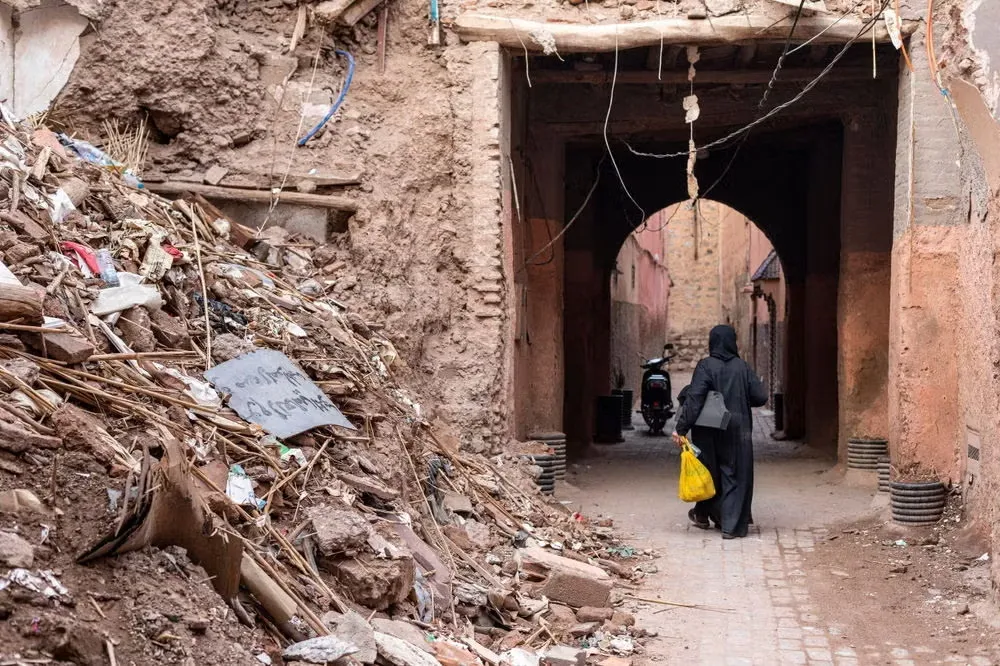
Morocco faces an array of natural disasters, including floods, earthquakes, landslides, droughts, and coastal erosion, which pose significant risks to both lives and livelihoods. The challenges are exacerbated by climate change and rapid urbanization, leading to an increase in the frequency and severity of these events. A stark example of this vulnerability was the devastating Al-Haouz earthquake in September 2023, which tragically resulted in the loss of nearly 3,000 lives and impacted around 300,000 individuals. Additionally, flash floods in Safi in December 2025 caused the deaths of at least 37 people, while severe flooding in northern Morocco from January to February 2026 displaced over 180,000 residents, prompting the government to declare multiple provinces disaster zones.
A Comprehensive Approach to Disaster Risk Management
In response to these escalating threats, the World Bank Group (WBG) has been instrumental in supporting Morocco through a multifaceted approach encompassing financing, policy reform, technical assistance, and strategic partnerships over the past decade. Rather than merely focusing on emergency responses, this comprehensive program aims to establish a robust system for managing disaster risks prior to their occurrence. Significant reforms include transforming Morocco’s disaster fund into a resilience financing mechanism, establishing a permanent disaster management directorate, and launching the nation’s inaugural national strategy for disaster risk management. Furthermore, the WBG has facilitated the development of a public-private insurance framework designed to safeguard both insured and uninsured households from the financial implications of disasters.
The technical assistance provided has bolstered resilient infrastructure standards, improved building regulations, and enhanced city resilience planning in areas such as Fez and Mohammedia/Ain Harrouda. Collaborations with organizations like the Global Facility for Disaster Reduction and Recovery, the Global Shield Financing Facility, and the Swiss Secretariat for Economic Affairs (SECO) have further enriched the expertise and financing available to tackle these challenges.
Between 2016 and 2025, Morocco successfully financed over 300 disaster risk reduction projects, amounting to more than $408 million, which included initiatives such as flood protection works, early warning systems, hazard mapping, and safer urban planning. By March 2025, completed structural projects were able to protect nearly 700,000 individuals, with approximately half being women, significantly surpassing initial targets. Additionally, non-structural projects focused on risk mapping and preparedness benefited over 36 million people nationwide, with women making up a substantial portion of the recipients.
In terms of institutional development, Morocco established a permanent Directorate for Disaster Risk Management, staffing it with 89 personnel, and adopted its first National Disaster Risk Management Strategy for 2020-2030. A newly implemented catastrophe insurance system provided coverage for nearly 20 million people, while a public solidarity fund mobilized $133 million and distributed $300 million in the aftermath of the Al-Haouz earthquake, showcasing the effectiveness of pre-established financial mechanisms. Since 2023, a newly established early-warning system has successfully protected 240,000 individuals in four high-risk areas, demonstrating the tangible benefits of proactive disaster management strategies.
The program's contributions align with the World Bank Group’s climate adaptation and resilience objectives by enhancing disaster risk preparedness for more than 36 million Moroccans, with women constituting roughly half of the beneficiaries. Investments in flood protection, drainage, and infrastructure not only fostered local employment opportunities in construction and engineering but also strengthened the long-term resilience of vulnerable sectors such as agriculture and urban economies against floods and earthquakes.
Morocco’s experience serves as a valuable lesson in disaster resilience, illustrating that effective strategies arise from the simultaneous advancement of institutional reform, investment, and financial protection. The establishment of a dedicated disaster management authority and a long-term national strategy has facilitated sustained investments and coordinated actions across various levels of government. When the Al-Haouz earthquake struck in 2023, the rapid mobilization of resources through the new insurance and solidarity system highlighted the critical importance of having financial protection mechanisms in place prior to disasters.
Looking ahead, the World Bank Group is committed to continuing its support to Morocco in further enhancing its resilience to disasters and climate-related shocks. Future initiatives will concentrate on expanding flood early-warning systems, fortifying the resilience of critical infrastructure and buildings, improving local disaster preparedness, and scaling up risk-informed urban planning. The ongoing Global Shield grant is instrumental in helping Morocco bolster its financial protection against climate-related incidents. Furthermore, Morocco’s successful strategies are poised to inform new operations in other countries, establishing the kingdom as a regional leader and a valuable source of insights for disaster resilience.
As reported by worldbank.org.