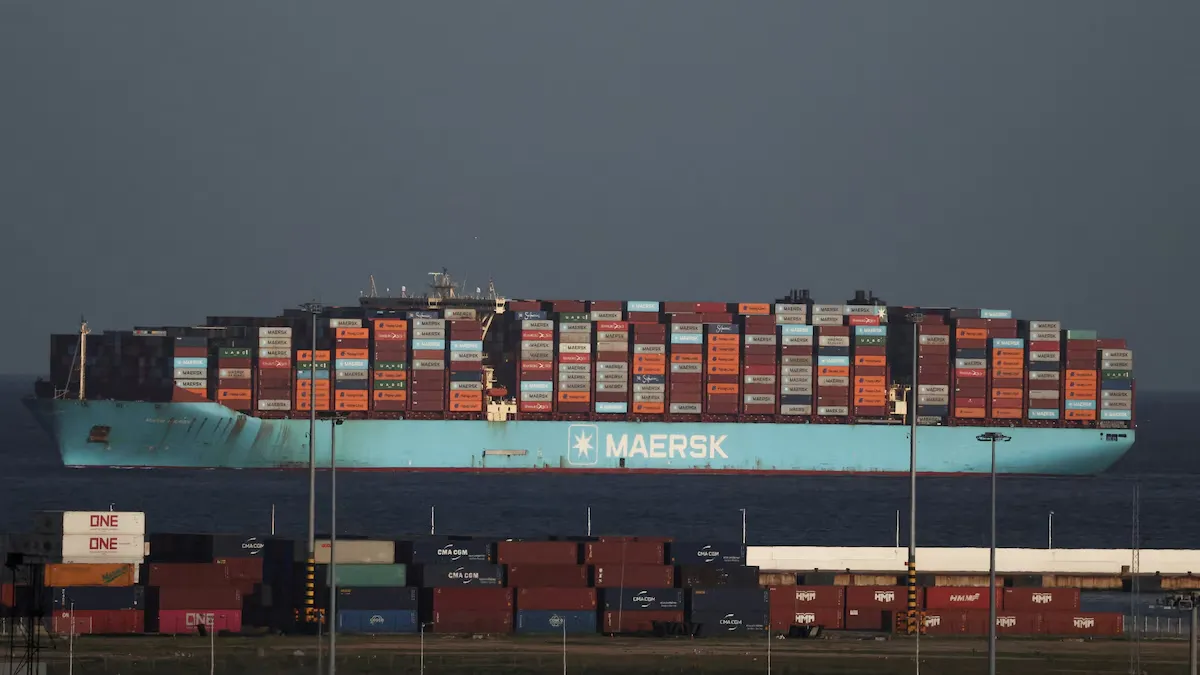

Cádiz Advances Negotiations for New Maritime Route to Morocco
The Cádiz Port Promotion Association is currently in discussions with two shipping companies to establish a new maritime route aimed at connecting southern Spain with Morocco via the Canary Islands. This initiative comes at a time when Morocco's port expansion in the Atlantic has raised concerns among Canary Island authorities. The proposed route would include stops at the Port of Las Palmas and establish direct connections with Moroccan ports in Agadir and Dakhla, with the goal of transforming the Cádiz Bay into a strategic logistical hub bridging Europe and Northwest Africa.
Daniel Macpherson, president of Cádiz-Port, confirmed to _AtlánticoHoy_ that the negotiations are "well advanced" and enjoy support from the Cádiz Bay Port Authority. Furthermore, they have the collaboration of Moroccan authorities, with whom bilateral trade missions have already taken place. According to Macpherson, "We have been working extensively on this project and believe that Cádiz meets all the conditions to become a strategic commercial hub with southern Morocco, supported by the Port of Las Palmas."
An Alternative to the Strait of Gibraltar
This operational plan is set to utilize feeder-type container ships and roll-on/roll-off (Ro-Ro) vessels, with Cádiz Bay serving as the main departure point and Las Palmas de Gran Canaria as the primary island stopover. The timeline for implementation depends on fleet availability: if agreements can be reached with the negotiating shipowners, the route could be activated in the short term; however, if new vessels need to be commissioned, it could take up to four years for the project to materialize.
The new corridor intends to alleviate congestion in the Strait of Gibraltar, which is particularly pronounced during the summer months. According to data from _Europa Press_, the 2026 Operation Crossing of the Strait recorded 2.16 million passengers in its first two months, a volume that, combined with heavy transport, periodically overwhelms the primary maritime route between Europe and Africa. The new route aims to diversify traffic beyond seasonal agricultural products into more consistent annual sectors, such as automotive industry components.
However, the project does not operate in a vacuum; it is influenced by the geopolitical dynamics surrounding the Canary Islands. In August, Antonio Morales, president of the Gran Canaria Cabildo, issued a warning about Morocco's increasing assertiveness and its direct implications for the archipelago, particularly concerning the port of Dakhla.
Furthermore, the central government has halted a deal for Marsa Maroc, a semi-public Moroccan company, to purchase 45% of Boluda Maritime Terminals for 80 million euros, following a complaint lodged by the Gran Canaria Cabildo in January 2026. This transaction, under scrutiny by the Foreign Investments Board and pending a ruling from the Council of Ministers, involves nine Spanish terminals, including those in Cádiz, Las Palmas, and Santa Cruz de Tenerife. Morales described the transaction as a "Trojan horse" that could compromise the operational sovereignty of critical infrastructures in the archipelago.
Major players in the sector have already made significant inroads into the Moroccan market. Boluda and MSC have reached agreements with Morocco to operate terminals in both countries, recognizing the potential of ports like Nador, Dakhla, and Tangier Med. The latter has emerged as a key reference point in the new Atlantic port landscape, and its growth serves as a precedent that both Cádiz-Port and the Gran Canaria Cabildo cite, albeit with differing interpretations: the Cadiz officials see it as a model to emulate, while the Canarians see it as a warning of what could happen to the Port of Las Palmas.
As reported by infobae.com.