
Ceuta Remains Stable Despite Online Calls for Migrant Influx
In recent days, alarms have sounded across Spain and Morocco in response to online calls for a new wave of migrants attempting to breach the border into the Spanish enclave of Ceuta. However, contrary to fears of chaos reminiscent of the situations witnessed in late July, the anticipated surge did not materialize over the weekend, thanks in large part to heightened security measures implemented by both nations.
Reports indicate that approximately 300 migrants, who were likely aiming to reach the enclave, were intercepted by security forces near the town of Fnideq, roughly 20 kilometers from the border. This figure, while concerning, is not unusual according to local media citing Moroccan officials. The Spanish newspaper "El Mundo" noted that the Moroccan authorities have deployed significant security resources along the border, resulting in a marked decrease in attempts by migrants from the Maghreb region to enter Spain.
The atmosphere in Ceuta is one of relief, as reflected in the reports from various Spanish media outlets stating, "The enclave breathed a sigh of relief on Saturday." A local resident expressed her gratitude on television, stating, "A weight has been lifted from our hearts. Many here feared the chaos would return." In late July, it was estimated that as many as 80,000 migrants arrived in Ceuta, with the majority returning to Morocco shortly thereafter.
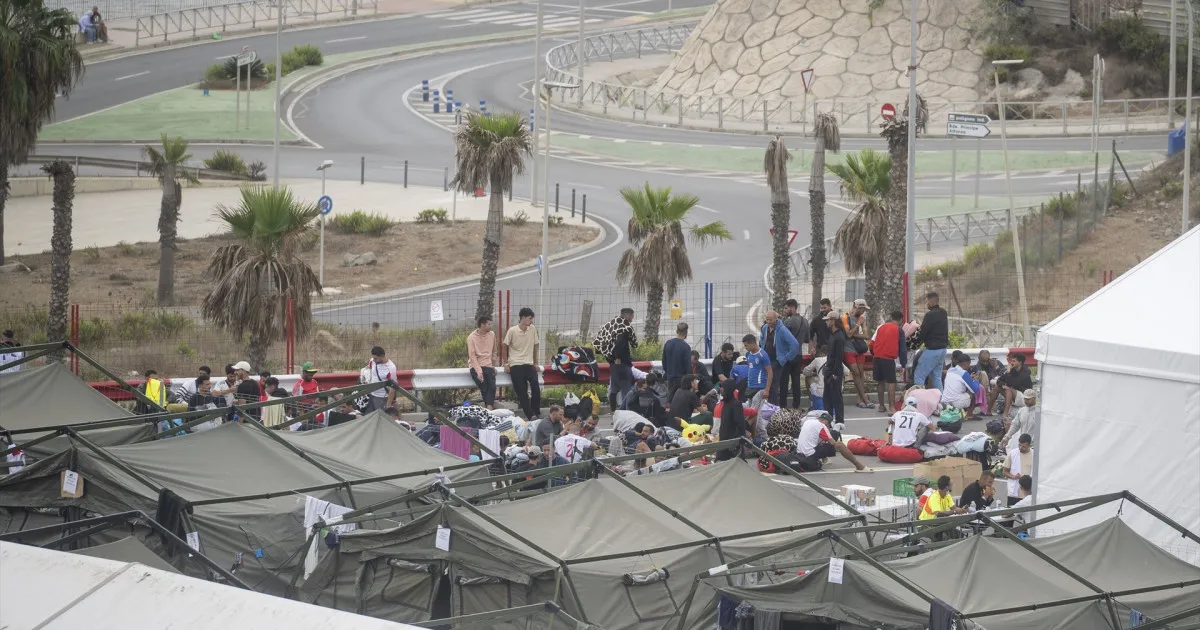
A reporter from the dpa confirmed the largely tranquil situation in the city center, where police and military presence was minimal. Larger groups of young migrants were observed only in the outskirts, and the calm extended into Sunday, reinforcing the notion that the situation had stabilized.
Moroccan security personnel were out in force both around Ceuta and at the border with the second Spanish enclave, Melilla, effectively preventing possible crossings well before reaching the border. According to Moroccan security sources, 294 individuals were detained, including 248 from sub-Saharan countries and 46 Moroccans. Additionally, at least 61 others were arrested for allegedly promoting irregular migration through social media platforms.
The reinforcement of security measures by both Spain and Morocco aimed to avert a repeat of the events witnessed in late July, when tens of thousands of migrants crossed into Ceuta. Spain's Interior Minister, Fernando Grande-Marlaska, reiterated that the influx during that period was an "extraordinary" event that would not be repeated.
In Fnideq, Morocco has set up additional barbed wire and NATO wire barriers, deployed patrol boats along the coast, and stationed water cannons at the border. Numerous checkpoints have also been established on access roads to enhance security measures.
Spain has similarly increased its security presence in Ceuta, with the deployment of 880 National Police officers, an increase of 270 since late July. They are supported by around 2,000 soldiers and more than 700 members of the military-organized police unit, Guardia Civil.
Security experts suggest that the absence of a significant influx underscores Morocco's crucial role in regulating irregular migration towards Europe. "This demonstrates that Rabat can control irregular migration when it chooses to," quoted a high-ranking police official in "El País." The article further emphasized Morocco's assertive role as the guardian of Ceuta's borders.
The surge experienced two weeks ago was unprecedented, with tens of thousands of migrants primarily arriving by sea. According to the latest official reports from Madrid, 83 bodies were recovered from the sea, while non-governmental organizations estimate fatalities to be well over a hundred.
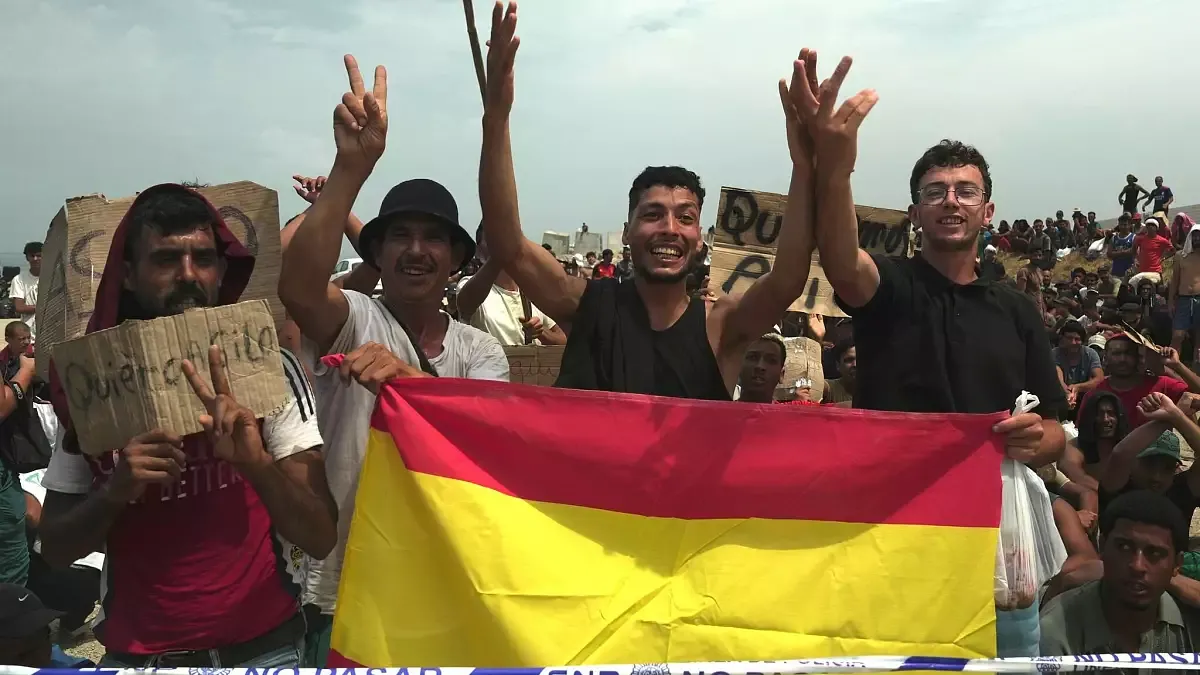
The majority of arrivals reportedly returned to Morocco within hours or days. Currently, around 5,000 migrants are still in Ceuta, and Interior Minister Grande-Marlaska acknowledged that it may take some time before the enclave fully returns to normalcy. Despite the government’s migrant-friendly policies, the leftist central government intends to continue the repatriation of irregular arrivals, leading to protests on the beach in Ceuta where dozens of migrants displayed signs reading, "We are also human" and "No Regreso a Marruecos - Asilo" (No return to Morocco - Asylum).
As reported by mt.de.