
Canada as the EU's First Associate Member
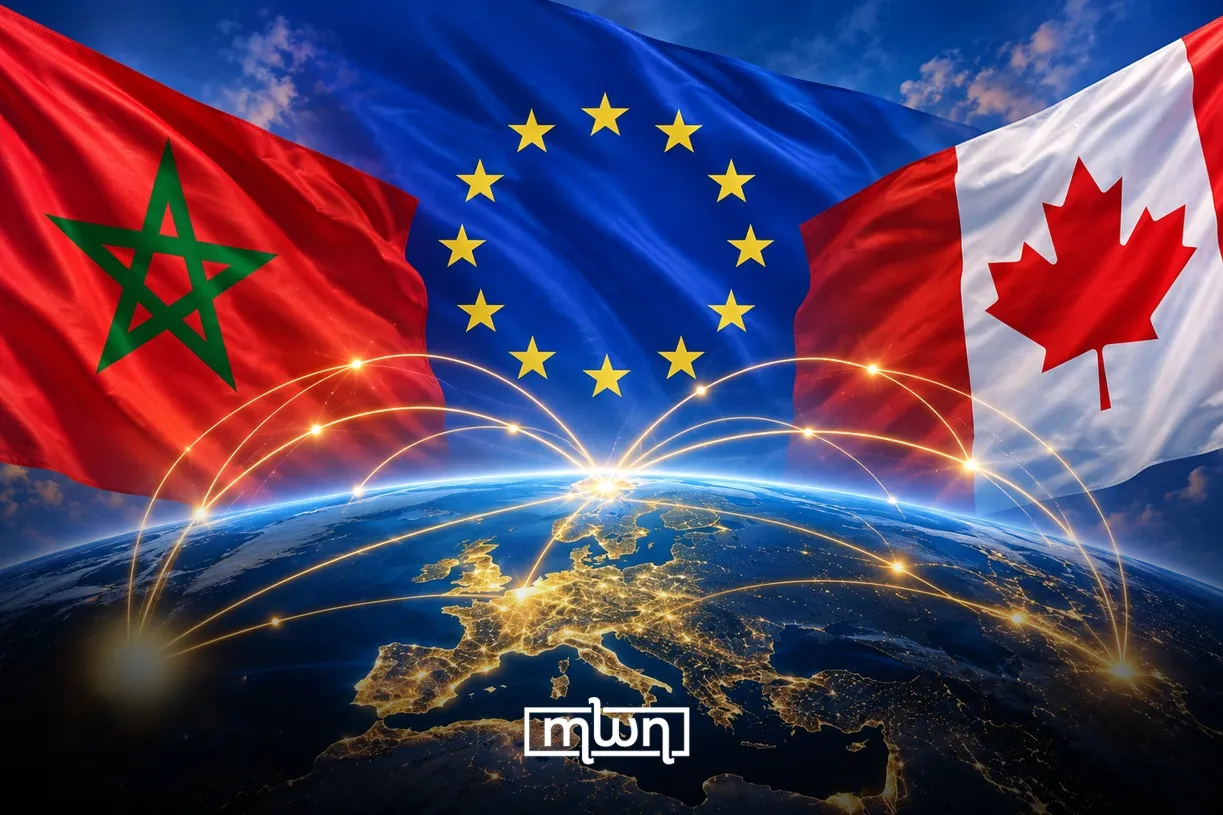
Ursula von der Leyen, the President of the European Commission, has proposed that Canada could become the European Union's first associate member, a designation that intriguingly does not conform to any existing EU treaties. This proposal revisits a historical context where Morocco, located a mere 14 kilometers from Europe across the Strait of Gibraltar, was denied membership in 1987 on the grounds that it was not a European state. In stark contrast, the EU is now discussing a 'Common Mediterranean Space,' yet extends the language of membership to Canada, a nation situated across the Atlantic Ocean. Meanwhile, Morocco is in the process of forming a new government, and EU officials are eager to finalize a comprehensive partnership with Rabat by year-end. The specifics that Brussels will bring to the negotiation table will undoubtedly be more telling than any public addresses.
During her State of the Union address on September 16, von der Leyen articulated her intention to collaborate with Members of the European Parliament (MEPs) to facilitate Canada’s entry as the first associate member of the EU. This proposal elicited a standing ovation and a warm embrace from Canadian Prime Minister Mark Carney. However, an EU diplomat succinctly encapsulated the ambiguity surrounding this proposal for Reuters, stating that "nobody really knows what it means.” This indicates that while the idea is politically appealing, it currently lacks the necessary legal clarity and framework.
Morocco's Longstanding Relationship with the EU
Morocco first sought to join the European Communities in July 1987 but was rebuffed due to its geographic status. According to Article 49 of the Treaty on European Union, eligibility is confined to 'any European State.' Despite signing its first association agreement with the EEC in 1969 and achieving 'advanced status' in 2008, Morocco's relationship with the EU has yet to evolve into full membership status. In contrast, Canada is not actively seeking EU membership; instead, Prime Minister Carney refers to this evolving relationship as a 'unique alliance.' The language now employed by Brussels raises questions about the varying standards applied to geographic proximity and membership aspirations.
Morocco brings significant contributions to the EU, particularly evident in trade, which reached a record €62.2 billion in 2025, with the EU accounting for 33.7% of Morocco's goods trade. Notably, over half of the goods imported from Morocco to the EU consist of machinery and transportation equipment, showcasing a deep integration into European supply chains. Moreover, Morocco plays a crucial role in managing irregular migration, with authorities reporting the thwarting of 73,640 attempts in 2025. With millions of Moroccan nationals residing in Europe, the nation’s influence is felt across the continent. However, trade relations have not been without conflict, as evidenced by protests from farmers in Spain and France regarding Moroccan agricultural imports.
The disparity in mobility between Morocco and Canada is stark. In 2025, Schengen consulates in Morocco received approximately 620,000 short-stay visa applications, of which 114,320 were denied. Meanwhile, Canadians enjoy visa-free travel to the Schengen area, and recent discussions suggest that Ottawa aims to secure rights for its citizens to live and work in Europe without the need for visas. This illustrates a significant imbalance in how the two nations are treated in relation to the EU.
The political landscape surrounding EU membership has evolved significantly, particularly with Ukraine's swift candidacy following Russia's invasion in February 2022. This scenario illustrates the potential for procedural flexibility within the EU, which has not been as readily extended to other candidates like Turkey and Morocco. While Turkey has remained a candidate since 1999, Morocco's aspirations have been limited by geographic considerations, whereas Canada has been offered a status that remains undefined.
With the appointment of Fatima Ezzahra El Mansouri as Morocco's first female head of government on September 29, there exists an opportunity for renewed efforts in establishing a robust partnership with the EU. The focus of her administration on domestic issues such as economic modernization and public services provides a platform to expand bilateral relations beyond mere migration and diplomatic concerns. Given that the monarchy continues to hold sway in foreign affairs, EU engagement will likely remain centered on King Mohammed VI and Foreign Minister Nasser Bourita. However, the new government’s priorities align with areas where Europe is already investing heavily, potentially paving the way for a more comprehensive relationship.
As the EU and Morocco have characterized their partnership as one of equals, the forthcoming months will be critical in defining the nature of this relationship. EU officials have indicated a desire to finalize a strategic partnership with Rabat by year-end, raising the stakes for what such a partnership entails. Should this partnership primarily focus on migration and border control, it may reinforce existing perceptions of inequality. Conversely, if it encompasses broader areas such as industry, energy, and mobility, it could signify a significant shift in EU-Moroccan relations.
In conclusion, while the Moroccan coastline is visible from Tarifa on a clear day, Canada lies an ocean away. This raises a critical question for Brussels: if this is indeed a partnership of equals, why has the language of membership been extended first to Canada, before any clarity has been established on what that status would entail?
As reported by moroccoworldnews.com.