
Transforming Casablanca: An Artistic City Break
As the economic capital of Morocco prepares for the 2030 FIFA World Cup, which it will co-host, Casablanca is experiencing a remarkable transformation that highlights its rich heritage. According to Karim Rouissi, an architect and president of the local 20th-century heritage preservation association Casamémoire, "In Casablanca, we are never just tourists." Unlike the bustling bazaars that might distract visitors in other cities, the streets of Casablanca maintain a unique charm, where local artisans go about their work without fussing over passersby. The port city, named after the white house that served as a landmark for Spanish and Portuguese sailors, is rich in history and culture.
In the city center, Art Deco facades, albeit cracked and faded, are on the verge of revival. The 1930s Citroën garage, reminiscent of a luxury liner, is currently being converted into an upscale hotel, indicating a renewed interest in preserving this architectural legacy. Rouissi notes the long struggle for recognition of this heritage, which was often deemed insignificant. When Casamémoire was founded three decades ago, many accused its members of being colonial remnants, capitalizing on a heritage that was not theirs. However, perspectives are shifting in this North African metropolis, especially with the World Cup excitement building for the upcoming event in 2030, which will see matches held across Spain, Portugal, and Morocco, with the final expected in either Madrid or Casablanca, featuring a new stadium with a capacity of 115,000.
Cultural Identity and Modern Attractions
The landscape of Casablanca is changing dramatically, as slums have been demolished to make way for wide boulevards that connect various neighborhoods, many of which were once construction sites under the French protectorate from 1912 to 1956. Marshal Lyautey's vision of a new city has manifested in public buildings adorned with neo-Moorish touches, such as the striking post office at Mohammed V Square, surrounded by vibrant zelliges in green and blue. Notably, although the city hall previously displayed two grand paintings by Jacques Majorelle, replicas now adorn the walls while the originals reside in a museum in Marrakech, Morocco's tourist capital.
Despite its historical significance, Casablanca continues to develop its cultural offerings. This summer, a new Museum of Photography and Visual Arts opened, designed by renowned Japanese architect Tadao Ando, a Pritzker Prize laureate. Nestled within the old medina, the museum's concrete façade harmonizes with its surroundings, bordered by 16th-century walls. Visitors, such as Meryem from Marrakech, come to explore the city's dynamic art galleries, commenting on the vibrant cultural scene that is constantly evolving. Wandering through the medina, adorned with street art murals, one can observe local life unfold: children playing, women chatting after market trips, and men relaxing outside their homes.
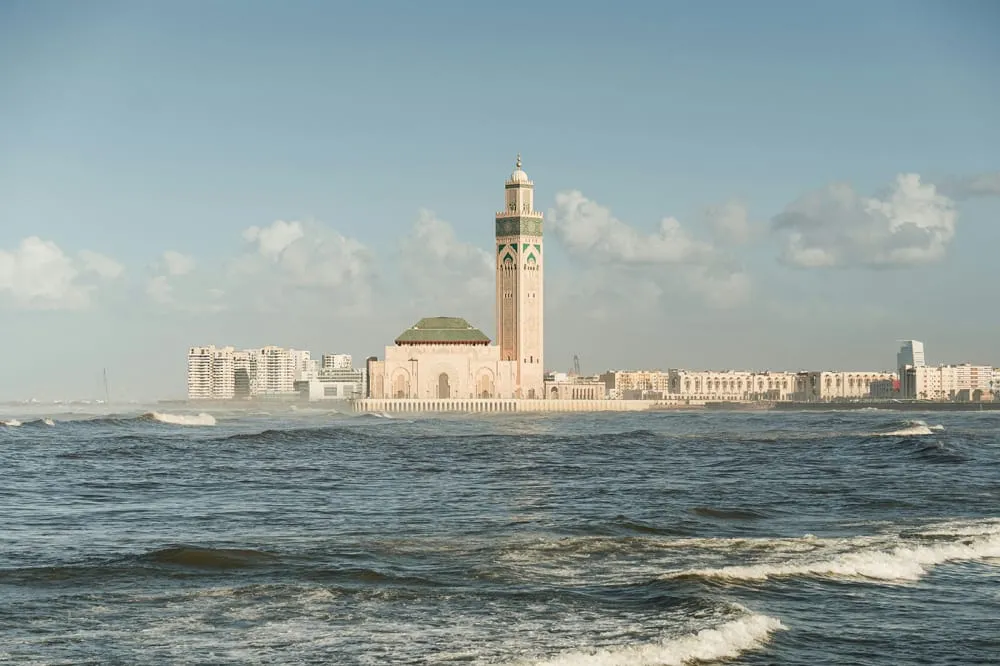
The iconic Hassan II Mosque dominates the skyline, partly built over the sea, and within its vast prayer hall, visitors can admire intricately carved ceilings made from Atlas cedar, reminiscent of Marrakech's grand madrasas. As Casablanca gradually reveals its unique allure, it is a city that embodies both historical depth and contemporary vibrancy.
As reported by latribune.fr.