
Casablanca vs. Madrid: The Battle for the 2030 World Cup Final
As the FIFA approaches its decision regarding the distribution of matches for the 2030 World Cup, which is set to be jointly hosted by Morocco, Spain, and Portugal, the spotlight is increasingly shining on the venue that will host the final match. While no official announcements have been made yet, competition between Casablanca and major Spanish cities is intensifying, igniting a flurry of speculation in Iberian media. Observers in Spain are voicing growing concerns about Morocco's chances of securing the prestigious hosting rights for the tournament's final match. This apprehension is compounded by theories suggesting potential political influences from the United States favoring Morocco, although no concrete evidence has surfaced to support such claims. These speculations have their roots in a prior incident related to the 2026 World Cup, during which former President Donald Trump reportedly urged FIFA to reconsider a sanction against American player Folarin Balogun. This action led to the suspension of the sanction, allowing the player to continue in the tournament, an episode that stirred significant reactions but did not establish a clear connection to future decisions concerning the 2030 World Cup.
A Strong Showdown Between Two Nations
On the sporting front, both nations are presenting their own compelling arguments. Rafael Louzán, the president of the Spanish Football Federation, has expressed confidence that the final will take place in Madrid or Barcelona, highlighting the extensive number of host cities proposed by Spain. However, this argument has been challenged by various analysts who contend that the sheer number of Spanish venues primarily reflects the country’s territorial organization, which could lead to increased travel for teams. Therefore, the mere number of cities does not inherently serve as a decisive criterion for determining the final's host.
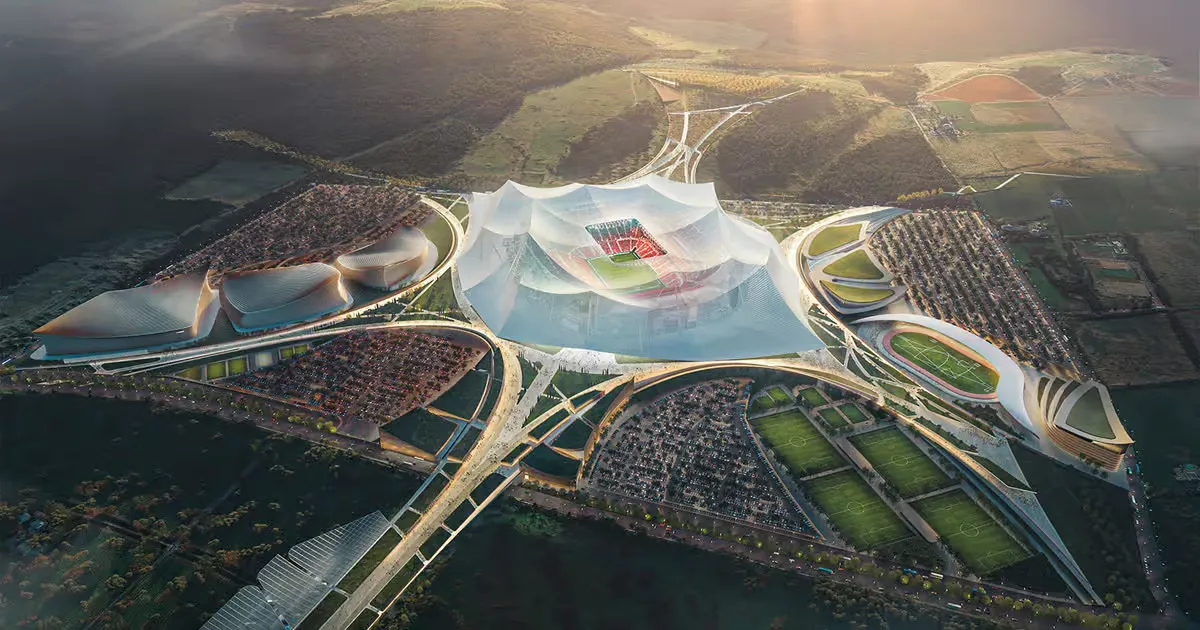
Morocco is equally ambitious, with national football officials confirming their desire for Casablanca to host the tournament's final, primarily due to the upcoming Grand Stade Hassan II, which is currently under construction near the economic metropolis. With a projected capacity of 115,000 seats, this stadium stands as one of the largest in the world and is part of a broader initiative to modernize sports infrastructure, transportation, and hospitality services in the region. In contrast, Spain boasts the prestige of the renovated Santiago Bernabéu and Camp Nou, two iconic stadiums already intertwined with international football history.
The stakes have now transcended mere sporting considerations. In Spain, some political figures have accused the government of indirectly favoring the Moroccan bid, alluding to hypothetical diplomatic agreements. However, no official evidence or statements have substantiated these claims, which seem to be more reflective of domestic political discourse. At this juncture, it remains unclear which venue will ultimately host the 2030 World Cup final. Casablanca, Madrid, and Barcelona are all vying for this honor, while FIFA continues its evaluation process. Nonetheless, Morocco's substantial investments, the exceptional capacity of the Grand Stade Hassan II, and the nation’s ambition to provide Africa with another World Cup final are substantial elements that keep this competitive race wide open.
As reported by lebrief.ma.