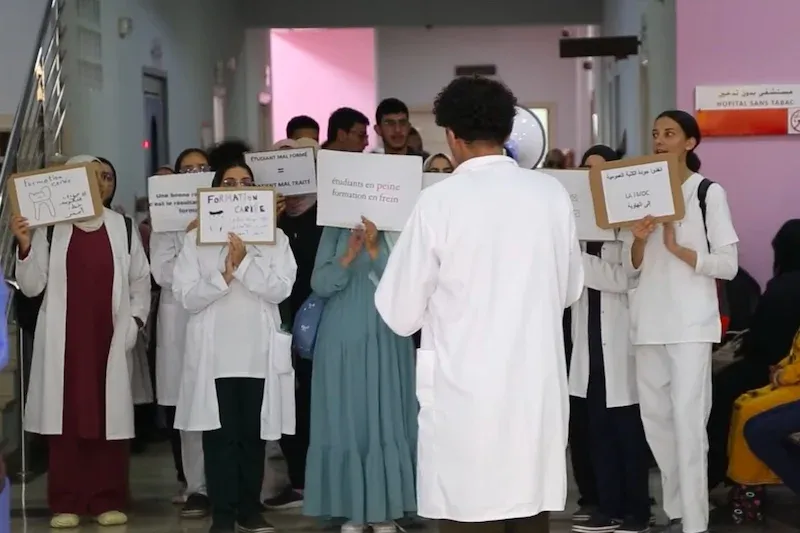

Casablanca Dental Students Initiate Boycott of Clinical Training
In a significant move, dental students from Casablanca have embarked on an indefinite boycott of their clinical training, a decision that has sparked considerable attention within the academic and medical communities. The boycott, which began on Tuesday, was initiated in response to what students describe as inadequate training facilities and the burden of having to pay for materials required for patient treatment. According to the representatives of the student body, the situation has reached a critical point where the quality of education and the standards of patient care are being jeopardized.
The boycott affects all departments at the dental treatment center located within the Ibn Rochd University Hospital. Students have expressed their concerns that the increase in enrollment numbers has far exceeded the available capacity, leading to heightened pressure on training resources and facilities. This situation, they argue, is unsustainable and undermines their educational experience. The student representatives have voiced their belief that the administration should have proactively expanded placements to accommodate the growing number of students prior to the surge in enrollments.
Moreover, the students are demanding that the financial burden of medical supplies and equipment, which they are currently required to cover, be lifted. They assert that such costs should not fall on students, especially when they are already facing the challenges of rigorous academic training. Following numerous failed attempts to engage in constructive dialogue with university administrators and relevant authorities, the student representatives are now calling for concrete actions to be taken within a specified timeline. They have made it clear that they hold the administration accountable for any disruptions to both their training and the treatment of patients that may arise as a result of this boycott.
The student body insists that they will only return to their clinical placements once their demands are addressed through significant improvements in their training environment, emphasizing that proper clinical conditions are essential for their professional development and the quality of care provided to patients.
As reported by en.hespress.com.