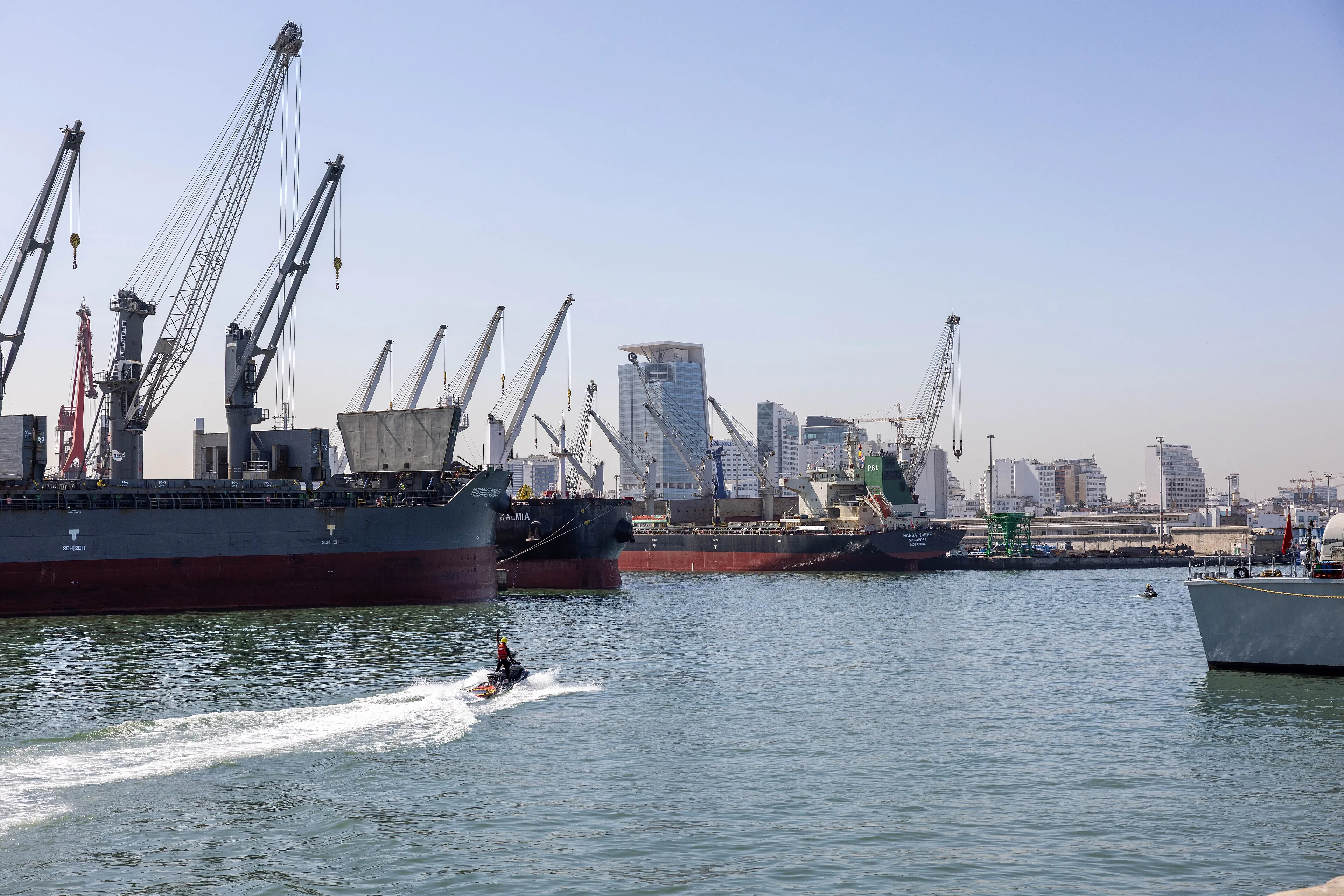
The Moroccan city of Casablanca, a pivotal economic engine for the country, is actively inviting Spanish companies to engage in its ambitious transformation plan, which encompasses projects valued at approximately €8.5 billion. This initiative includes the construction of the Hassan II Stadium, currently underway and a contender to host the final of the 2030 World Cup. Notably, the Catalan company Royalverd has already secured a contract for the installation of the stadium's turf.
During an interview conducted by elEconomista.es at the recent Casablanca Business Forum (CBF), held on October 2, which brought together business and political elites, Abdellatif Maâzouz, President of the Casablanca-Settat Regional Council, highlighted the historical role of Spain as a vital ally. He expressed confidence that Spanish firms would play a significant role in the development plan he is spearheading.
"Spain is a key economic partner for our region and for Morocco as a whole. Numerous Spanish companies across various sectors have invested and are operating here, providing services and executing projects. For instance, Spanish firms were involved in the Casablanca tramway," Maâzouz stated, noting that he envisions an elevated level of collaboration in the coming years. "The answer is clear. We maintain a strong relationship with Spanish companies, and we foresee a promising future, especially in the economic sector."
Last week, Maâzouz updated the figures related to the ongoing development plan in Casablanca, as reported by the Moroccan financial portal medias24. By the end of September, the Regional Council had approved 515 agreements totaling 92.7 billion dirhams (approximately €8.6 billion) since the beginning of the current mandate.
Of this amount, 21.3 billion dirhams is attributed to the region itself, while the remaining 71.4 billion dirhams comes from institutional and economic partners. The agreements span a wide range of projects, including transportation, logistics, water management, environmental protection, education, health, sports, and economic development.
A significant portion of these investments is channeled through the Regional Development Program (PDR) 2022-2027, which aims to enhance mobility, water supply, environmental resilience, and the economic capacity of the region, among other objectives. In parallel, six major projects are set to extend beyond 2027, with a combined budget of approximately 47 billion dirhams. These include high-speed rail connectivity, a regional express train network, desalinated water transport systems, public bus transport management, stormwater drainage infrastructure to prevent flooding, waste management and recovery, and a regional agri-food platform.
The Hassan II Stadium
Maâzouz explained that the construction of the Grand Hassan II Stadium is progressing according to plan, with even slight advancements over the schedule. The access road infrastructures connecting the airport, city, and stadium site are either well underway or completed, while the main structure of the stadium is nearly finished.
Regarding the involvement of Spanish companies, the president noted that the direct management of the stadium falls under an independent entity separate from regional administration, thus not under the purview of the plans he is overseeing. Nevertheless, he conveyed his strong belief that Spanish firms would participate, either directly or through joint ventures with local companies.
Indeed, during the interview, Maâzouz celebrated the official awarding of the contract for the stadium's turf that same morning. This contract was awarded to the Catalan firm Royalverd and its Moroccan partner Somecotrad, amounting to approximately €8.3 million. The two companies have 14 months to complete the work, which includes the installation of a hybrid natural and artificial turf playing surface, along with drainage systems, sewage, irrigation, ventilation, playing area equipment, and lighting to promote turf growth.
The Hassan II Stadium is being constructed in the commune of El Mansouria, located in the Benslimane province between Casablanca and Rabat, with an estimated official investment of about €450 million and a planned capacity of 115,000 spectators, making it one of the largest football venues in the world.
This project represents Morocco's major bid to host the final of the 2030 World Cup, which it is co-organizing with Spain and Portugal. The stadium is competing to host the decisive match against the Santiago Bernabéu in Madrid and Camp Nou in Barcelona, both included in the joint candidacy. However, FIFA has yet to designate the final location, reiterating that the decision will be made at a later date.
As reported by eleconomista.es.