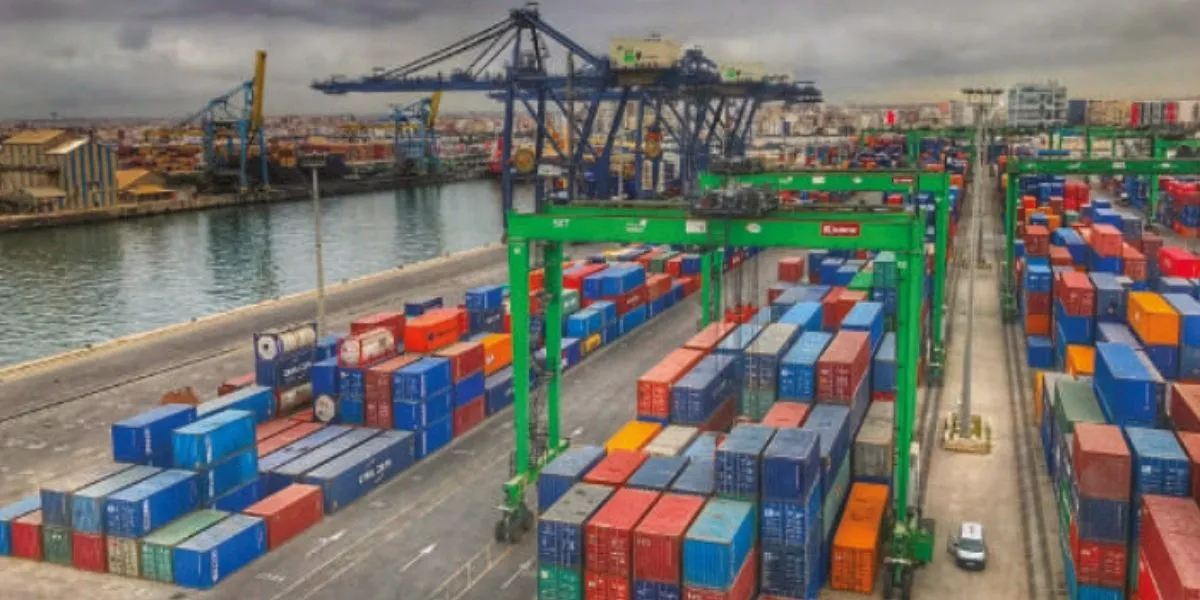

Casablanca Port Experiences Historic Congestion Yet Records Traffic Growth
The Port of Casablanca has recently undergone the worst congestion in its history, a situation that surprisingly did not hinder its performance during the first half of 2026. Amidst a backdrop of heightened demand for transshipment activities in Morocco, the port reported a remarkable 7% increase in overall traffic, reaching a total of 17 million tons from January to June. This increase is noteworthy, especially as it comes after several months of congestion that have been the subject of intense scrutiny within maritime circles.
This surge in traffic not only showcases the port's resilience but also illustrates an improvement in operational performance. If this positive trend continues through the end of the year, it is possible that Casablanca Port could achieve new milestones. Recent measures implemented by authorities to enhance on-site operations suggest that normalcy may soon return.
According to the National Ports Agency (ANP), there is already talk of a "return to normal," particularly following last month, which saw an acceleration in activity. In June, an impressive 3.5 million tons were processed, compared to 2.6 million tons in June 2025, marking a substantial 32% increase.
Significant Improvements and Future Prospects
Port stakeholders are optimistic about these tangible improvements. Rachid Tahri, president of the Moroccan Freight Forwarders Association (AFFM), acknowledged the notable progress, stating that processing times for container ships have reduced significantly from ten days to an average of 48 to 72 hours. This enhancement can be attributed to the recent decision by the governor of Casablanca to implement a 24/7 operational schedule.
It is also important to note that 75% of the total volume during this first semester comprised imports (12.8 million tons), while exports accounted for 25% (4.1 million tons). Beyond the statistics, the Moroccan ports are becoming increasingly critical in global maritime traffic, especially due to disruptions in major shipping routes. Professor Najib Cherfaoui emphasized that the congestion at Casablanca Port does not necessarily indicate a negative trend; rather, it reflects Morocco's successful repositioning on the global maritime map. This situation has led to heightened demand for port infrastructure, including Casablanca, which is not exclusively used for transshipment.
The impending operationalization of the Nador West Med and Dakhla Atlantic ports is expected to further solidify Morocco's position in the maritime landscape. This development is particularly timely, as the country aims to cultivate a maritime industry capable of meeting demands in ship repair and construction. Revitalizing the national shipping registry remains a top priority, especially given that recent reports indicate Morocco's fleet has dwindled to just 13 vessels from 69 in the 1990s. Younes Zrikem, director of Boston Consulting Group (BCG) in Morocco, expressed optimism that the kingdom could see its fleet expand to over 20 new vessels by 2030, potentially increasing the national maritime fleet to 33 ships in the coming years, provided that the necessary conditions are met.
As reported by leseco.ma.