
Recent reports from credible sources within the political party "Junts per Catalunya" (Together for Catalonia) indicate that the leadership has been attempting to establish communication channels with Moroccan officials in light of the ongoing crisis in relations between Rabat and Madrid, particularly following the events in Ceuta. However, these efforts have reportedly been met with a lack of response from the Moroccan side.
According to the same sources, the party, which advocates for the independence of Catalonia from Spain, aimed to convey a supportive political stance for Morocco regarding the issues surrounding Ceuta and Melilla, and sought to open either direct or backdoor communications with officials in Rabat. Unfortunately, these communications did not evolve into the desired level of political dialogue, reflecting a long-standing Moroccan approach of avoiding involvement in the Catalan separatist agenda, even when the positions of some of its leaders align with Moroccan interests concerning territorial sovereignty.
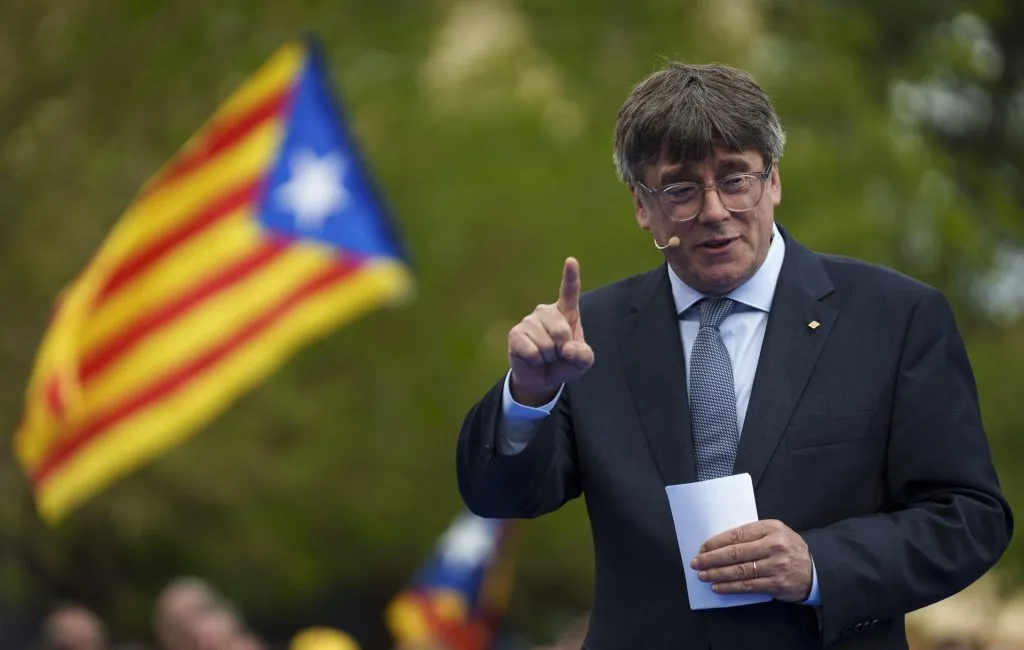
This situation is particularly noteworthy given the previous stances of the party’s historic leader and former Catalan President Carles Puigdemont. During the Ceuta crisis in May 2021, Puigdemont made a notably clear statement regarding the two cities, asserting that Ceuta and Melilla are "African cities" while criticizing Madrid's handling of the crisis and defending Morocco's right to raise the issue. His remarks came during one of the most tense moments in Moroccan-Spanish relations, following the entry of thousands of migrants into Ceuta in May 2021. However, Puigdemont's pro-Moroccan stance did not lead to any significant political rapprochement with Rabat, which has consistently avoided establishing official channels with the Catalan separatist movement, despite previous attempts to cultivate closer ties.
Morocco has maintained a clear position during the unilateral referendum crisis in Catalonia in 2017, officially rejecting the "unilateral process for Catalan independence" on October 11 of that year. The Moroccan government reaffirmed its commitment to Spain's sovereignty, national unity, and territorial integrity, labeling the separatist movement as "irresponsible and unsustainable," arguing that it could lead to instability and division both within Spain and in its European context.
This stance reflects a consistent foundation in Moroccan foreign policy, as Rabat has not allowed its disputes with Madrid to serve as a means to support separatist movements within Spain, even during periods of heightened bilateral tensions. Morocco has clearly chosen to stand in favor of Spain's territorial unity and constitutional sovereignty, particularly during the height of the Catalan crisis when Puigdemont was spearheading the secessionist project.
In stark contrast, there is a growing paradox today as several Spanish political and media voices adopt pro-separatist positions regarding Western Sahara, even hosting representatives from the Polisario Front and treating its claims as a legitimate part of political discourse in Spain. The sensitivity of this issue is exacerbated by emerging narratives in certain Spanish circles that aim to revisit the Rif issue or re-evaluate the region's history in the context of political conflicts with Morocco. Such approaches are viewed by Rabat as a breach of the principles of good neighborliness, especially when they coincide with calls for economic and political pressure on Morocco or attempts to reopen territorial files within the kingdom.
As reported by assahifa.com.