
Agadir Unveils a New Arts Space
This week, two remarkable events in Agadir and Boulemane highlight the cultural, artistic, and agricultural resources of these regions. In Agadir, twelve talented artists are showcasing their works at the inaugural exhibition titled "Agadir, L’Écrin," which opened on Thursday evening. This exhibition, which will run until October 31, coincides with the launch of the new Espace Expo Agadir, designed to become a permanent venue dedicated to promoting both local and international artists.
Organized by the Mohammed VI Foundation for the Promotion of Social Works in Education and Training, the exhibition features a diverse group of artists, including Samira Aït Laamalem, Radouane Challaf, Rachid Fassih, Ismaël Oulhaj Alla, Faissal Hmichane, Omar Ennaciri, Imam Djimi, Aomar Ajbour, Abdelhadi Mourid, Hassan Abarou, Abdelaziz Ousalah, and Youssef Ousaif. This initiative represents a strategic effort by the Foundation to integrate cultural and artistic vibrancy into its social activities, with Radouane Mourai, head of cultural and artistic animation, noting that this is the first collective exhibition of its kind organized by the institution in Agadir.
The Espace Expo Agadir is envisioned to sustainably host innovative artistic activities while enhancing the visibility of regional creations, thus fostering a vibrant cultural dialogue.
A Dialogue Between Heritage and Contemporary Creation
The exhibited artworks reflect a rich tapestry of artistic approaches, including lyrical abstraction, material exploration, color dynamics, collage, and emotional expression. This diverse collection showcases artists engaged in experimentation and the renewal of their visual language. For instance, Imam Djimi draws inspiration from the ancient rock paintings found in the Tata region, creatively revisiting this heritage through contemporary techniques such as collage.
Beyond the aesthetic pursuits, Djimi aims to raise awareness about the importance of preserving this cultural heritage and integrating it into regional development dynamics. The exhibition serves as a bridge connecting ancient heritage with contemporary expressions, establishing Agadir as a new meeting point for artists and the public alike.
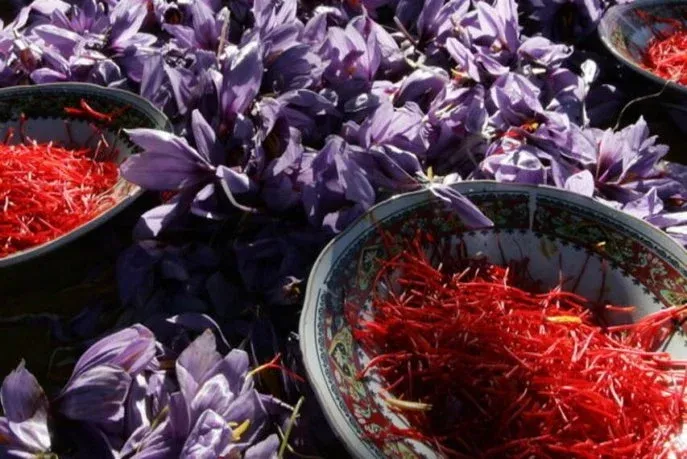
Meanwhile, several hundred kilometers away in Boulemane, the local community is focusing on another facet of territorial wealth. The second edition of the Saffron and Aromatic and Medicinal Plants Festival commenced on Thursday, aimed at promoting local production and harnessing it as a driver for economic and rural development. Organized by the Boulemane Development Association, the festival celebrates saffron, aromatic and medicinal plants, alongside various local products sourced from the province's municipalities.
According to Saïd Anharou, president of the organizing association, the festival's primary goal is to assist cooperatives in enhancing their production techniques, product quality, and marketing methods. The event includes thematic workshops for producers and local stakeholders, focusing on accessing both Moroccan and international markets.
One of the festival's highlights is the exhibition space where cooperatives can present their products and share their experiences. The organizers aim to create a networking hub for producers, professionals, and rural development actors. This year's edition emphasizes cooperative structuring and sanitary quality, with six cooperatives receiving health certificates from the National Office for Food Safety, a critical step in ensuring compliance and improving market prospects.
Additionally, agricultural equipment and materials have been distributed to several beneficiaries to enhance production conditions and support local supply chain development. These initiatives are part of a broader strategy to strengthen agricultural value chains in the province and facilitate better integration of producers into marketing circuits.
The Boulemane Festival is not solely focused on agricultural and economic dimensions; it also seeks to promote the province's cultural and tourism heritage. Several awards were presented to individuals who have contributed to local development and heritage preservation. The first day concluded with a carnival featuring performances by Ahidous troupes, popular arts, and traditional music. Running until August 9, the festival also offers scientific meetings, training for cooperatives, cultural activities, and discovery tours of the province's natural, historical, and archaeological treasures.
As reported by quid.ma.