
The Significance of the 14th Zahria Festival in Marrakech
The 14th edition of the Zahria Festival in Marrakech, dedicated to the orange blossom, takes place this year against a remarkable backdrop, highlighted by the adoption of a historic legislative framework for Moroccan heritage. Scheduled from March 22 to April 12, this festival is organized by the Al Muniya Association of Marrakech, in collaboration with several institutions, including the Ministry of Youth, Culture, and Communication, the Marrakech Municipal Council, and the Marrakech-Safi Regional Council. This event is spearheaded by women who are the custodians of a time-honored tradition that has been passed down through generations.
More than just a celebration of fragrance, the Zahria Festival showcases the richness of an intangible heritage that has recently been inscribed on the list of Islamic cultural heritage by ICESCO. This international recognition underscores the historical and cultural significance of the festival, further enhancing the Al Muniya Association's mission. This organization is already recognized by UNESCO as an expert NGO, with aspirations for future inclusion on the World Heritage list.
A New Legal Framework and Expanded Activities
One of the highlights of this year's event was the symposium held on April 3, which focused on Law 33-22, enacted in June 2025, and organized in partnership with the Morocco Memory Collective, comprising ten organizations dedicated to preserving national heritage. This new legal framework mandates, for the first time, compulsory institutional coordination among government administrations, local authorities, civil society, and the private sector, a significant shift from previous arrangements that relied on ad-hoc and non-binding agreements.
Additionally, this year's festival marks a departure from the confines of the medina, expanding its reach throughout the entire region. The program is rich with scientific and sensory encounters featuring Khalid Bitar, a fragrance expert, and Valérie Ogé, an olfactotherapist from UM6P in Benguerir. Distillation ceremonies will also be organized at the Kelaâ des Sraghna Higher School of Technology in partnership with Cadi Ayyad University.
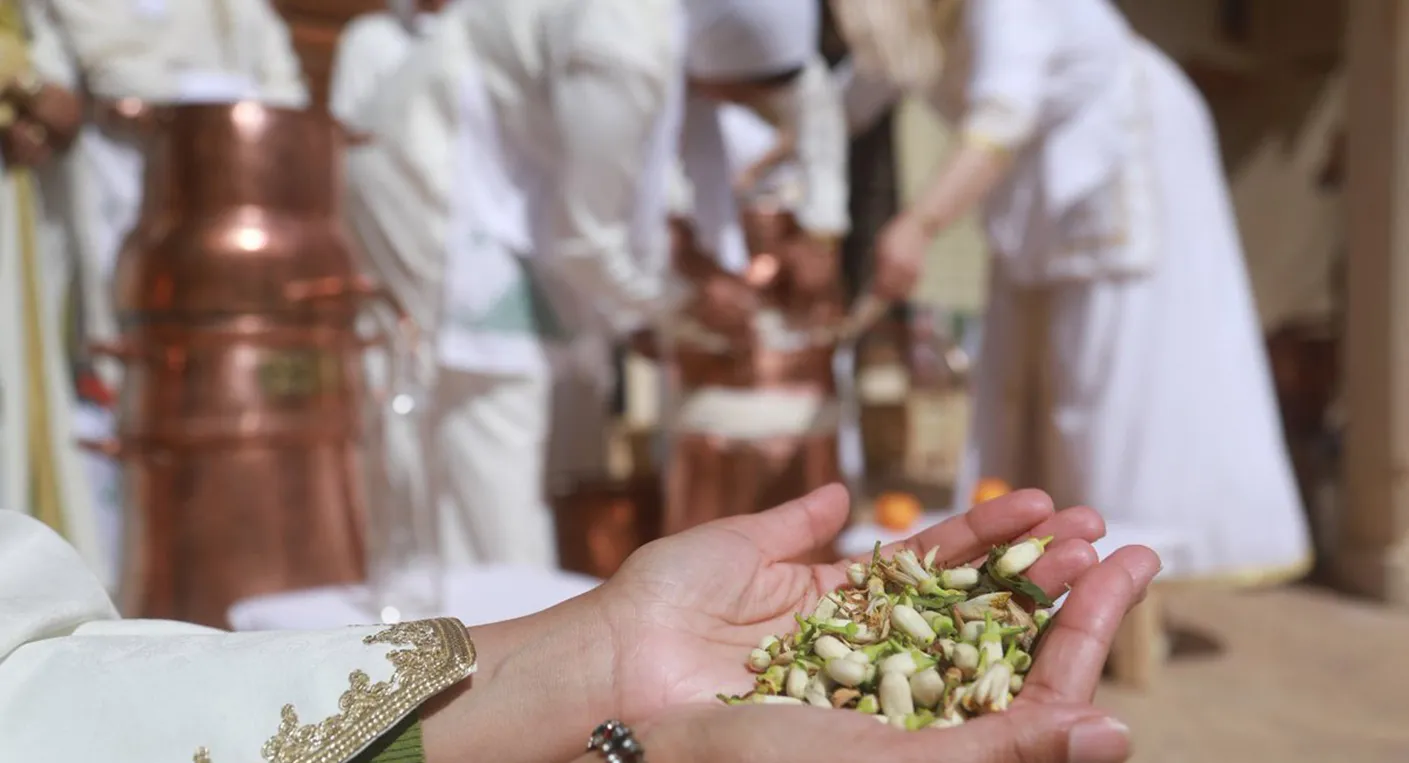
Spanning 22 days, the festival offers a diverse array of activities, including distillation ceremonies at schools and iconic locations in Marrakech such as the Jardins de la Médina, Jemaa el-Fna Square, and the Farid Belkahia Museum. Attendees can also participate in weaving workshops at the Cultural House of Carpets led by Mireille Loopuyt, along with musical interludes, including a lute concert at the Farid Belkahia Museum and samaa sessions hosted by the Ibn Al Arif ensemble, directed by Shaykh Idris Souabni.
As reported by femmesdumaroc.com.