
UAE Moroccan Festival Highlights Arabian Racing Excellence
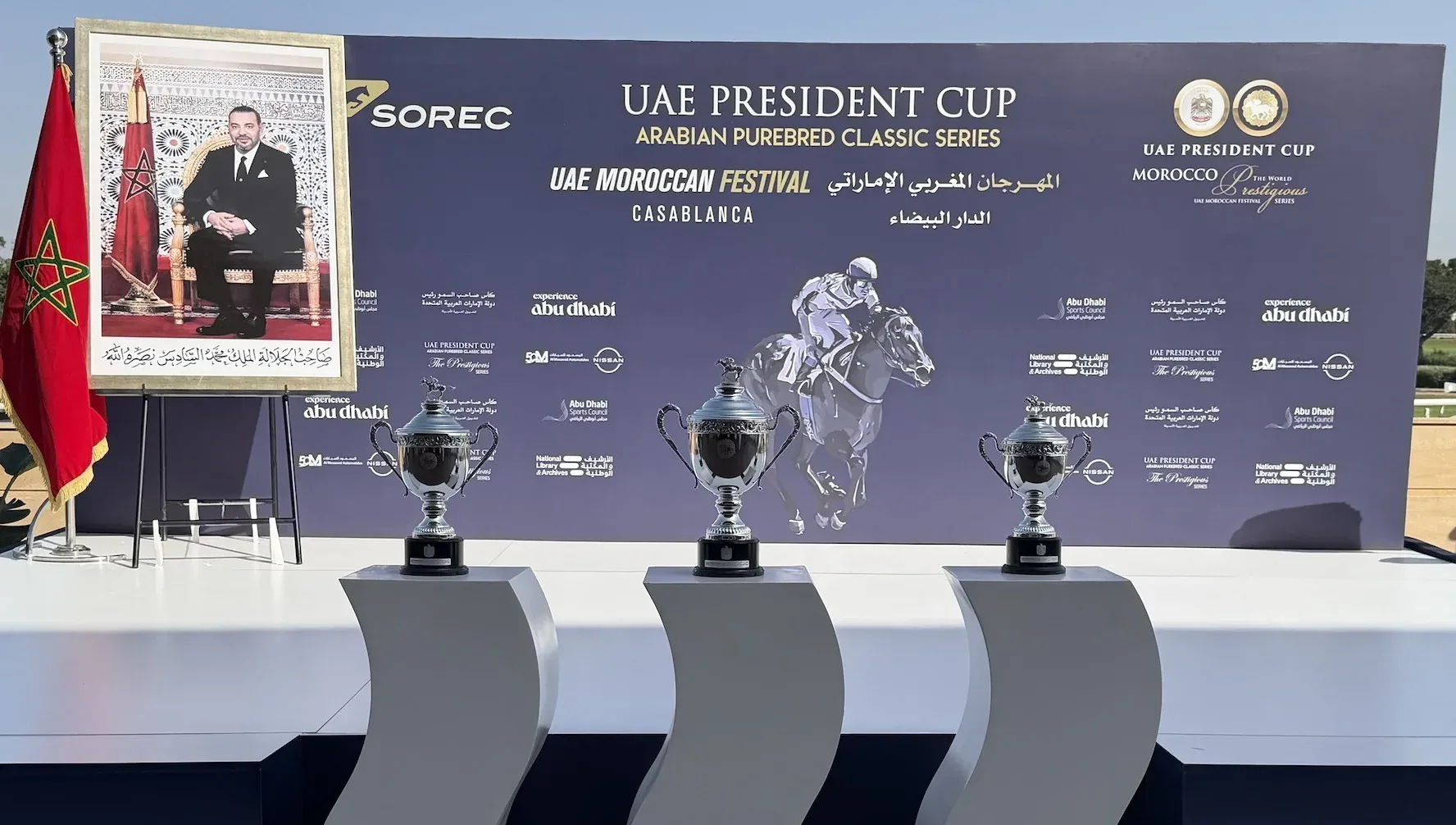
The Casablanca-Anfa Racecourse was abuzz with excitement on Saturday as it hosted the second UAE Moroccan Festival, a grand event that united Moroccan and international horses, alongside their owners, trainers, and jockeys. This vibrant festival, which featured a total of eight thrilling races, was a testament to the longstanding cooperative relationship between Morocco and the United Arab Emirates, specifically spotlighting the elegance and prowess of purebred Arabian racing.
Organized by the Royal Society for the Encouragement of the Horse (SOREC) in collaboration with the UAE President Cup Committee, the festival was highlighted by the participation of over six foreign horses in an international race, showcasing the global appeal of Arabian horse racing. Among the standout competitors was Buraak, owned by Al Leith Racing and expertly ridden by Moroccan jockey Mohcine Lafram, who triumphed in the prestigious «President of the UAE Cup». This 1,900-meter race, exclusively for purebred Arabian horses aged four years and older, offered a substantial prize pool of €250,000, attracting top talents from the racing community.
In a display of grit and competitive spirit, Moshrif, ridden by Guillaume Guedj-Gay and owned by Khalifa Bin Sheail Al Kuwari, secured second place, while Mugheer, partnered with Omar Lakjal for Atlas Stud, claimed third. After the race, Lafram expressed his satisfaction with the victory, stating, «It was not a surprise. We knew we had a contender and did our best. Thank God, our efforts paid off», reflecting the dedication and hard work that goes into preparing for such prestigious events.
Guedj-Gay also shone brightly, clinching another significant victory aboard Huda De Carrere in the Abu Dhabi Cup, owned by Emadadein Althoushi. Ines Grine, with Omar Lakjal as the jockey, finished in second place, followed closely by Mellie De Faust and jockey Amine Moughat. Guedj-Gay commented on the race, noting, «It was a great race, very close at the finish», which further emphasized the competitive nature of the event.
Enhancing Morocco's Status in Arabian Horse Racing
Hicham Debbagh, the deputy director general of SOREC, shared insights about the significance of international participation in the festival, emphasizing the growing recognition and respect for Morocco’s racing industry. He remarked, «Moroccan purebred Arabian racing is becoming increasingly recognized and highly regarded. We have the pleasure, each time, of welcoming horses of very high quality.» Debbagh highlighted that Morocco hosts over 1,000 purebred Arabian races annually, establishing itself as a leader in both Africa and the Middle East when it comes to the number of races held.
Furthermore, the festival aimed to elevate Morocco’s racing and breeding industry on a global scale, creating opportunities for local breeders and owners to market their horses in Europe and the Middle East. Debbagh articulated the importance of this initiative, stating, «We are trying to raise the profile of Moroccan racing and purebred Arabian breeding, while creating opportunities for our breeders and owners to sell their horses in Europe and the Middle East.»
Moreover, Debbagh underscored the deep-rooted partnership between Morocco and the UAE, which spans several decades and has fostered a rich cultural exchange. The festival served not only as a platform for showcasing racing talent but also allowed Moroccan spectators to immerse themselves in Emirati traditions and folklore. Faysal Al Rahmani, president of the International Federation of Arabian Horse Racing Authorities, echoed this sentiment, describing Morocco as a frontrunner in the sector due to its advancements in organization, technical systems, refereeing, regulations, and timing. He noted, «Arabian horses have a history in Morocco that goes back well over a century», commending the significant progress made in the past decade.
Beyond the exhilarating races, the festival offered a delightful array of Moroccan and Emirati traditional performances, a pony club, and various activities for children, ensuring a family-friendly atmosphere with free admission for the public. This blend of culture and sport not only celebrated the heritage of Arabian horse racing but also reinforced the strong ties between Morocco and the UAE.
As reported by yabiladi.com.