
Understanding the Importance of August Holidays in Morocco
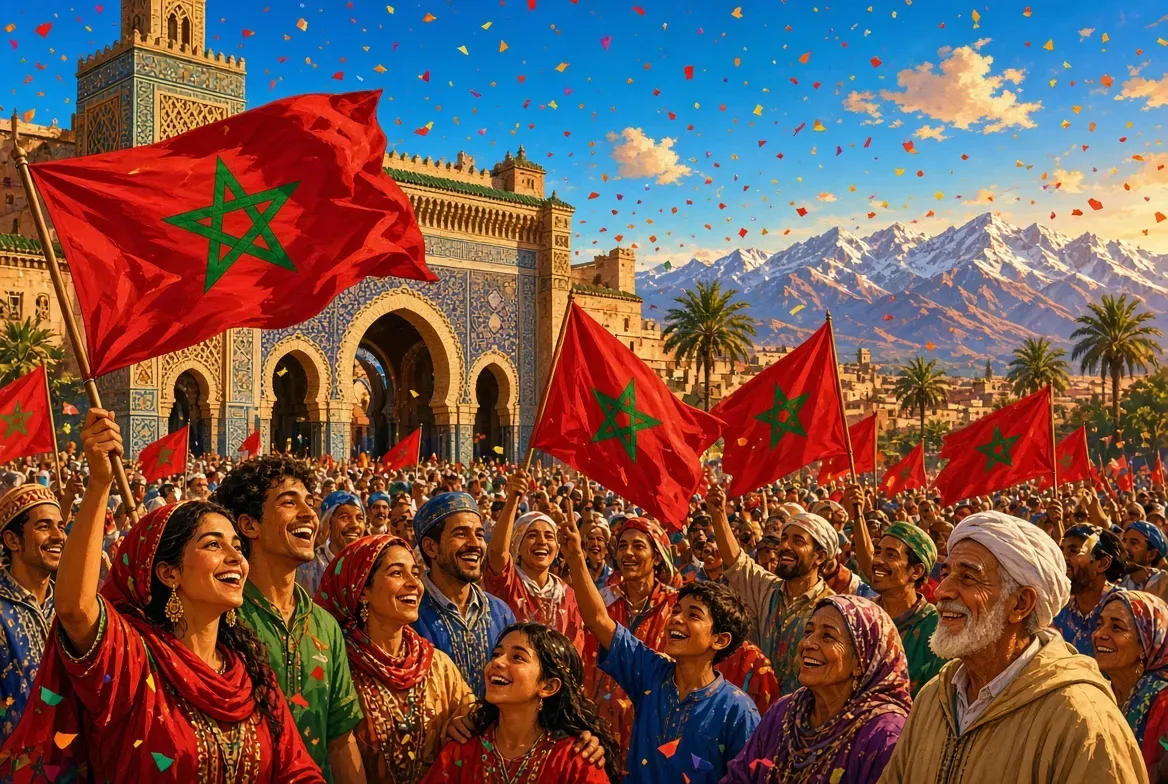
Every year, Morocco celebrates two significant national holidays on August 20th and 21st, which are known as the anniversary of the King and People's Revolution and Youth Day, respectively. In 2026, these holidays fall on a Thursday and Friday, creating an extended weekend for employees as public administrations, banks, and most official institutions will be closed. This presents an excellent opportunity for citizens to engage in festivities or spend quality time with family.
Historical Significance of the King and People's Revolution (August 20th)
The 20th of August marks a pivotal moment in Moroccan history, commemorating the events of August 20, 1953. On this day, French protectorate authorities exiled Sultan Mohammed V, the grandfather of the current King Mohammed VI, along with his family to Corsica and later to Madagascar. This action was intended to suppress national resistance and replace him with Mohammed Ben Arafa. Contrary to the French intentions, this decision sparked widespread unrest and a popular uprising throughout Morocco. Citizens took to the streets, refusing to accept the imposed ruler and demanding the return of their rightful Sultan. The resistance lasted for 27 months, culminating in the return of Sultan Mohammed V on November 16, 1955, and subsequently Morocco's independence in 1956. This day serves as a symbol of the strong bond between the throne and the people, reflecting shared sacrifices for freedom and national sovereignty. Various national, cultural, and educational events are held to honor this day, evoking values of loyalty, unity, and sacrifice.
The following day, August 21st, is celebrated as Youth Day, coinciding with the birthday of King Mohammed VI, who was born on this day in 1963 in Rabat. The official observance of this day emphasizes the vital role of youth in shaping Morocco's modern landscape and future. The celebration of Youth Day began in the context of independence and later became associated with the current king's ascension to the throne in 1999. This occasion highlights the importance of youth as a driving force for progress and development, featuring various sports, cultural, and educational activities across the nation. Despite the cancellation of the large official birthday celebration at the royal palace since 2019, Youth Day remains a paid national holiday, enshrined in the list of public holidays.
The convergence of these two holidays signifies both a celebration of Morocco's glorious past, marked by the King and People's Revolution, and a forward-looking vision represented by Youth Day. Together, they exemplify the enduring connection between the monarchy and the Moroccan people, providing an opportunity for reflection on the country's historical journey and developmental trajectory. In years where these holidays fall on consecutive weekdays, such as in 2026, they offer an extended break that many citizens utilize for travel, family visits, or participation in official and community events.
These holidays are integral components of Morocco's national celebrations alongside other significant occasions such as Throne Day (July 30), the anniversary of the recovery of the Oued Ed-Dahab (August 14), the Green March (November 6), and Independence Day (November 18). Thus, August 20th and 21st remain prominent national milestones that remind Moroccans of their roots of independence and the aspirations of their youth.
As reported by tanja7.com.