
Ceuta's Ongoing State of Emergency Amid Migrant Influx
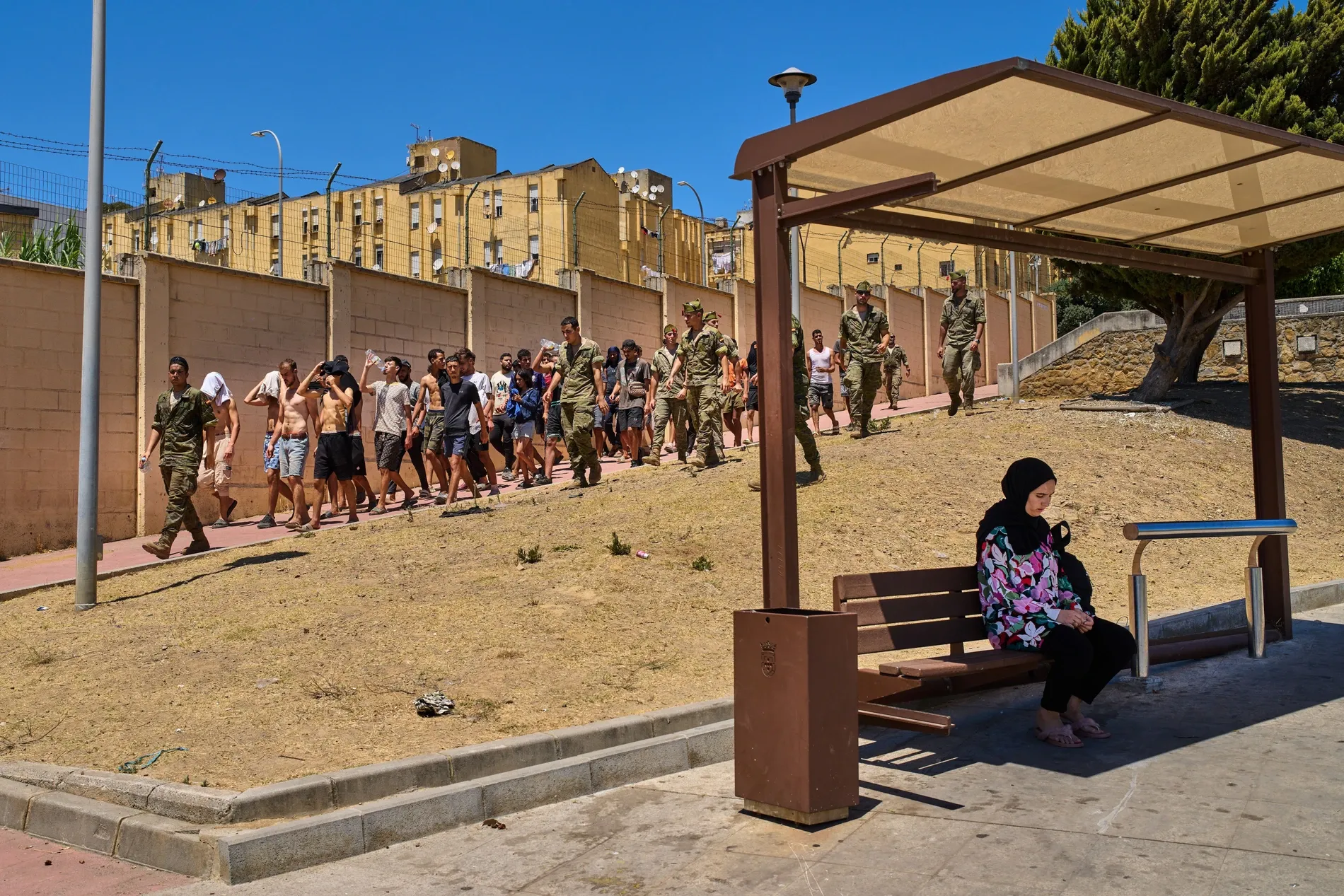
The Spanish enclave of Ceuta remains under a state of emergency as the local population grapples with the fallout from what many are calling an "invasion" of migrants. This situation has sparked a heated discourse among residents, who are not only concerned about the overwhelming number of newcomers but are also critical of right-wing populists who they believe are capitalizing on their plight. At the beaches of Ceuta, particularly at Playa del Trampolín, hundreds of migrants continue to crowd the area, seeking refuge from the scorching sun under makeshift shelters made of Red Cross blankets. Long queues have formed at the only shower available, as these individuals represent just a fraction of the over 70,000 who swam from Morocco to this relatively small Spanish territory on July 30. With the mainland only 14 kilometers away, the disillusionment among these migrants is palpable, as many find themselves still on African soil despite their hopes for a better life in Europe.
Frustration and despair echo through the voices of those stranded; a young Nigerian lamented, "We went days without food or water. No one cares about us here." After a year of perilous journeying, he and his companions had believed the promise of TikTok that "Ceuta is open" and took the plunge into the sea. Many of the Moroccan swimmers who joined them have since been deported, with Spanish soldiers reportedly rounding them up and forcing them into trucks. Meanwhile, those hailing from Sub-Saharan Africa, Syria, and Egypt are allowed to remain while their asylum claims are processed.
The shock of this unprecedented migrant surge is still fresh among Ceuta's 84,000 residents. The local police watched helplessly as nearly as many migrants arrived in just a few hours as there are citizens in the city, a situation comparable to the population of cities like Aschaffenburg or Dinslaken, or the full capacity of Munich’s Allianz Arena. Many locals describe this occurrence as an "invasion," while the major local newspaper has referred to it as a "tsunami." As the community grapples with the influx, tensions are rising, exemplified by the emergence of a citizen militia that has taken to social media to express its desire to "cleanse" the city. Their messages reflect a growing xenophobia, as they report sightings of migrants hiding in their neighborhoods, likening them to "cockroaches."
In stark contrast, humanitarian efforts are also in motion. A volunteer Muslim organization named "Luna Blanca" works tirelessly to provide meals for up to 5,000 migrants daily. Nonetheless, the reality remains grim for those without legal status in Ceuta; only migrants from Sub-Saharan Africa, children, and deceased individuals are permitted to stay, as the city struggles to accommodate the sheer number of newcomers. The wooded area along the narrow road leading from Trampolín Beach to the "Ceti" resembles a refugee camp, where hundreds await their fate. Ceuta's only reception center, which has about 600 spots, was already overwhelmed before July 30. The plight of unaccompanied minors is particularly dire, with only 29 official spaces available for them, while local organizations estimate that there are over 1,100 such children currently in the city.
The authorities are scrambling to prepare schools for emergency housing and have even reactivated an old military hospital. Meanwhile, the chilling reality of death looms large, as forensic experts have been called in from the Spanish mainland to perform autopsies on the bodies of 80 drowned migrants, with fears that more casualties remain undiscovered. The youngest victim identified was just 13 years old, and while Morocco has officially reported only eleven deaths, the Spanish NGO "Caminando Fronteras" claims that the true number could be as high as 63. The local Muslim cemetery has seen a surge in activity as workers dig new graves, a grim reminder of the tragic attempts to reach Europe that have resulted in loss of life.
Recent days have seen a noticeable increase in young Moroccan migrants seeking refuge among the graves, using the cemetery's fountains for washing—a behavior deemed disrespectful by many local Muslims who view the site as sacred. Families in Morocco, desperate for information about missing loved ones, have taken to calling funeral homes in Ceuta, sharing pictures of relatives who have not returned after attempting the perilous crossing. As the Spanish police patrol the beaches, the sea reveals remnants of the tragedies, with discarded shoes and colorful floatation devices washed ashore, serving as haunting reminders of the lives lost in pursuit of a dream.
Among the tragic stories is that of Faten Ben Omar El Azizi, a promising talent in Moroccan women's football. Just 20 years old, she played for "Maghreb Atlético Tanger" and had been granted a Schengen visa by the Spanish consulate in Tangier just before her ill-fated attempt to cross the Straits of Gibraltar, where she tragically drowned. Her death has become symbolic of the despair faced by many young Moroccans who see no future in their homeland.
As the situation unfolds, the Moroccan government has remained relatively silent, only speaking out days later with accusations against Spain for undermining their deterrent measures through a Supreme Court ruling that prohibits the immediate return of migrants who reach Ceuta. This has sparked a national debate, with Moroccan-French author Taher Ben Jelloun expressing "shame and anger" over the situation, criticizing the Moroccan police for allowing thousands to reach Ceuta, resulting in widespread tragedy. He attributes the issue not solely to Moroccan failings but also to the influence of Spain's judicial decisions and Algeria's antagonism towards Morocco, claiming that a significant portion of the migrants in Ceuta are Algerians.
In a recent commentary, Ben Jelloun proposed that the solution to the migrant crisis lies in returning Ceuta and Melilla to Moroccan sovereignty, asserting that this would effectively end illegal immigration. This sentiment resonates with the Moroccan leadership, which views the two enclaves as colonial remnants, and is beginning to garner support from U.S. and Israeli circles. While the migrant surge may not have been anticipated, it has spotlighted Spain's reliance on Morocco to manage its borders effectively. As Spanish officials maintain their stance on Ceuta and Melilla, the political landscape remains fraught, with tensions rising amid calls for new migrant incursions planned for August 15, labeled as "our last chance" by those seeking to cross.
As reported by faz.net.