
Ceuta: A Convergence of Cultures and Migration Challenges
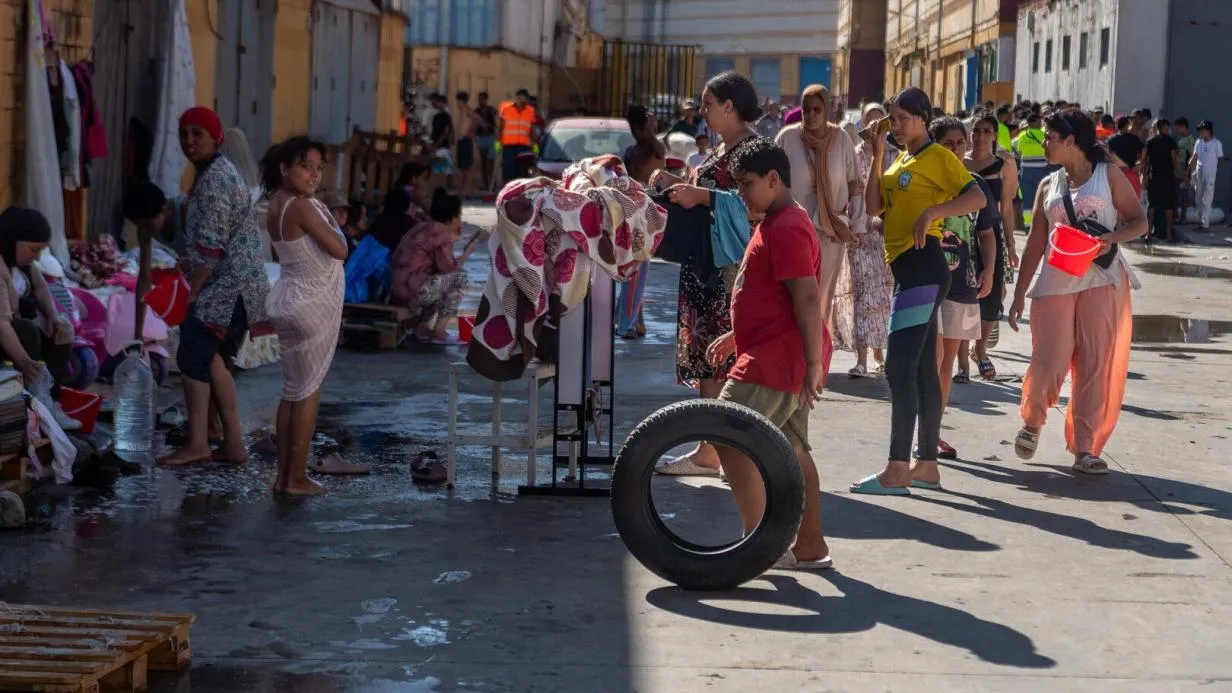
During the pandemic, Morocco closed its border with Ceuta, leading to the abandonment of industrial halls known as "Las Naves," which have now been repurposed as emergency shelters for migrants. From Playa Benítez in Ceuta, Europe appears tantalizingly close, with only 20 kilometers separating the Spanish mainland from this North African enclave. The mountains of Andalusia are visible on the horizon, and the Rock of Gibraltar stands tall as a symbol of the proximity to Europe. Ferries frequently depart for Algeciras, underscoring the geographical and cultural ties between the two regions.
Among the countless migrants is Abdullah, who arrived in Ceuta two weeks ago after a harrowing journey of 5,000 kilometers from war-torn Sudan. He spent a year navigating life in Morocco before hearing that the border to Spain was open. In late July, he swam past the breakwater at El Tarajal, hoping for a fresh start. For many migrants, Ceuta, alongside its sister enclave Melilla, represents a gateway to Europe. However, to most Europeans, particularly those on the mainland, these autonomous cities exist as mere blind spots on the map. Juan, a local café owner, notes the stark contrast between perceptions in Spain and the reality in Ceuta, stating, "People back in Spain have no idea what life is truly like here."
The Impact of Migration on Ceuta's Community
Juan has called Ceuta home for eight years, having moved from Madrid to open several establishments. He enjoys the laid-back lifestyle, affordable living, and the close-knit community. He often travels to the mainland, recently returning from Marbella with his family. The recent surge of 80,000 migrants arriving at the end of July has left the city grappling with its implications. This sudden influx has doubled the local population, and two weeks later, around 9,000 undocumented adults remained in the city alongside over 1,500 registered youth.
Yusef, a taxi driver and lifelong resident, recalls the chaos during those days, with streets so congested that navigating them was nearly impossible. He appreciates the diversity of Ceuta, home to Muslims, Catholics, Jews, and Hindus, and emphasizes the respect and harmony among different cultures. Schools and sports fields have been converted into makeshift shelters, raising concerns about the future as the new school year approaches.
The historical relationship between Ceuta, Melilla, and Morocco has always been intimate, with the border once being little more than a broken fence. Political scientist Enrique Ávila, who studies migration in the region, explains that even after proper border fortifications were established and Spain joined the Schengen Area, special arrangements were made to allow many Moroccans to work in Ceuta. However, the pandemic saw Rabat close its borders, and the previous system was never reinstated, leaving thousands of families on the Moroccan side without their livelihoods.
Currently, the dynamics between Ceuta and Morocco are complex, with social media playing a significant role in the recent migrant surge. Experts speculate that Morocco was indirectly involved, with Ávila commenting, "In Morocco, hardly anything happens without the King's knowledge, particularly during significant events like royal celebrations." Speculation surrounds various motivations, including the upcoming co-hosted 2030 FIFA World Cup and ongoing territorial disputes, with Rabat claiming sovereignty over the Spanish enclaves.
Locals like Juan express frustration, feeling caught in the geopolitical crossfire, while Spain's Prime Minister Pedro Sánchez is often blamed for the influx, with his regularization process viewed as a pull factor for migrants. While Yusef sees the need for foreign labor, he remains wary of individuals who might exploit the system, fearing the rise of far-right parties like Vox in the upcoming elections.
As Ceuta attempts to return to normalcy, beaches are reopened, yet the aftermath of the migration crisis lingers. Recent reports indicate that over 140 individuals tragically drowned during their attempts to reach the shores of Ceuta. The Sidi Embarek cemetery has begun to prepare graves for the unclaimed bodies, highlighting the human cost of this ongoing crisis. Abdullah, holding onto the hope of reaching Europe, reflects on his disrupted education and dreams of a stable life in Spain, yet he remains trapped in Ceuta, awaiting recognition from the authorities.
As reported by kurier.at.