
Ceuta: A Crucial Experiment in Territorial Acquisition
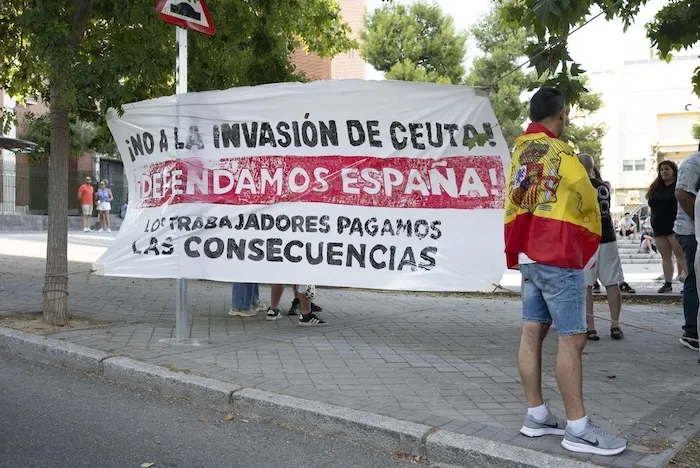
On August 11, 2026, Morocco illustrated a novel approach to territorial control through orchestrated human movements, demonstrating that the acquisition of disputed territories does not necessarily require armed forces to breach borders. Instead, Morocco's strategy involved temporarily suspending border controls, mobilizing tens of thousands of individuals, and compelling the affected state to defend its sovereignty, adhere to humanitarian protocols, and justify its actions to European allies. This incident at Ceuta served as a critical test case for territorial acquisition below the threshold of war.
According to Spanish authorities, approximately 72,000 people from Morocco crossed into the Spanish enclave of Ceuta within just 24 hours, a city with a resident population of around 85,000. The local government, led by Juan Jesús Vivas, later reported around 100 fatalities and estimated that between 3,000 to 5,000 individuals remained in Ceuta after the event. Significantly, the vast majority of this influx returned to Morocco shortly thereafter.
This sequence of events is politically significant. A human tide nearly equivalent to the population of the city overcame a heavily monitored external border of the European Union. Shortly after, most of the individuals involved moved back in the opposite direction. The border acted like a political switch: it opened, then closed again, sending shockwaves throughout Europe.
In response to the mass influx, Italy implemented border controls for travelers from Spain, citing security risks, which Spain reciprocated by imposing checks on travelers from Italy. A single event on the African coast was sufficient to incite mutual border measures between two EU nations.
Ceuta thereby illustrated the entire process of an operation conducted below the threshold of war: the sudden movement of a civilian mass, the strain on a small territory, the engagement of police and military forces, the activation of legal and humanitarian proceedings, disputes among allies, and the subsequent restoration of border control by the very authority that had initially loosened it.
The Border Switch: A Political Tool
Preliminary conclusions drawn by Spanish intelligence agencies highlight a critical distinction: Morocco did not plan the mass border crossing from the outset but allowed it to unfold. Moroccan border controls were gradually relaxed and occasionally lifted throughout July as the crowd approached the border.
This clarification does not absolve Rabat; rather, it illustrates a particularly flexible instrument of state power. A gray zone operation does not require a written command or meticulous management of every step. A state can allow a spontaneous movement to occur, utilize its political direction for leverage, and subsequently re-establish border closures.
Factors such as human smugglers, economic distress, and misinformation on social media can mobilize people. However, whether tens of thousands can breach a monitored border also depends on the state controlling the other side. Only that state has the authority to remove police barriers, leave certain routes unchecked, and later facilitate the return of tens of thousands.
The precedent was set in May 2021 when approximately 8,000 individuals entered Ceuta after Spain granted medical treatment to Brahim Ghali, the leader of the Polisario Front. The European Parliament explicitly condemned Morocco's use of border control, migration, and unaccompanied minors as political leverage against an EU member state.
Thus, the surge in 2026 was not an isolated failure. Rabat had already demonstrated its capability to increase and later decrease migration pressure during a political conflict. Five years later, the same mechanism was visible on a much larger scale. Those who focus solely on human smugglers and social media overlook the actor operating the border switch.
As reported by theeuropean.de.