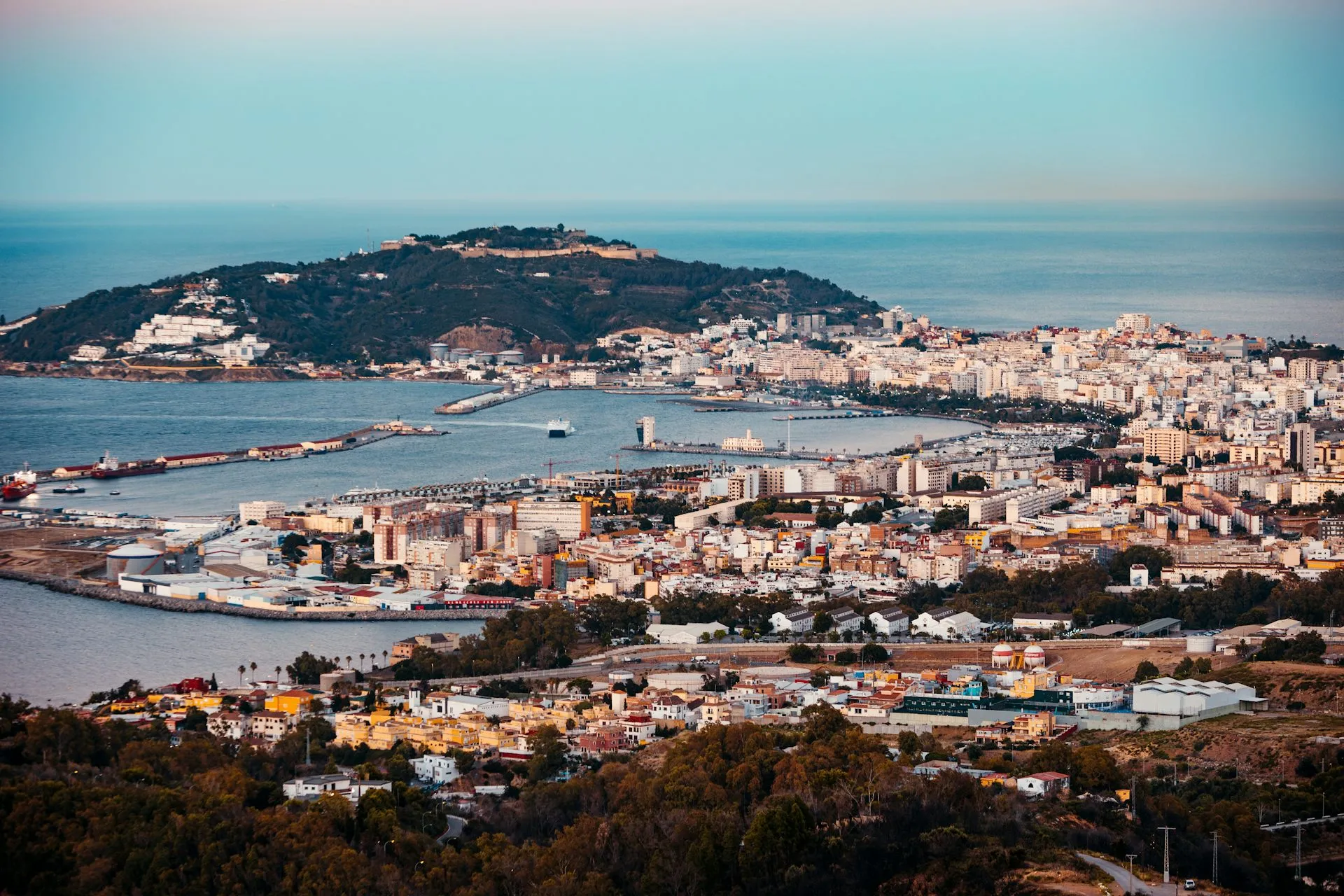

Understanding Ceuta's Status and Implications for NATO
Ceuta, a unique Spanish enclave located on the northern coast of Africa, is officially part of Spain and the European Union. However, from the perspective of NATO, the military alliance that Spain has been a member of since 1982, Ceuta is considered part of Africa. This seemingly technical distinction carries significant ramifications. In the event of an attack on Ceuta, NATO allies would not be legally obligated to come to its defense, particularly at a time when the relationship between Spain and the United States, a key NATO member, is strained.
The historical roots of Ceuta's status as a Spanish territory can be traced back to 1415 when it was conquered by Portugal. Following the unification of the Spanish and Portuguese crowns in 1580, Ceuta remained under Spanish control even after Portugal regained its independence in 1640, a fact recognized by the Treaty of Lisbon in 1668. This occurred long before Morocco gained its independence in 1956, a timeline that has been critical in shaping Moroccan claims over the city. Since then, Morocco has sought to assert its claims, including an unsuccessful appeal to the United Nations in 1975 to classify Ceuta as a territory pending decolonization.
Despite Morocco's repeated claims, the United Nations has not included Ceuta in any list of decolonized territories, and the Spanish Constitution explicitly recognizes it as part of the Spanish state. Furthermore, since 1986, Ceuta has been integrated into the European Union, albeit with specific customs regulations, making its border with Morocco one of the few terrestrial borders of Europe located in Africa.
The Summer Crisis and Its Aftermath
This past summer, Ceuta experienced an unprecedented surge in irregular migration, with over 72,000 individuals entering the city between July 30 and 31, 2026. This influx was overwhelming for a city with a population of just over 80,000. While approximately 70,000 migrants returned to Morocco within days, tragic losses were reported, with 75 individuals drowning in Spanish waters during this chaotic period. In a ruling by Spain's Supreme Court in July 2026, the court clarified that the controversial practice of 'hot returns'—where migrants attempting to enter Ceuta via swimming are returned immediately—was not permissible. The ruling specified that this practice could only be applied to individuals who breach physical barriers such as fences, a rule that does not extend to swimmers.
The European response to the crisis was mixed; while Italy temporarily suspended Schengen free movement agreements with Spain, the European Commission extended additional support, including aid from the European Border and Coast Guard Agency, Frontex. This situation echoed previous tensions, such as the 2002 Perejil Island incident, where Moroccan gendarmes briefly occupied a small uninhabited island near Ceuta, prompting a swift and bloodless recovery operation by Spanish forces. NATO deemed the issue a bilateral matter, with significant mediation from U.S. Secretary of State Colin Powell, thereby reiterating the alliance's limited involvement in purely territorial disputes.
According to Article 5 of the NATO treaty, an attack on one ally is considered an attack on all; however, Article 6 limits this protection to specific geographical areas, which notably excludes Ceuta and Melilla as they are situated in Africa. Consequently, Spain would not be able to invoke automatic NATO support in the event of an attack, necessitating a consensus-based meeting of the North Atlantic Council to determine a response. While assistance could potentially be provided, it would not be obligatory.
Spain's relationship with the United States, its most significant defense ally, is currently under scrutiny, particularly following Spain's refusal to commit to a 5% GDP defense expenditure target by 2035 and the denial of the use of Spanish military bases for potential strikes against Iran. The former U.S. President Donald Trump even suggested that Spain should be expelled from NATO, although such a move would not be legally feasible under the treaty's provisions.
To navigate this precarious situation, Spain might consider three strategic actions: Firstly, it could request a political declaration from NATO recognizing that an attack on Ceuta or Melilla would impact the alliance's security, a more realistic approach than seeking to amend Article 6. Secondly, Spain could advocate for the activation of Article 42.7 of the Treaty on European Union, which mandates member states to assist any member facing armed aggression, irrespective of geographical boundaries. Finally, Spain could push for the management of Ceuta's border as an external frontier of the European Union, which would entail increased EU funding, enhanced support from Frontex, and a clear legal framework for maritime entries.
The ultimate resolution lies in diplomacy. Spain and Morocco share a long-standing relationship, encompassing various interests such as trade, energy, fishing, migration control, and counter-terrorism efforts. It is essential to regulate and preserve these interests through diplomatic channels, as exemplified by the resolution of the Perejil crisis, which was settled through negotiation rather than military intervention. Sustained diplomatic efforts are crucial to establishing a stable security framework that prevents the recurrence of such crises. While defense guarantees are necessary, the use of force should always remain the last resort.
As reported by theconversation.com.