
Burial Operations Underway Amid Decomposition Concerns
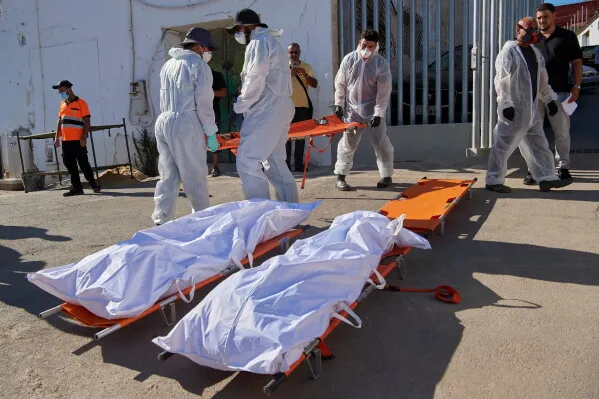
Ceuta has initiated a somber operation to bury the bodies of migrants who tragically lost their lives attempting to cross from Morocco during the mass influx observed on July 30 and 31. These deceased individuals were previously housed in forensic facilities adapted from the Military Hospital, awaiting identification or repatriation. So far, a total of 30 bodies have been laid to rest in the Sidi Embarek Muslim cemetery, with 18 buried on August 21 and another 12 on August 22. The burials are set to continue in the coming days until all remains in Ceuta have been interred. This operation was prompted by Morocco’s initial refusal to accept the bodies, coupled with the advanced state of decomposition of many, which complicates the situation significantly since most of the deceased remain unidentified. Authorities have opted to bury these individuals under a numerical system linked to forensic records, allowing for potential identification in the future through methods such as fingerprinting or DNA analysis. This approach ensures that the possibility of uncovering the identities of the deceased remains open, preserving the hope of returning their remains to their families or Morocco, as indicated by the Justice Minister.
Numbered Graves: A Unique Identification System
The first group of 18 victims was interred in graves marked with numbers ranging from 5412 to 5430. During the second collective burial, held on Saturday, the remaining 12 bodies occupied graves numbered 5426 to 5437, located in the newly designated area of the cemetery. The absence of named headstones underscores the ongoing challenge of identifying these victims, which remains a key difficulty amidst the tragedy. The chosen system is specifically designed to ensure that the burials do not close off future opportunities to learn the identities of the deceased, allowing their remains to be returned to their families or the Moroccan authorities. The Sidi Embarek Muslim cemetery has been selected for these burials, following Islamic rites, where the bodies are prepared and interred according to Muslim traditions, with imams and cemetery workers participating in the ceremonies. The scale of this operation has necessitated the creation of additional burial spaces. As reported by _El Faro de Ceuta_, the 12 bodies interred on Saturday were placed in the newly developed section of the cemetery, which has seen the construction of more graves to accommodate this extraordinary tragedy.
Currently, official figures indicate that 82 bodies have been recovered in Ceuta, all related to the mass entry on July 30. The identification of the deceased is being conducted through forensic processes that include fingerprinting and DNA testing. The office set up to assist families of the missing has received 32 reports and is working on 29 possible identifications, according to local media reports. The Ceuta Institute of Legal Medicine is under tremendous strain, as its director, Manuel Aparcero, explained that the team had to manage the influx of nearly 100 bodies within just two days, a situation for which no forensic service is adequately prepared.
Initially, Morocco had rejected the acceptance of several bodies, including one that had already been identified and prepared for transfer by Spanish authorities. On August 19, a 21-year-old whose body was ready for crossing the border was denied entry by Moroccan authorities when the hearse arrived at Tarajal. This obstruction contributed to the prolonged presence of the bodies in Ceuta, ultimately leading to the commencement of burials in Sidi Embarek. However, Rabat has now shifted its stance. The individual publicly advocating for this new position is not the Minister of Interior, but the Moroccan Justice Minister, Abdellatif Ouahbi. In an interview with the Saudi channel Al Arabiya, Ouahbi demanded that Spain return both the surviving migrants still in Ceuta and the remains of the deceased. Nonetheless, this does not equate to an unconditional acceptance of the bodies. Ouahbi insists that Spain first provide the forensic records necessary to ascertain the identities and nationalities of the deceased. He stated that Morocco needs to know whether the bodies belong to Moroccan citizens, Sub-Saharan individuals, or others from different nationalities. "We do not separate between the living and the dead," Ouahbi asserted, as he called for a simultaneous approach to the repatriation of both survivors and the deceased.
As reported by okdiario.com.